

How to Make a Small Bedroom Feel Warm and Cozy
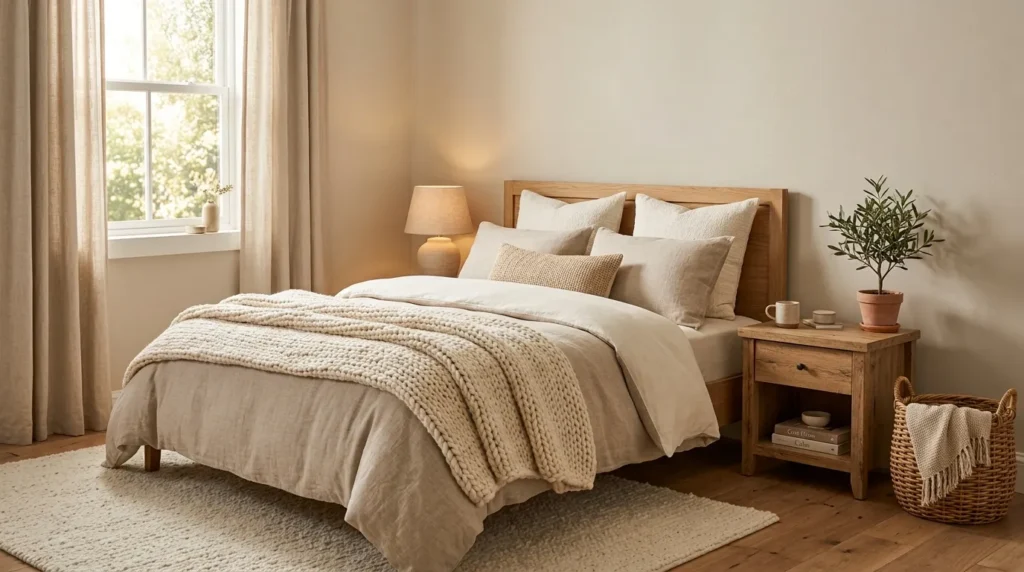
A small bedroom can feel incredibly cozy when the right elements are layered thoughtfully. Instead of trying to make the room look bigger at all costs, you can embrace its compact size and create a warm, comfortable retreat.
The most inviting small bedrooms usually rely on soft textures, warm lighting, comfortable bedding, natural materials, and a carefully controlled color palette. These elements work together to create depth without making the room feel crowded.
In my experience, lighting makes one of the biggest differences. A small room with harsh overhead lighting can feel cold, while warm bedside lamps, soft accent lights, and natural daylight can completely change the atmosphere.
Color also matters. Warm whites, cream, beige, caramel, muted terracotta, and soft brown can make a bedroom feel more welcoming. You don’t need to use dark colors everywhere; even small amounts of warm-toned wood or textiles can add richness.
The goal is to create comfort without adding unnecessary objects. Choose pieces that provide either function, texture, or personality, and leave enough open space for the room to breathe.
These ideas can help you transform a compact bedroom into a cozy retreat that feels warm, relaxing, and beautifully styled.
Table of Contents
- Layer Soft Bedding
- Add Warm Lighting
- Choose Warm Neutral Colors
- Use a Soft Area Rug
- Introduce Natural Wood
- Hang Cozy Curtains
- Add Textured Pillows
- Create a Bedside Glow
- Bring in Small Plants
- Keep the Room Clutter-Free
1. Layer Soft Bedding
Quick Benefits
- Adds instant comfort
- Creates visual depth
- Makes the bed inviting
- Adds texture
- Easy to refresh
Why It Works
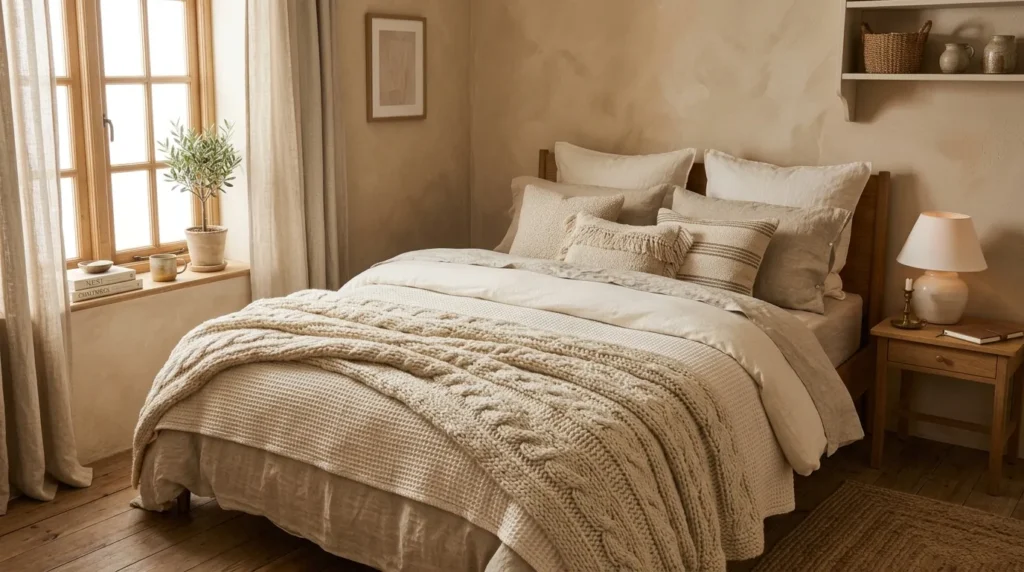
The bed is usually the dominant feature in a small bedroom, making bedding one of the easiest ways to influence the room’s atmosphere.
Layering different fabrics creates softness and depth without requiring additional furniture. Cotton sheets, linen duvet covers, knitted throws, and plush cushions can work beautifully together.
I’ve found that a relaxed bedding arrangement often feels warmer than an overly formal one.
How To Style It
Choose a warm neutral foundation such as cream, oatmeal, beige, or soft taupe. Add pillows in different sizes and textures.
Finish with a lightweight throw folded or casually draped across the lower portion of the bed.
2. Add Warm Lighting
Quick Benefits
- Creates ambiance
- Makes the room inviting
- Softens the décor
- Adds warmth
- Improves nighttime comfort
Why It Works
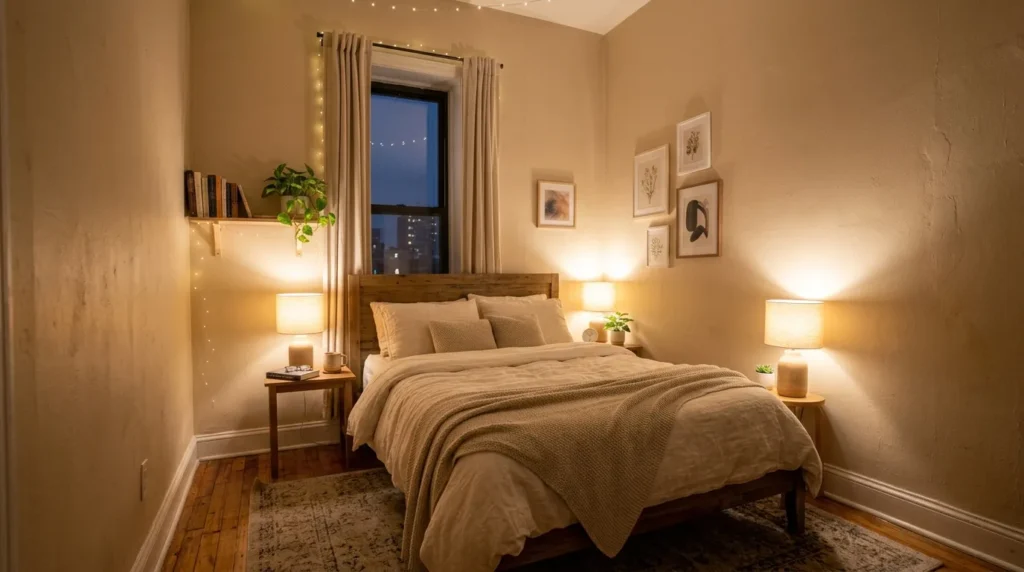
Lighting has a major influence on how a small bedroom feels. Warm, layered illumination can make even a compact room feel calm and intimate.
Instead of relying entirely on an overhead fixture, combine several smaller sources of light.
I’ve found that bedside lamps are particularly effective because they create a comfortable glow exactly where you need it.
How To Style It
Use warm-toned bulbs in bedside lamps, floor lamps, or wall sconces. Add a small decorative light if there is enough space.
Avoid overly bright lighting and use multiple low-level sources to create depth.
3. Choose Warm Neutral Colors
Quick Benefits
- Creates a cozy atmosphere
- Keeps the room calm
- Makes styling easier
- Works with natural materials
- Feels timeless
Why It Works
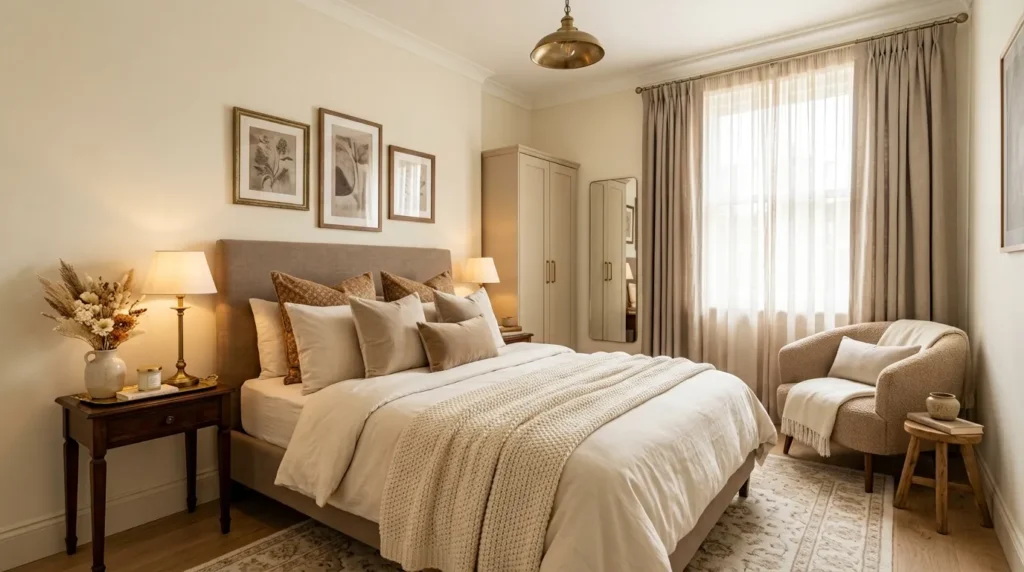
Warm neutral colors can make a small bedroom feel more welcoming without visually overwhelming the space.
Cream, warm white, beige, oatmeal, taupe, and muted brown create a soft foundation. Small accents of terracotta, caramel, or dusty rose can add additional warmth.
I’ve found that using several related tones creates more depth than covering everything in exactly the same shade.
How To Style It
Choose one main neutral and two or three supporting tones. Repeat them across bedding, curtains, rugs, furniture, and accessories.
Use darker warm shades sparingly for contrast.
4. Use a Soft Area Rug
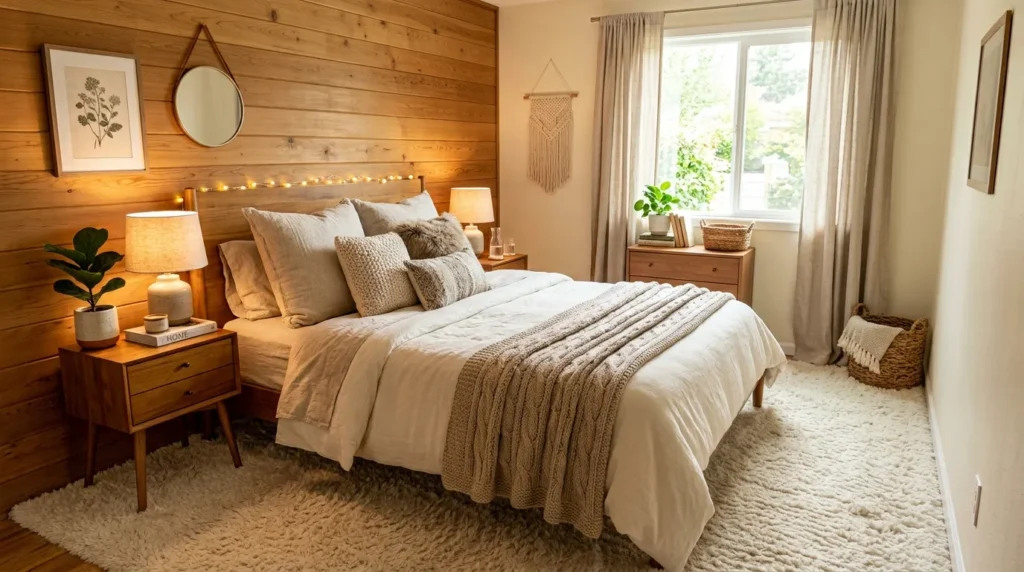
Quick Benefits
- Adds softness
- Warms the floor
- Defines the bed area
- Adds texture
- Improves comfort
Why It Works
A soft rug can make a small bedroom feel significantly more comfortable, especially when the existing flooring is hard or visually cool.
It also helps visually anchor the bed and creates another opportunity to introduce texture.
I’ve found that simple rugs with subtle patterns or solid neutral tones are easiest to incorporate.
How To Style It
Choose a rug that extends beyond the sides of the bed where space allows. Soft cream, beige, oatmeal, or muted patterns can complement a warm bedroom palette.
Make sure the rug doesn’t interfere with doors or drawers.
5. Introduce Natural Wood
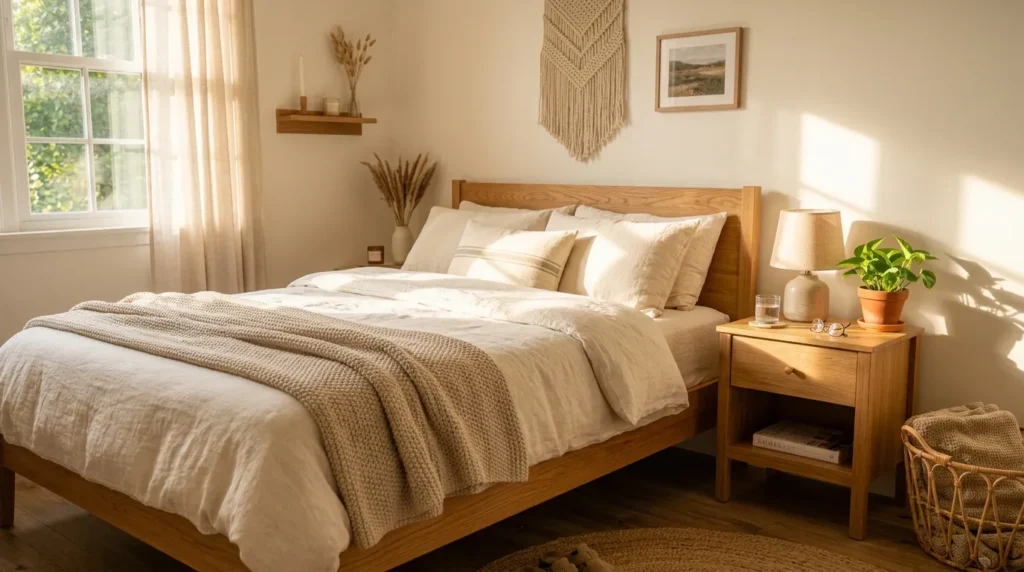
Quick Benefits
- Adds warmth
- Creates organic texture
- Adds contrast
- Works with neutrals
- Feels timeless
Why It Works
Natural wood introduces warmth without requiring bright colors. Its grain provides subtle visual interest while complementing soft textiles.
Wood can appear through a bed frame, nightstand, stool, shelf, picture frame, or small decorative tray.
I’ve found that even a few wooden elements can make a neutral bedroom feel much more inviting.
How To Style It
Choose a warm wood tone and repeat it in a few locations. Pair it with cream bedding, woven accessories, and soft lighting.
Avoid introducing too many unrelated wood finishes in a small room.
6. Hang Cozy Curtains
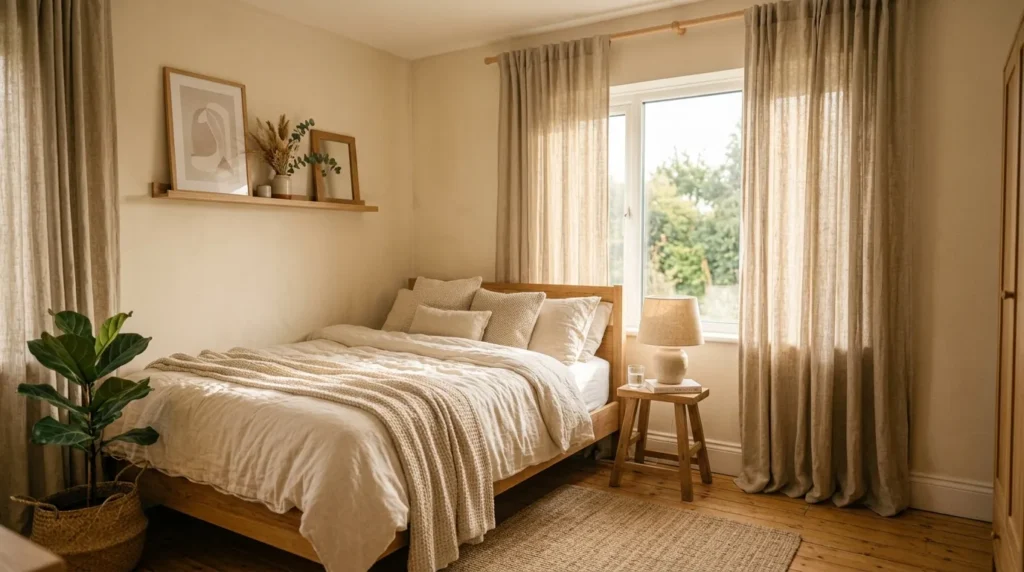
Quick Benefits
- Softens the room
- Adds warmth
- Creates privacy
- Makes windows inviting
- Adds visual height
Why It Works
Curtains can dramatically change the atmosphere of a small bedroom. Soft fabrics such as linen, cotton, or lightly textured blends add warmth without making the room feel visually heavy.
They also help frame the window and create a softer transition between the wall and the rest of the room.
I’ve found that warm ivory, oatmeal, beige, and soft taupe curtains work especially well in cozy bedrooms.
How To Style It
Hang the curtain rod slightly higher than the window frame to create the impression of additional height. Let the fabric fall close to the floor where practical.
Choose a lightweight material that allows natural light to filter through during the day.
7. Add Textured Pillows
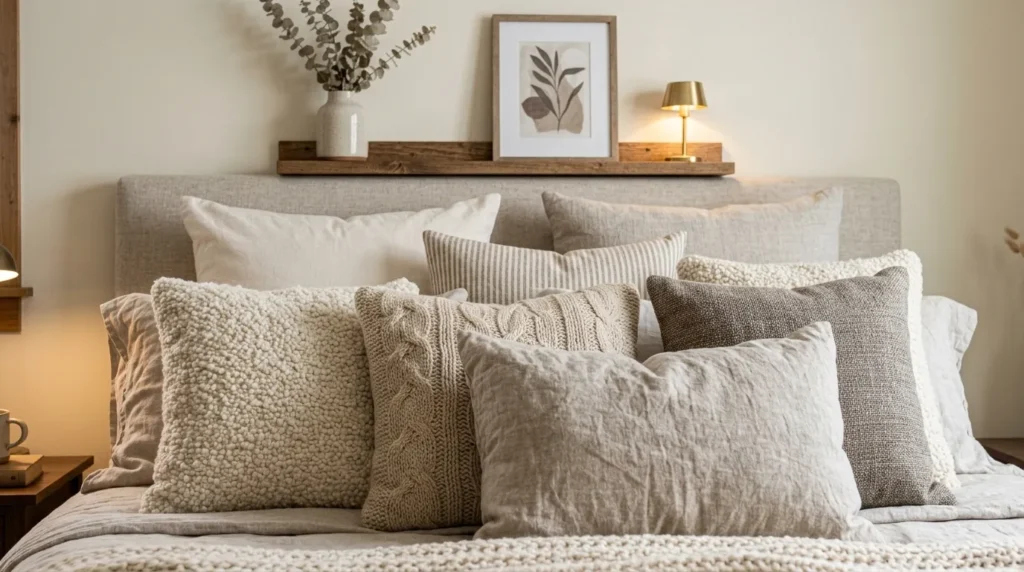
Quick Benefits
- Adds softness
- Creates visual depth
- Makes the bed inviting
- Introduces personality
- Easy to replace
Why It Works
Pillows are an easy way to add layers of texture without taking up additional floor space. Mixing materials such as linen, boucle, cotton, velvet, and knitted fabrics creates a richer appearance.
A few thoughtfully selected pillows can make a simple bed feel much more comfortable.
I’ve found that texture matters more than quantity in a small bedroom.
How To Style It
Choose pillows in complementary warm neutrals rather than many unrelated colors. Mix sizes and shapes to create a relaxed arrangement.
Keep enough room to comfortably sleep without having to remove a large collection every night.
8. Create a Bedside Glow
Quick Benefits
- Adds intimacy
- Creates soft illumination
- Makes evenings relaxing
- Uses little space
- Enhances the bed
Why It Works
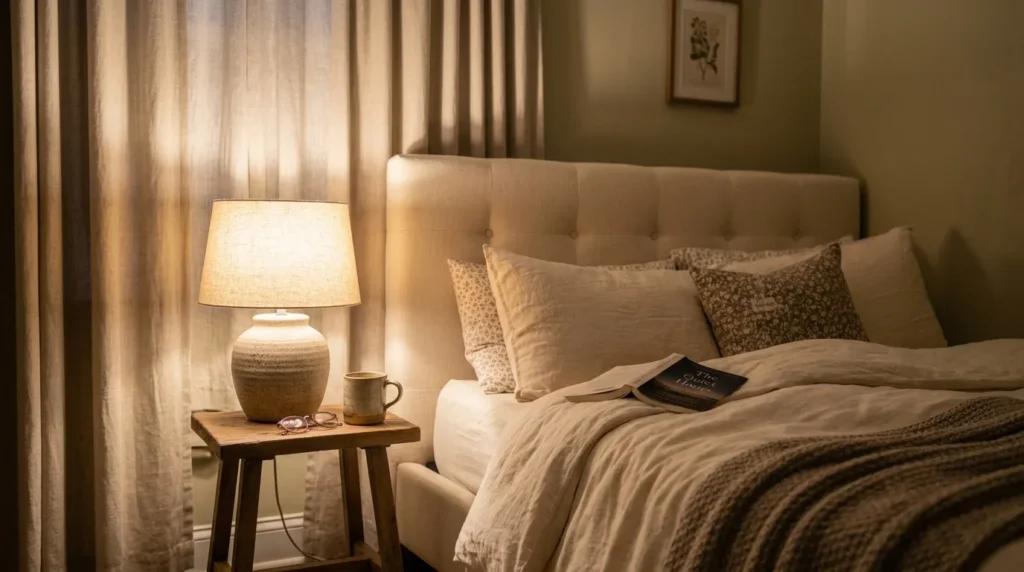
A small bedside light can become one of the most effective cozy details in a bedroom. The glow creates a visual focal point while providing practical lighting for reading or relaxing.
Wall-mounted sconces are especially useful when nightstand space is limited.
I’ve found that warm light positioned close to the bed makes a compact bedroom feel noticeably more comfortable.
How To Style It
Choose a small table lamp or wall sconce with a warm-toned bulb. Ceramic, linen, glass, wood, or woven shades can complement a cozy aesthetic.
Keep the light soft enough to create ambiance without overpowering the room.
9. Bring in Small Plants
Quick Benefits
- Adds natural color
- Creates freshness
- Introduces organic texture
- Uses minimal space
- Personalizes the room
Why It Works
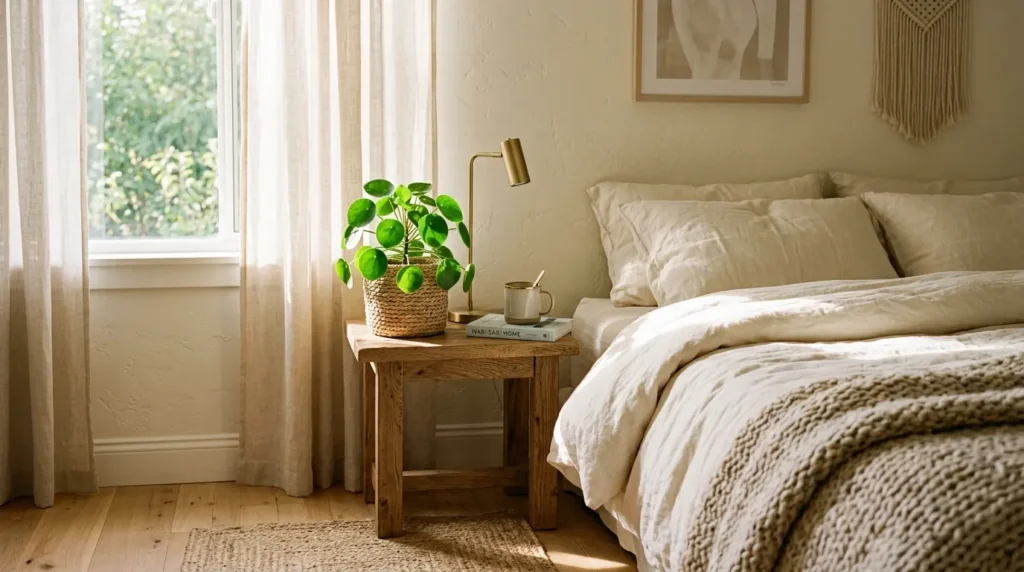
Plants can make a small bedroom feel more alive without requiring much space. Their organic shapes soften the straight lines of furniture and add subtle contrast to neutral décor.
Even a single plant can make a noticeable difference.
I’ve found that small plants are particularly effective on floating shelves, nightstands, or window ledges when appropriate.
How To Style It
Choose plants suited to the available light and your ability to care for them. Use small ceramic or woven planters that coordinate with the room.
Avoid filling every surface with greenery.
10. Keep the Room Clutter-Free
Quick Benefits
- Makes the room feel calmer
- Improves functionality
- Creates visual space
- Makes cleaning easier
- Enhances cozy décor
Why It Works
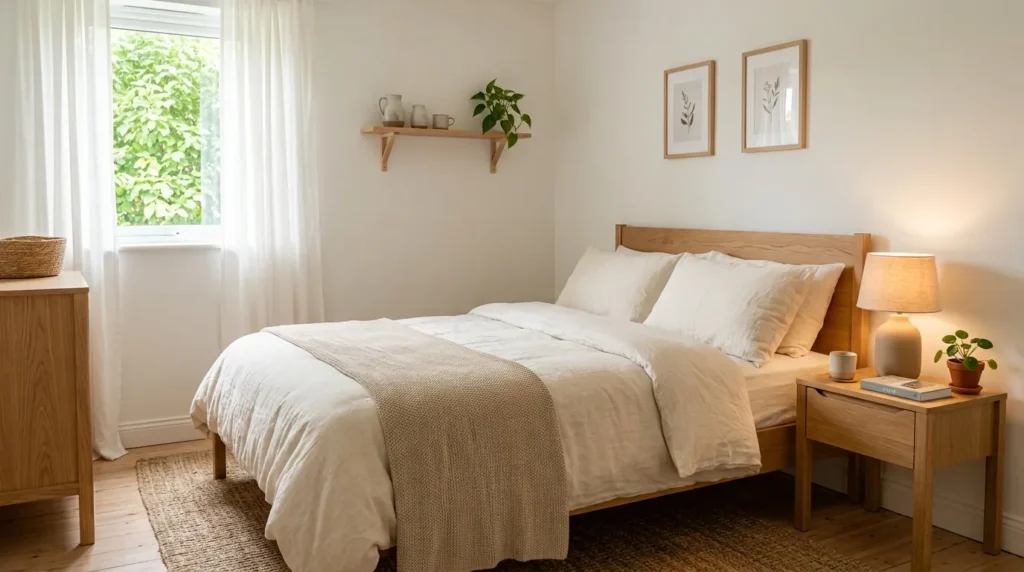
A cozy bedroom shouldn’t feel crowded. Too many objects can compete with the textures and lighting that create warmth.
Keeping surfaces relatively clear allows the bedding, rug, lighting, and natural materials to become the visual focus.
I’ve found that removing unnecessary items can make a small room feel more comfortable immediately.
How To Style It
Give everyday belongings a designated home. Use baskets, drawers, under-bed storage, and wall-mounted solutions to keep clutter contained.
Leave some negative space around furniture and décor so the room feels intentional rather than packed.
Frequently Asked Questions
How can I make a small bedroom feel cozy?
Use layered bedding, warm lighting, soft rugs, textured pillows, natural wood, warm neutral colors, and a few meaningful accessories.
What colors make a small bedroom feel warm?
Cream, warm white, beige, oatmeal, taupe, caramel, muted terracotta, and soft brown can create a welcoming atmosphere.
How can I make a small bedroom cozy without adding furniture?
Focus on textiles and lighting. Add a textured throw, pillows, curtains, a rug, warm lamps, and a small amount of greenery.
What type of lighting is best for a cozy bedroom?
Warm-toned lamps and layered lighting generally create a softer atmosphere than bright overhead lighting.
Should a small bedroom have a rug?
A rug can add softness and warmth while visually anchoring the bed. Choose a size that fits comfortably without blocking doors or furniture.
How do I keep a cozy bedroom from looking cluttered?
Use hidden storage, keep surfaces intentional, limit decorative objects, and choose multifunctional pieces whenever possible.
Conclusion
Making a small bedroom feel warm and cozy is primarily about creating layers of comfort rather than adding more things. Soft bedding, warm lighting, natural wood, textured pillows, curtains, rugs, and small touches of greenery can completely change the atmosphere.
Start with the bed and lighting because these elements have the greatest visual impact. Then introduce warmth through natural materials and textiles.
Most importantly, leave enough breathing room. A cozy bedroom should feel inviting, not crowded.
With a thoughtful combination of texture, warm tones, soft illumination, and simple organization, even a compact bedroom can become a peaceful retreat that feels comfortable every day.