Can Heavy Floating Shelves Be Anchored Safely into Hollow Drywall Alone?
Determining whether you can heavy floating shelves be anchored safely into hollow drywall alone is a common dilemma for homeowners looking to upgrade their storage. While it is tempting to believe that specialized hardware can hold substantial weight without structural support, the physics of drywall often dictates otherwise. Drywall is a gypsum-based material that crumbles under localized pressure, making it an unreliable partner for heavy, cantilevered loads.
This guide explores the technical limitations of wall anchors and provides the necessary steps to ensure your shelves remain securely attached to your walls without causing damage or falling hazards. Understanding these constraints will help you avoid costly repairs and keep your home decor displays stable and secure.
Understanding the Structural Limitations of Drywall
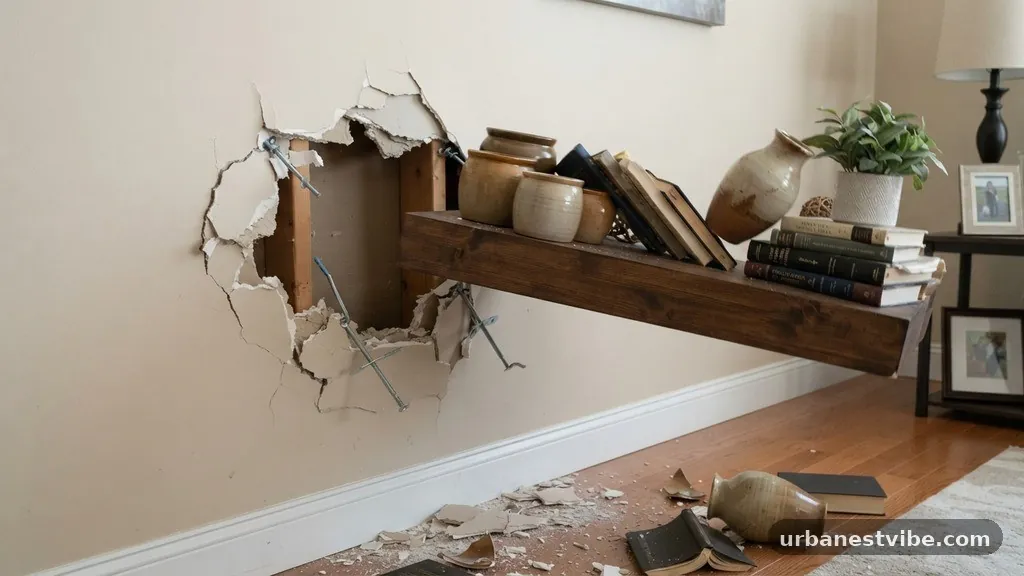
Drywall, or gypsum board, consists of a soft, chalky core sandwiched between two layers of paper. It is designed to be a wall covering, not a load-bearing surface.
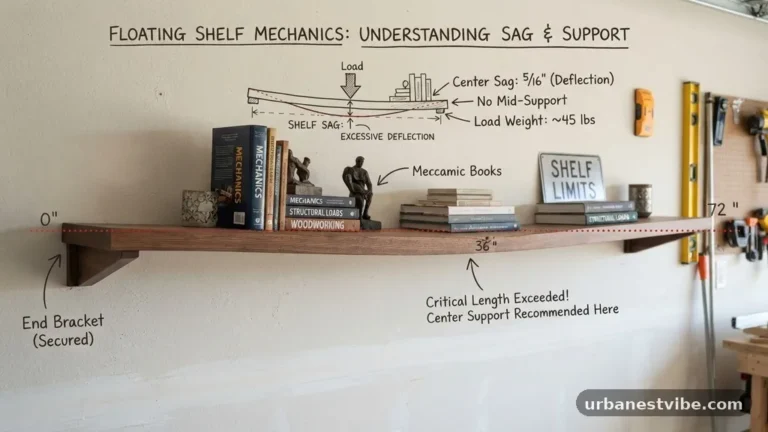
When you insert an anchor into hollow drywall, you are relying entirely on the strength of that thin gypsum layer to hold the weight of the shelf and everything you place upon it. As you add weight to a floating shelf, the force is directed outward, creating a lever effect that pulls directly on the top of the bracket.
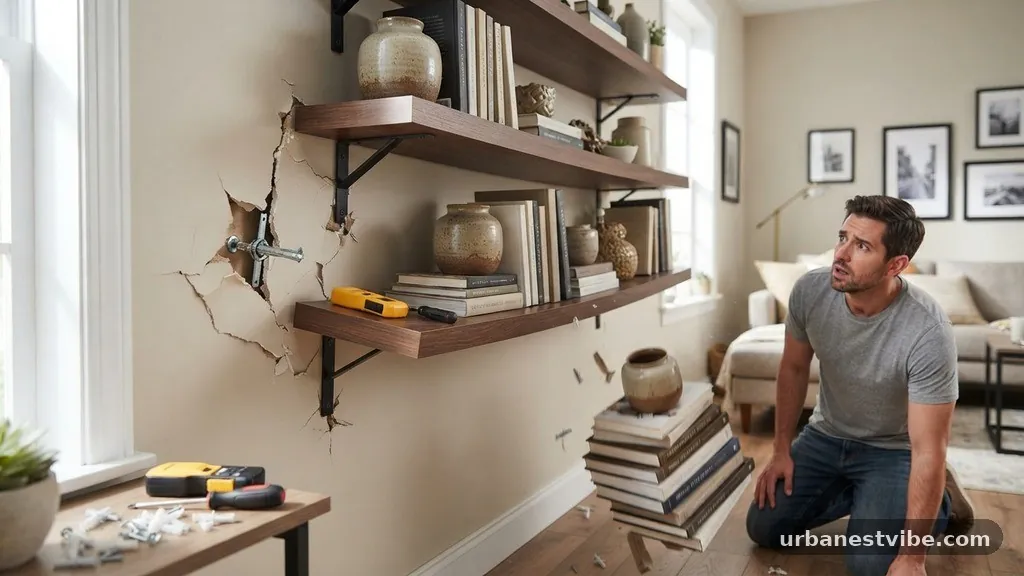
This leverage significantly amplifies the stress on the drywall. Even the most advanced toggle bolts or expansion anchors have a finite capacity before the drywall begins to compress or tear. If the load is heavy, the anchor might not pull out immediately, but it will likely create a widening hole over time, leading to a sagging shelf.
Because floating shelves lack vertical supports, the entire weight rests on the connection point. Relying on drywall alone for anything other than lightweight decor is a recipe for eventual wall failure.
Why Studs Are Essential for Heavy Loads
The most secure way to mount any shelf is to anchor it directly into the wooden studs behind the drywall. Studs are the vertical framing members that provide the structural integrity of your home’s walls.
When you drive a screw into a stud, you are biting into solid wood, which provides superior holding power compared to the brittle core of drywall. A single screw driven into a stud can support significantly more weight than the most heavy-duty expansion anchor ever could.
When planning your installation, you should always start by locating the studs using a high-quality stud finder. If your shelf design allows, align the mounting holes with these studs.
If the pre-drilled holes in your shelf bracket do not align with the stud spacing, you can often drill new holes into the metal bracket to match the studs. This extra effort ensures that your floating shelves are anchored to the house’s skeletal frame, providing the necessary stability for books, heavy ceramics, or other substantial items.
Evaluating Your Wall Anchor Options
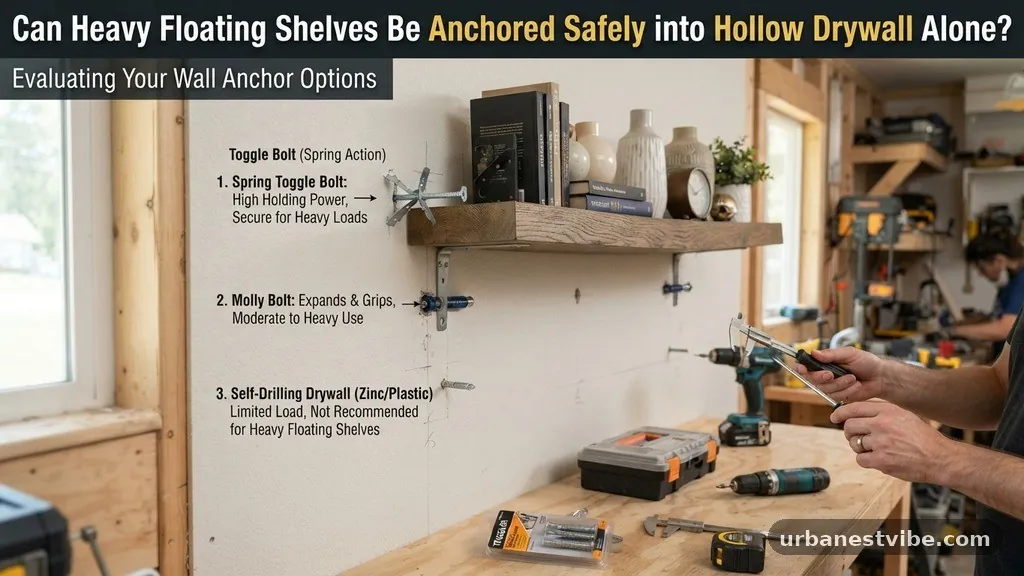
If you absolutely cannot reach a stud, you must choose the most effective hardware available. Not all anchors are created equal; simple plastic conical anchors are largely useless for floating shelves.
These rely on friction and have almost zero resistance to the pulling force exerted by a cantilevered shelf. If you attempt to use these for anything heavy, they will almost certainly fail, leaving you with large, unsightly holes in your wall.
For hollow walls, toggle bolts are the gold standard. A toggle bolt works by spreading the load over a larger surface area behind the drywall. When you insert the toggle through the hole, it flips open, creating a solid backstop against the rear of the drywall.
This distributes the pressure more effectively than a standard screw or plastic plug. However, even with toggle bolts, you are still limited by the strength of the drywall itself. You can find more technical details on hardware capacities at the National Park Service technical preservation guidelines regarding structural attachments, which emphasize that substrate integrity is the primary factor in any mounting project.
Step One: Locating and Marking Your Studs
Before touching a drill, you must map out the wall. Use a reliable stud finder to identify the centers of the studs in your desired location. Mark these spots clearly with a pencil.
If you are mounting a long shelf, you might find that only one or two holes align with the studs. This is perfectly normal. You can use a combination of wood screws for the stud locations and toggle bolts for the hollow areas.
Common mistakes here include trusting a low-quality stud finder or failing to account for the thickness of the drywall. Some stud finders struggle with textured surfaces or deep-set studs.
It is often helpful to verify your find by checking for screws or nails in the baseboard, which are usually driven into the studs. Once you have your marks, hold the bracket against the wall and use a level to ensure it is perfectly horizontal before making your final mounting points.
Step Two: Preparing the Mounting Holes
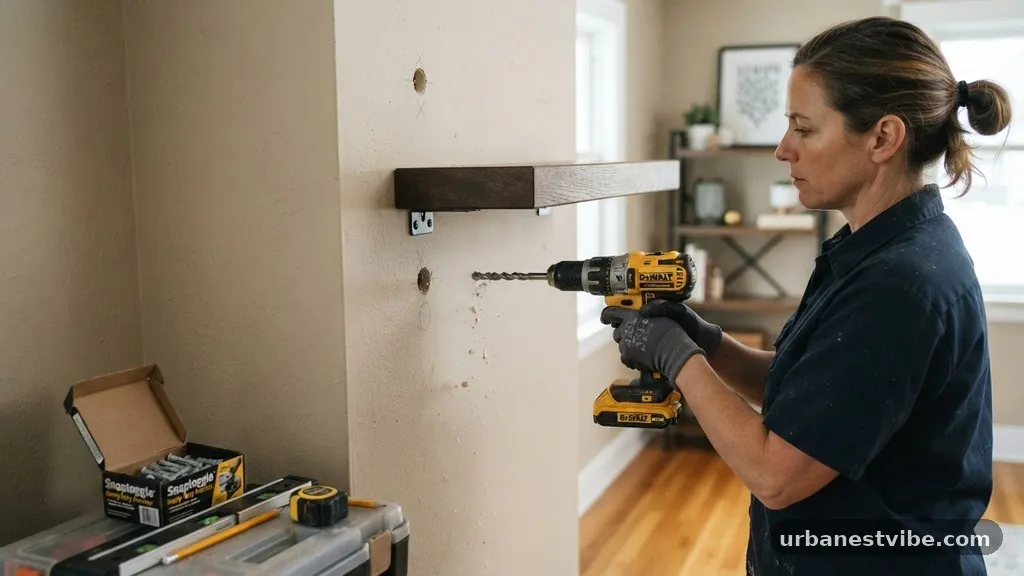
Precision is key when preparing your holes. If you are drilling into a stud, use a drill bit slightly smaller than the diameter of your screw shank to create a pilot hole.
This prevents the wood from splitting and makes it easier to drive the screw in straight. If you are drilling into hollow drywall for a toggle bolt, you must use a bit size that matches the manufacturer’s recommendation for the toggle.
A frequent error is drilling the hole too large, which compromises the fit of the anchor. If the hole is too big, the anchor will spin or pull through the drywall, rendering the connection useless.
Always start with a smaller bit and widen the hole gradually if necessary. Keep the drill steady and perpendicular to the wall to ensure the bracket sits flush against the surface.
Step Three: Installing the Hardware Correctly
When installing your hardware, take your time to ensure everything is secure. For stud locations, drive the screws in until the bracket is tight against the wall, but be careful not to overtighten and strip the wood. For toggle bolts, insert the bolt through the bracket, attach the toggle mechanism, and push it through the hole until you hear it snap open behind the wall.
Pull the bolt toward you while tightening to ensure the toggle is firmly seated against the back of the drywall. If the bolt feels loose or spins without tightening, the toggle may not have opened properly.
In this case, you must remove it and try again. Never force a bolt that refuses to catch; you risk damaging the drywall hole further, making it impossible for any anchor to hold securely.
Step Four: Attaching the Floating Shelf
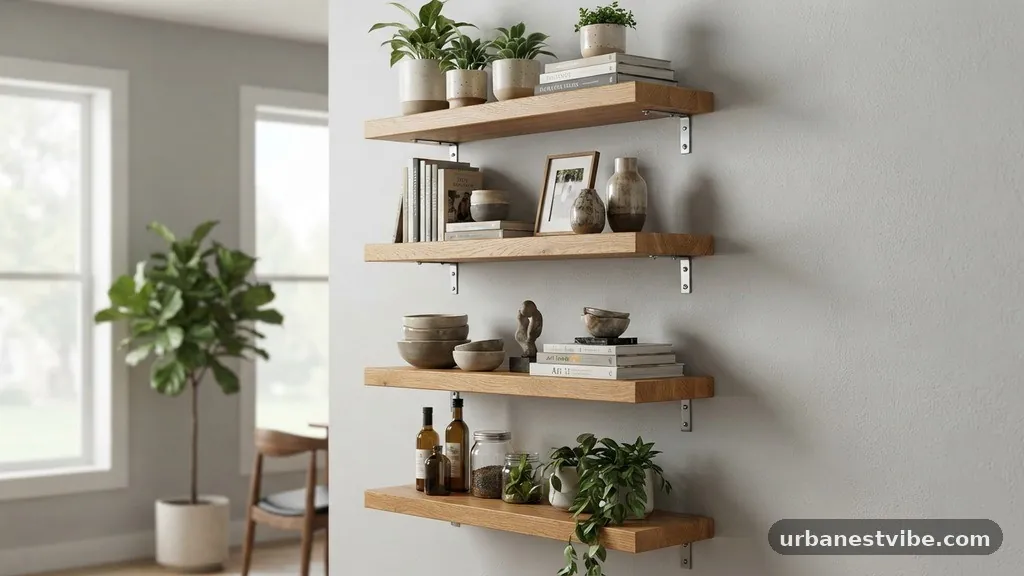
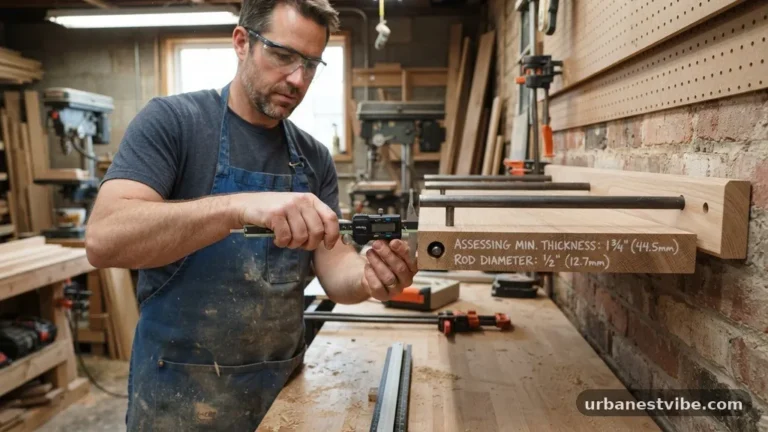
With the bracket securely mounted, you can now slide the shelf onto the supports. Floating shelves typically consist of a hollow box that slides over a metal rod or plate bracket.
Ensure the shelf slides on smoothly without forcing it. If the bracket is slightly misaligned, you might need to adjust the mounting screws slightly to ensure the shelf slides on perfectly.
Once the shelf is in place, check for any gaps between the shelf and the wall. If there is a noticeable gap, it could indicate that the bracket is not flush with the wall or that the wall itself is bowed.
Tighten the set screws located on the underside of the shelf to lock it onto the bracket. This prevents the shelf from sliding off accidentally and adds a final layer of stability to the connection.
Step Five: Testing the Weight Distribution
Before loading your shelf with heavy items, perform a test. Apply moderate pressure to the shelf with your hands to see if there is any movement or flexing in the wall.
If you notice the bracket pulling away from the drywall, you have not achieved a sufficient connection. Do not proceed to load the shelf if you detect any instability.
It is also important to consider the depth of your shelf. A deeper shelf creates more leverage, which puts significantly more strain on the anchors.
If your shelf is deep, the weight of items placed toward the front edge will be much higher than those placed against the wall. Distribute your items carefully, keeping the heaviest objects as close to the wall as possible to minimize the torque on the mounting hardware.
Common Mistakes to Avoid
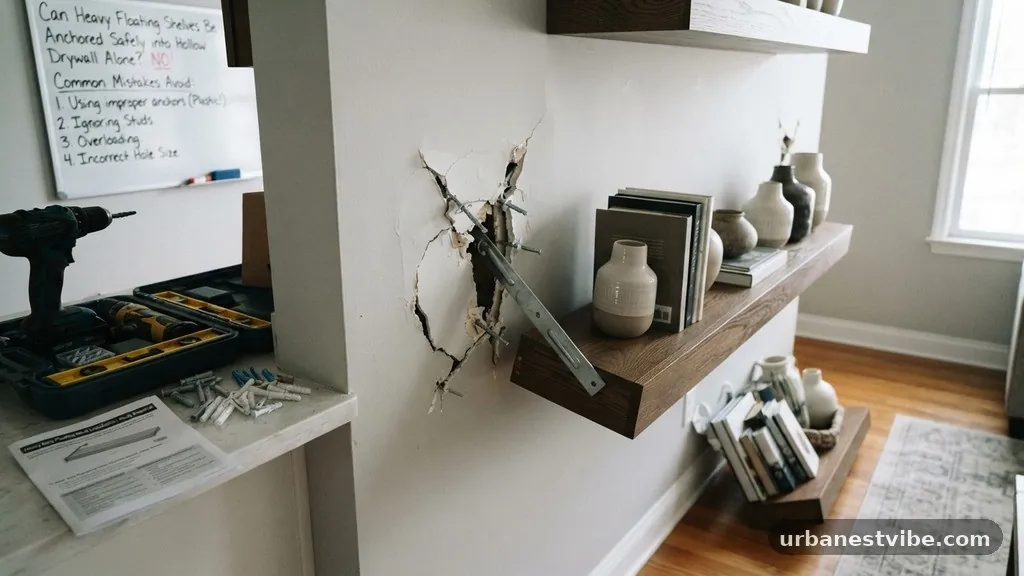
One of the biggest mistakes people make is underestimating the weight of their own belongings. A stack of books, for instance, is surprisingly heavy and can easily exceed the capacity of even the best drywall anchors.
Another mistake is ignoring the importance of the bracket design. Some brackets are simply too flimsy to support weight, regardless of how well they are anchored to the wall.
Avoid using adhesive strips or double-sided tape as a primary mounting method for floating shelves. These products are meant for lightweight wall art, not for structures that hold weight.
Similarly, don’t rely on “molly bolts” or standard plastic anchors for heavy-duty applications. These are designed for light loads and will eventually fail under the stress of a heavy floating shelf, potentially causing damage to your wall and your belongings.
Managing Expectations for Heavy Loads
If you have a collection of heavy items, consider whether a floating shelf is truly the right choice for your display. Floating shelves are inherently limited by their cantilevered design. If you need to store heavy items, such as large appliances or stacks of heavy books, a shelf with visible corbels or brackets that provide vertical support is a much safer option.
Vertical supports redistribute the weight downward into the wall, rather than pulling outward. This change in physics makes the installation significantly more reliable and capable of holding much higher loads.
If you are committed to the floating look, keep your expectations realistic. Limit your items to lighter decor, such as small plants, picture frames, or decorative objects, and avoid overloading the shelf beyond its manufacturer-rated capacity.
Frequently Asked Questions
What is the maximum weight a toggle bolt can hold in drywall?
While toggle bolts are the strongest option for hollow walls, their capacity depends on the thickness and condition of the drywall. In a typical half-inch drywall sheet, a correctly installed toggle bolt can often hold 50 to 75 pounds, but this is a theoretical maximum.
In practice, you should never push the limits of your drywall, as the material itself is the weak point. Always aim to stay well below these numbers to account for the dynamic load of placing and removing items.
Can I use liquid anchors or epoxy to strengthen the drywall hole?
Using epoxy or wall-repair compounds can help patch a hole, but it does not add structural strength to the gypsum core. If the drywall has already crumbled, filling it with epoxy will not create a strong enough base to hold a heavy anchor. It is almost always better to move the shelf to a new location where the drywall is intact or to relocate the installation so that it hits a stud.
Are there specific types of floating shelves that are easier to mount?
Yes, some floating shelves feature a long, continuous back plate that allows you to drive multiple screws into different studs. This design is far superior to brackets that only have two or three holes, as it spreads the load across multiple framing members. When shopping, look for shelves with pre-drilled holes that align with standard 16-inch stud spacing.
How do I know if my drywall is damaged behind the shelf?
If you notice cracking in the paint or the drywall around the bracket, or if the shelf has developed a downward tilt, your drywall is likely failing. This indicates that the anchors are pulling through the gypsum. You should remove the shelf immediately, patch the holes, and re-evaluate your installation method, preferably by securing the shelf to the studs.
Conclusion
Successfully installing heavy shelving requires a clear understanding of the limitations of your wall materials. While it is technically possible to hang lighter items using high-quality toggle bolts, the idea that you can heavy floating shelves be anchored safely into hollow drywall alone for substantial loads is a misconception that often leads to property damage. The most reliable approach is to identify the studs and prioritize a mechanical connection to the wood frame of your home.
By taking the time to measure correctly, use the right hardware, and respect the physical limits of your walls, you can create a beautiful and secure display that lasts for years. If you find that your desired shelf location lacks studs, consider choosing a lighter shelf or opting for a style that includes vertical supports to ensure your wall remains intact. Feel free to share your own experiences or ask further questions about your specific installation project in the comments below.