How to Organize a Small Bedroom Without a Closet
A small bedroom without a closet can feel challenging, especially when clothing, shoes, bedding, accessories, and everyday essentials all need a place to live. But a missing closet doesn’t mean you have to sacrifice style or organization.
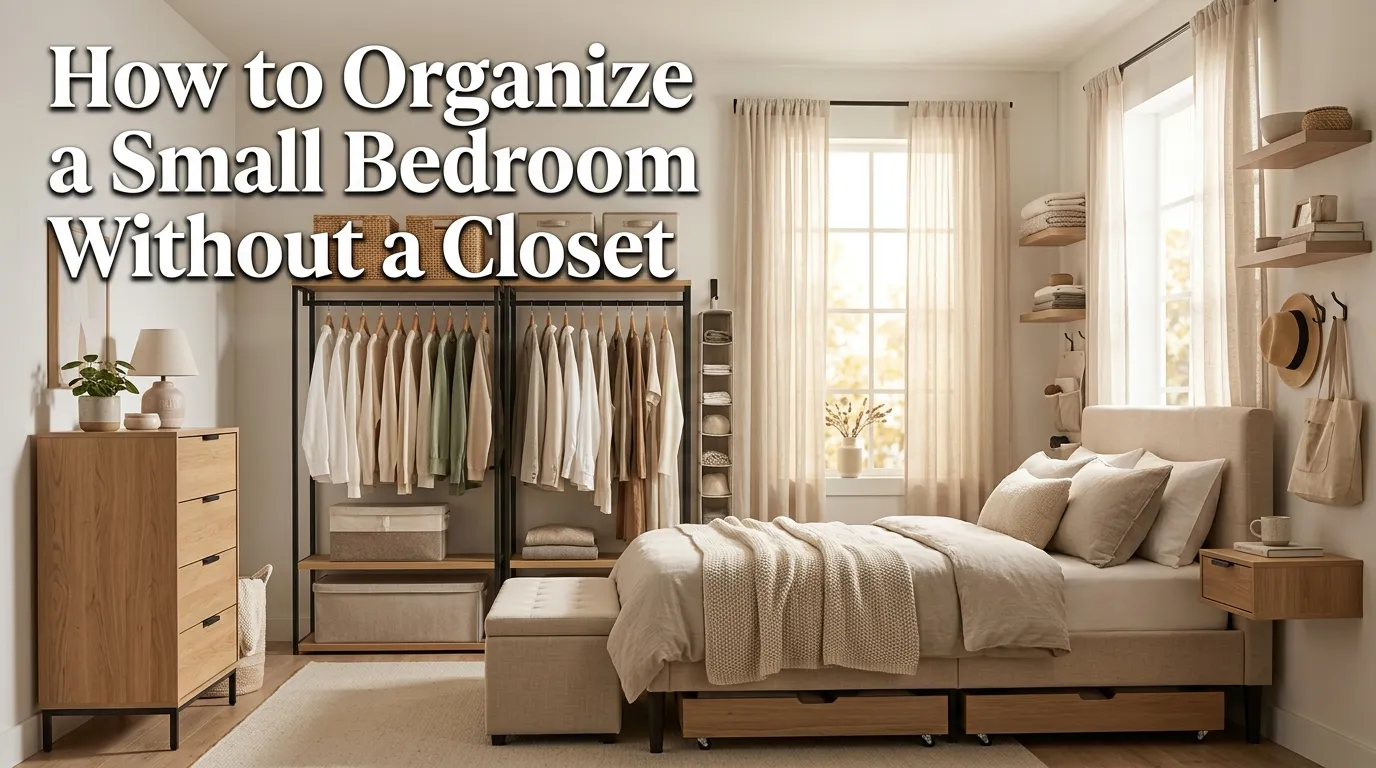
The key is to think beyond traditional storage. Instead of relying on one large closet, you can combine several smaller solutions throughout the room. A slim clothing rack can handle everyday garments, while under-bed containers can store seasonal pieces. Wall-mounted shelves, hooks, baskets, and multifunctional furniture can use vertical space that would otherwise remain empty.
In my experience, the most effective small-bedroom organization systems are the ones that make frequently used items easy to reach while keeping less frequently used belongings out of sight.
It’s also important to avoid filling every available corner with storage furniture. Too many bulky pieces can make a small room feel even smaller. Choosing furniture with multiple functions allows you to increase storage without sacrificing valuable floor space.
Whether you’re organizing a rental, guest room, studio apartment, or compact bedroom, these ideas can help you create a space that feels orderly, comfortable, and intentional.
Table of Contents
- Add a Slim Clothing Rack
- Use Under-Bed Storage
- Install Floating Shelves
- Hang Wall Hooks
- Choose a Storage Bed
- Add a Narrow Dresser
- Use Over-the-Door Storage
- Create a Clothing Ladder
- Organize With Baskets
- Use a Multipurpose Bench
1. Add a Slim Clothing Rack
Quick Benefits
- Creates hanging space
- Uses little floor area
- Keeps clothing accessible
- Works in rentals
- Easy to move
Why It Works
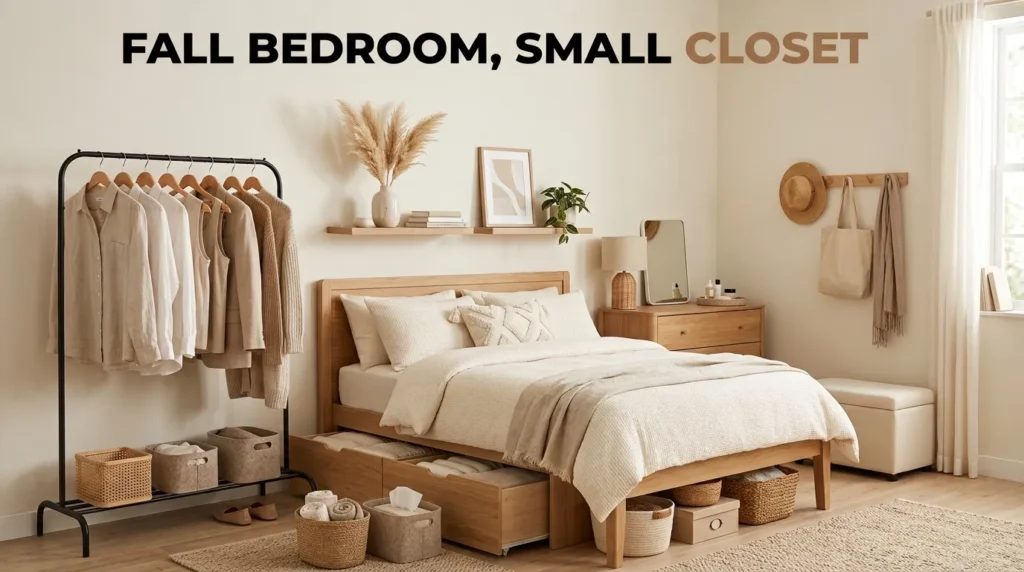
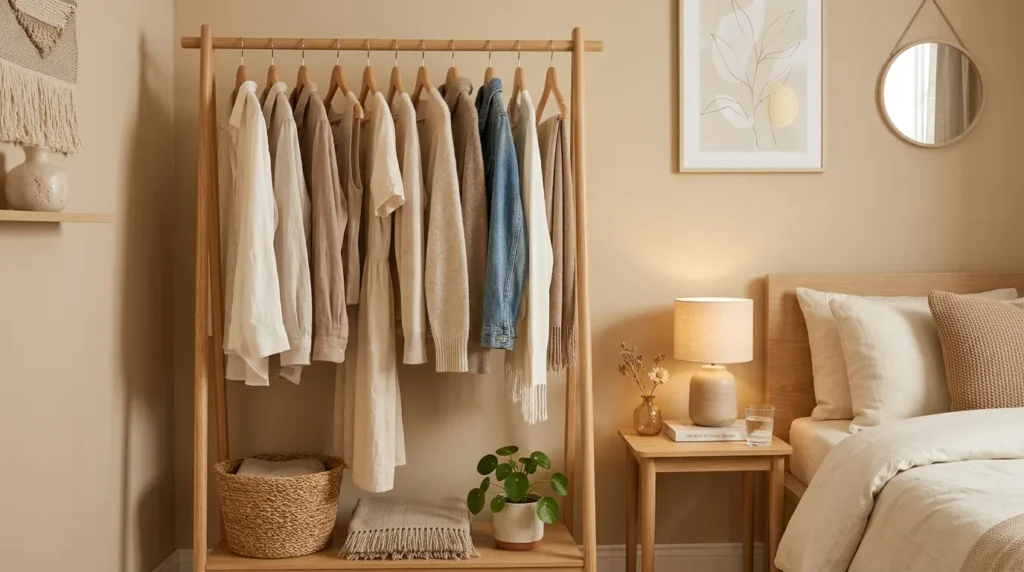
A slim clothing rack can effectively replace part of the function of a traditional closet without requiring major changes to the room.
It provides hanging space for coats, dresses, shirts, and frequently worn clothing while keeping garments visible and easy to access.
I’ve found that choosing a simple, streamlined rack prevents the room from looking like a temporary storage area.
How To Style It
Choose a narrow rack with a clean metal or wood frame. Keep only frequently worn clothing on it.
Arrange garments by type or color and leave some open space so the rack doesn’t look overcrowded.
2. Use Under-Bed Storage
Quick Benefits
- Uses hidden space
- Keeps floors clear
- Stores seasonal items
- Ideal for small rooms
- Easy to access
Why It Works
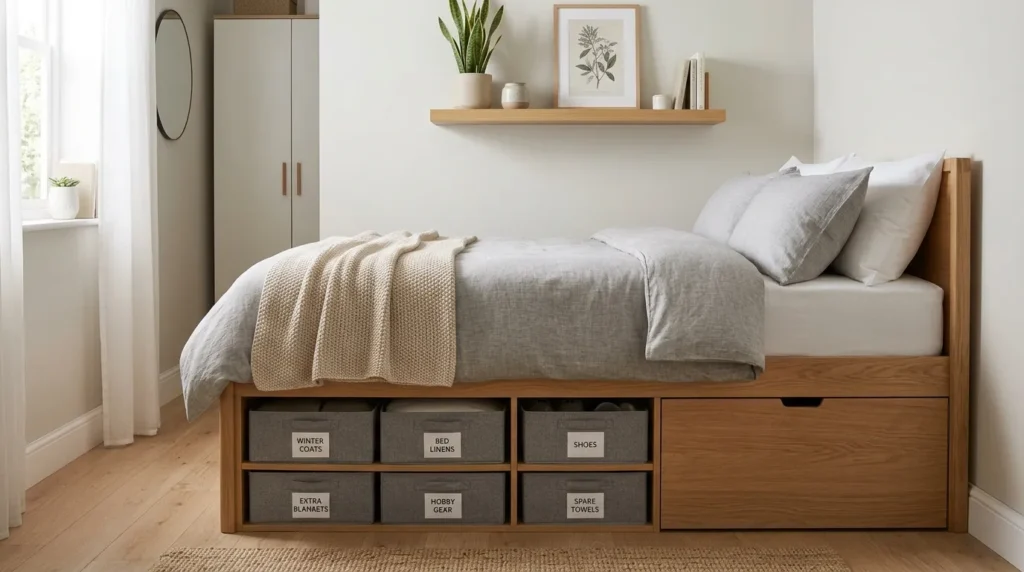
The space beneath your bed is one of the most valuable storage areas in a bedroom without a closet.
It can hold seasonal clothing, extra bedding, shoes, luggage, or other items that don’t need to be accessed every day.
I’ve found that under-bed storage is especially effective because it adds capacity without taking additional floor space.
How To Style It
Use shallow containers that fit comfortably beneath the bed. Choose lidded boxes or zippered fabric bags to protect stored belongings.
Label containers so you don’t have to pull everything out when searching for something.
3. Install Floating Shelves
Quick Benefits
- Uses vertical space
- Keeps floors open
- Adds display space
- Works above furniture
- Easy to customize
Why It Works
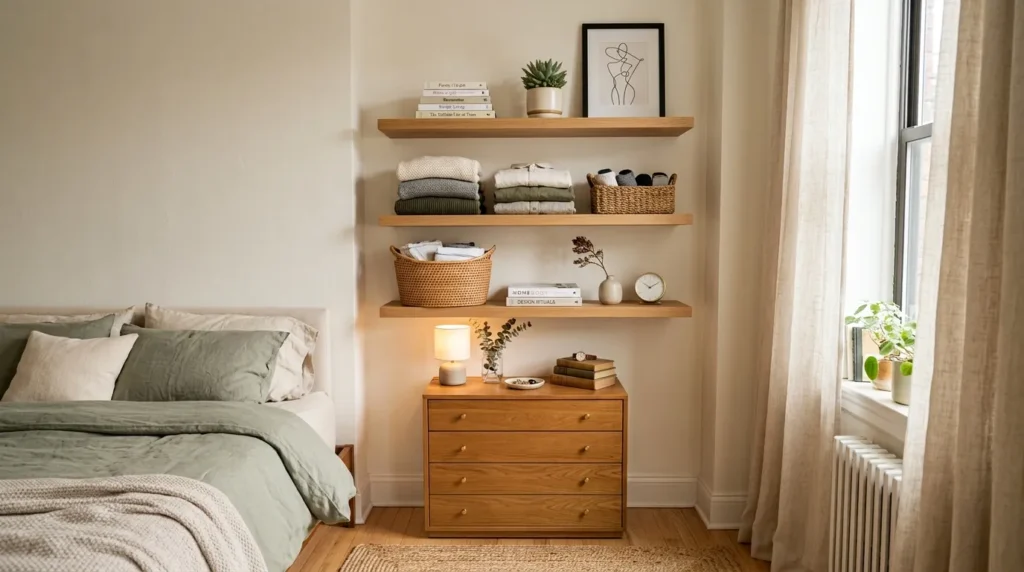
Walls provide valuable storage opportunities in a small bedroom. Floating shelves can hold folded clothing, accessories, books, baskets, and decorative objects without consuming floor space.
They also create visual interest while providing practical storage.
I’ve found that several smaller shelves can sometimes work better than one large shelving unit in a compact room.
How To Style It
Install shelves above a dresser, desk, or unused section of wall where practical. Use baskets to contain smaller items.
Keep decorative objects limited so the shelves remain functional rather than becoming another source of visual clutter.
4. Hang Wall Hooks
Quick Benefits
- Extremely space-efficient
- Easy access
- Affordable
- Uses unused walls
- Good for accessories
Why It Works
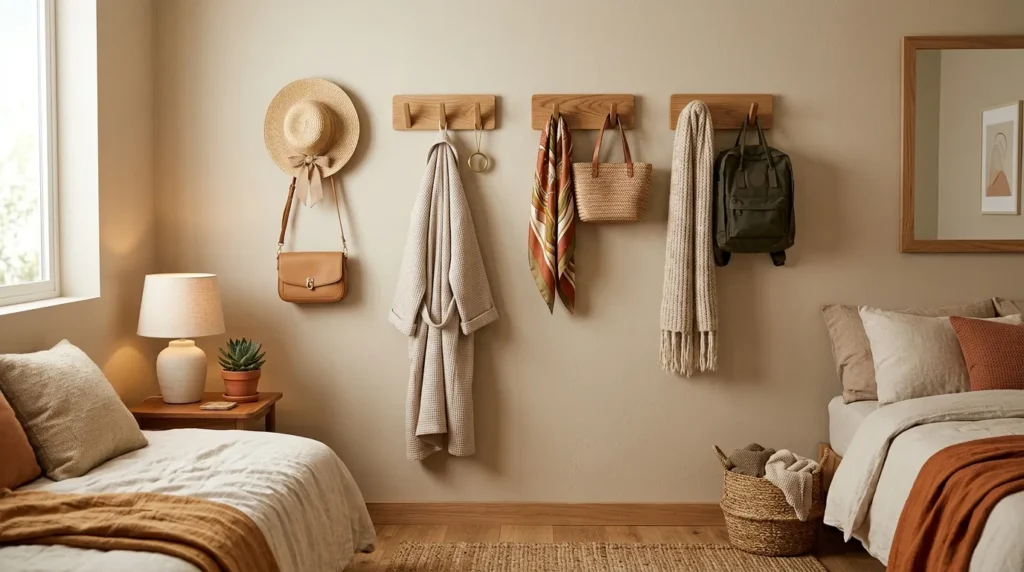
Hooks are a simple way to turn empty wall areas into functional storage. They can hold bags, hats, scarves, robes, jackets, and frequently used accessories.
Because they require very little depth, they work particularly well in narrow bedrooms.
I’ve found that a row of coordinated hooks can look intentional while providing surprisingly useful storage.
How To Style It
Choose hooks that complement the room’s hardware and furniture finishes. Install them at a convenient height and avoid overcrowding.
Use matching hangers or baskets nearby to create a cohesive organization system.
5. Choose a Storage Bed
Quick Benefits
- Maximizes floor space
- Provides hidden storage
- Reduces furniture needs
- Keeps belongings organized
- Works well in tiny rooms
Why It Works
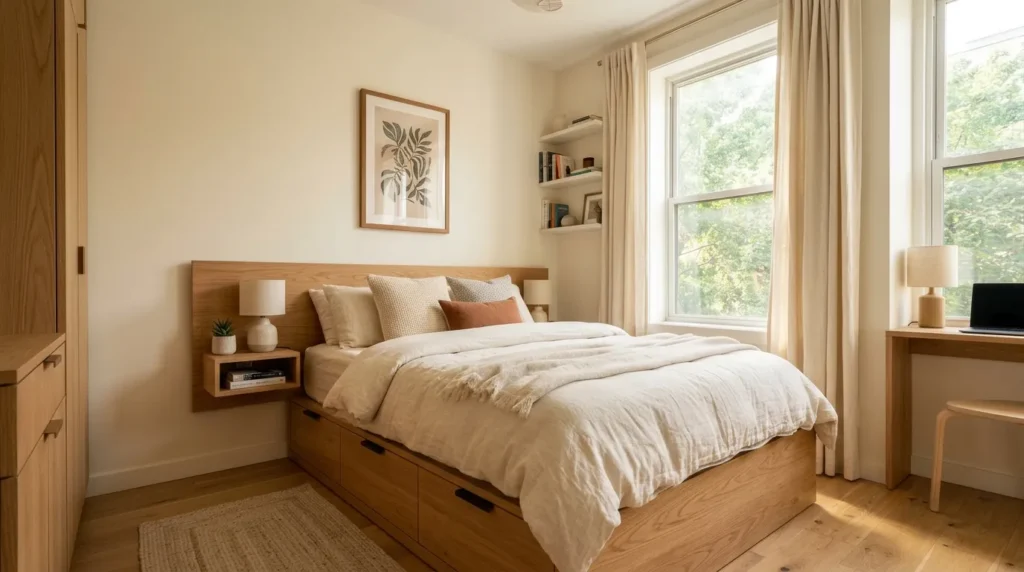
A storage bed can provide a large amount of hidden capacity without adding another bulky cabinet.
Depending on the design, storage may be available through drawers, lift-up compartments, or built-in shelving.
I’ve found that multifunctional furniture is one of the smartest approaches when a bedroom has limited square footage.
How To Style It
Choose a streamlined bed with storage that matches the room’s proportions. Use the compartments for bulky or less frequently used belongings.
Keep the surrounding furniture minimal to preserve an open feeling.
6. Add a Narrow Dresser
Quick Benefits
- Adds folded storage
- Uses limited floor space
- Provides a surface
- Keeps clothing organized
- Works in tight layouts
Why It Works
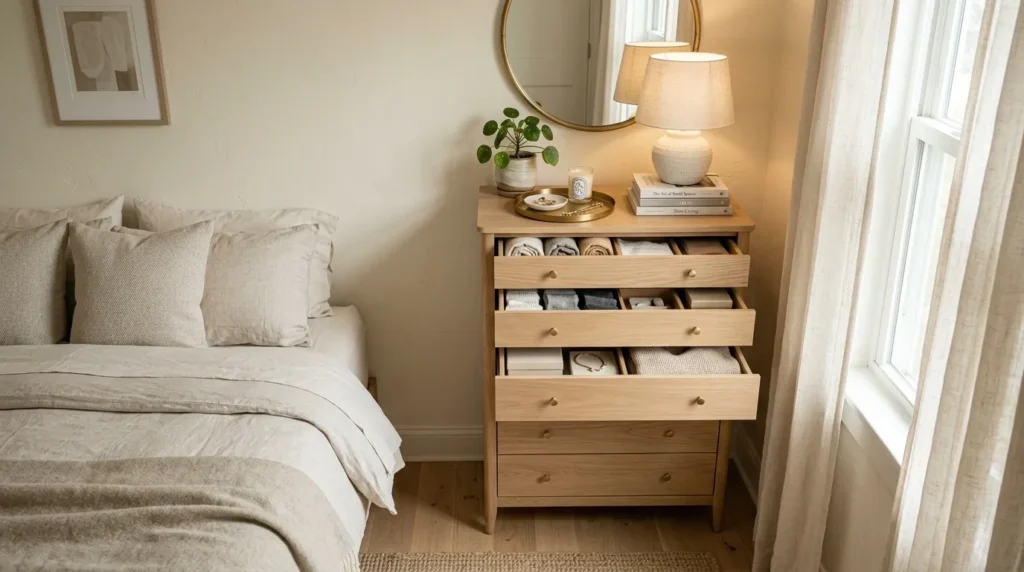
A narrow dresser can provide essential drawer storage without consuming as much floor space as a full-size wardrobe. Look for a tall, slim design that uses vertical space efficiently.
Drawers are particularly useful for folded clothing, undergarments, accessories, and smaller everyday items.
I’ve found that choosing a dresser with clean lines helps a small bedroom feel less visually crowded.
How To Style It
Measure the available wall carefully before buying. Choose a dresser that leaves enough clearance for drawers to open comfortably.
Use the top for only a few purposeful items, such as a mirror, small lamp, tray, or plant.
7. Use Over-the-Door Storage
Quick Benefits
- Uses overlooked space
- Requires little room
- Great for accessories
- Easy to install
- Keeps items accessible
Why It Works
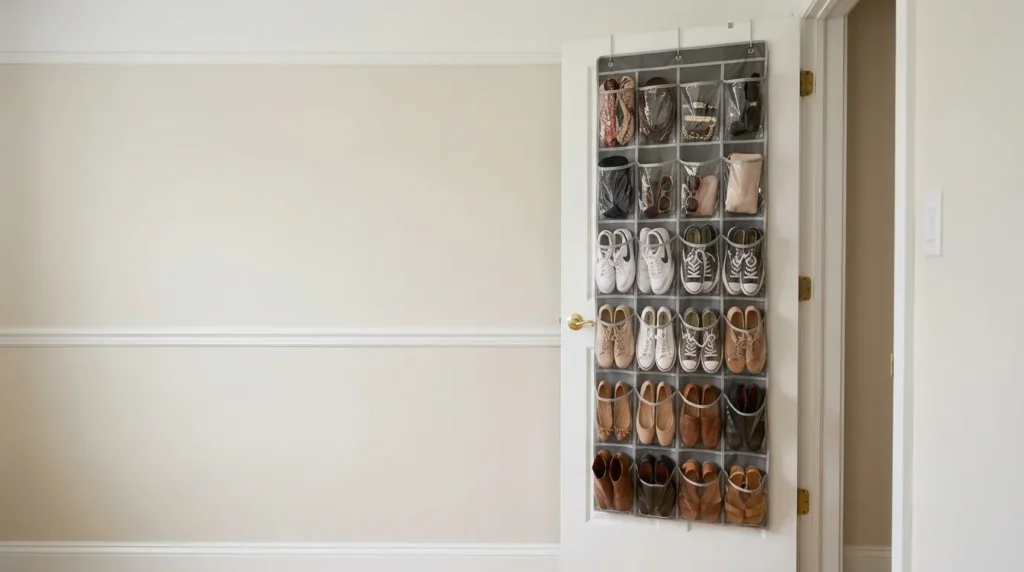
The back of a bedroom door is often completely unused. An over-the-door organizer can turn that forgotten surface into practical storage for shoes, accessories, scarves, beauty items, or small belongings.
This is especially useful when floor space is extremely limited.
I’ve found that hidden door storage can significantly increase organization without making the main room feel more crowded.
How To Style It
Choose an organizer with compartments that match the items you need to store. Avoid overloading it because excessive weight can affect the door.
Keep frequently used items toward the upper and middle sections for easier access.
8. Create a Clothing Ladder
Quick Benefits
- Takes little space
- Adds decorative interest
- Provides hanging storage
- Easy to move
- Works without drilling
Why It Works
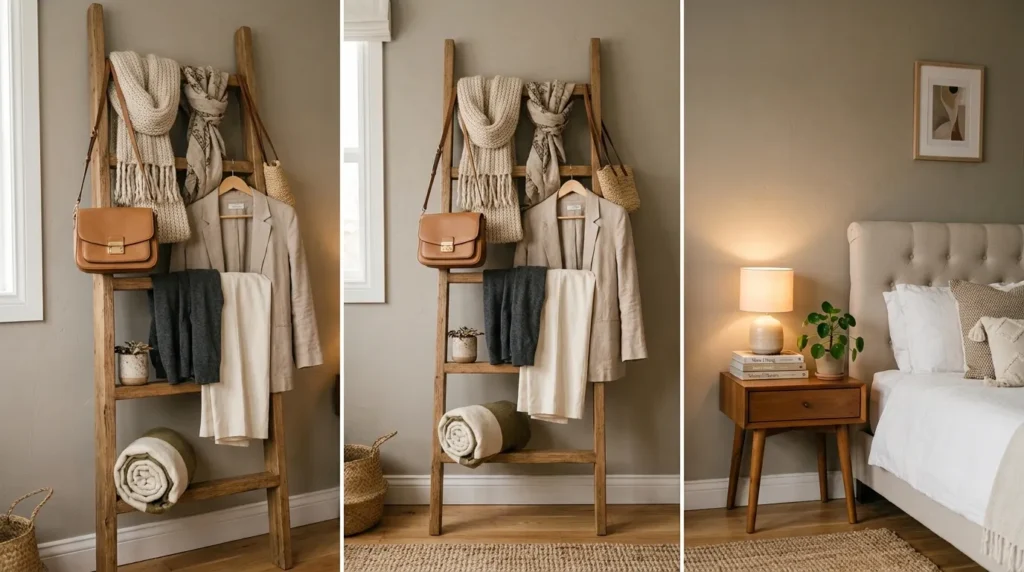
A decorative clothing ladder offers a lightweight alternative to a traditional garment rack. It can hold scarves, blankets, handbags, hats, or a small selection of frequently worn clothing.
Because it leans vertically, it uses very little floor depth.
I’ve found that a simple wooden ladder can double as both storage and décor.
How To Style It
Choose a sturdy ladder designed or suitable for decorative storage. Lean it securely against an appropriate wall.
Use a small number of hooks or hanging items so the ladder maintains its clean appearance.
9. Organize With Baskets
Quick Benefits
- Hides visual clutter
- Groups similar items
- Adds texture
- Easy to move
- Works on shelves
Why It Works
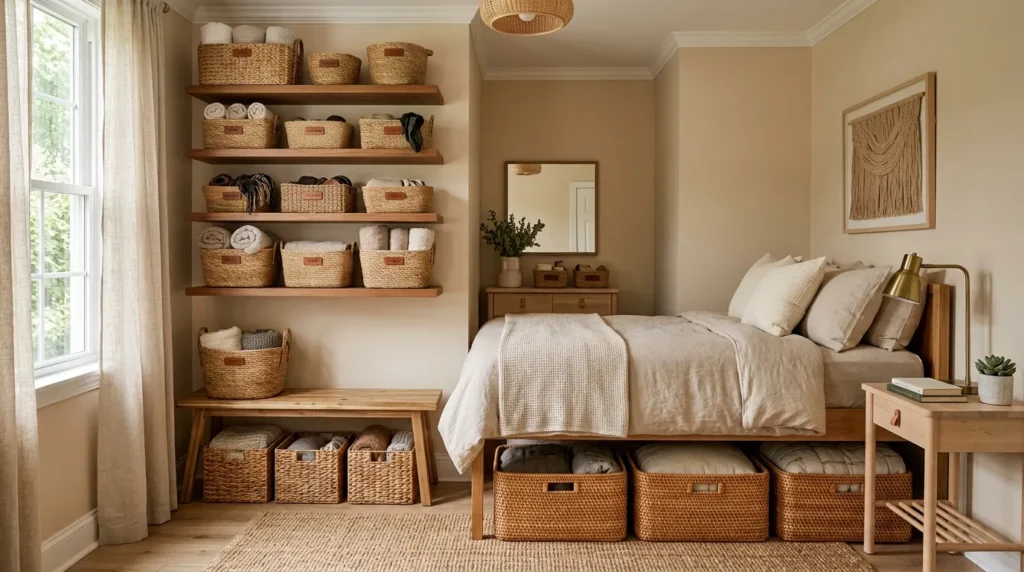
Baskets are useful when you need flexible storage for items that don’t fold or stack neatly. They can hold accessories, extra linens, shoes, bags, or miscellaneous belongings.
Natural woven baskets also add warmth to a bedroom that might otherwise rely heavily on hard furniture surfaces.
I’ve found that using similar baskets creates a much more organized appearance.
How To Style It
Choose baskets in related materials and colors. Label them if they’re used for hidden storage.
Place larger baskets under a console or beside furniture while using smaller versions on shelves.
10. Use a Multipurpose Bench
Quick Benefits
- Adds seating
- Provides storage
- Uses one footprint
- Creates a finished look
- Useful for everyday routines
Why It Works
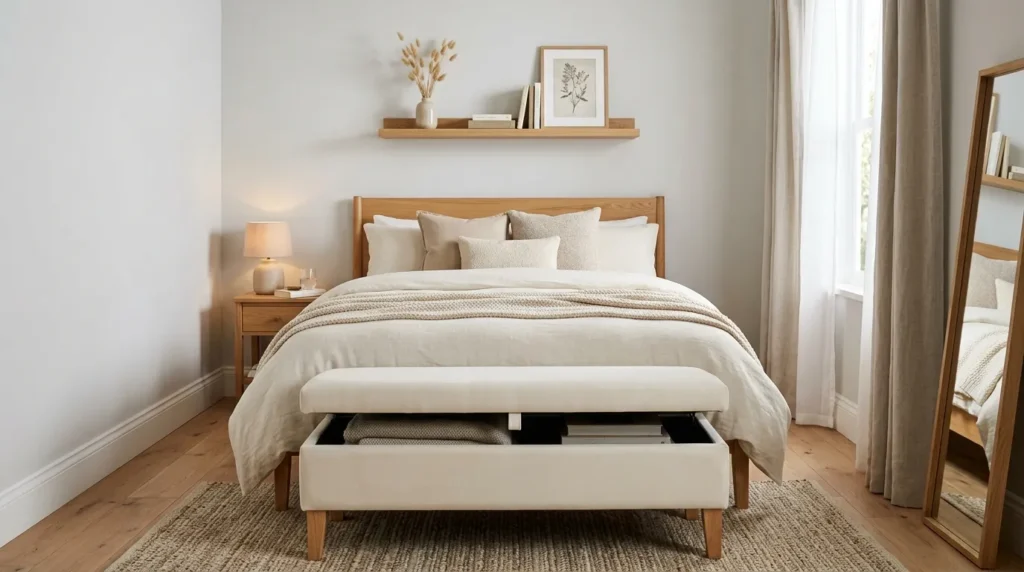
A storage bench can perform several functions at once. It can provide a place to sit while dressing, store extra bedding, or hold accessories.
In a small bedroom, combining functions helps reduce the number of individual furniture pieces.
I’ve found that a bench at the foot of the bed can make the room feel more complete without requiring a large cabinet.
How To Style It
Choose a slim bench with concealed storage or a lower shelf. Keep the top relatively clear so it remains useful for seating.
Add one soft cushion or folded throw for comfort without creating unnecessary clutter.
Frequently Asked Questions
How do you store clothes in a bedroom without a closet?
Use a combination of slim clothing racks, narrow dressers, storage beds, under-bed containers, shelves, baskets, and over-the-door organizers.
What is the best storage for a tiny bedroom?
Multifunctional furniture is particularly useful. Storage beds, narrow dressers, benches with storage, and wall-mounted shelving can provide capacity without taking up excessive floor space.
How can I make a small bedroom look less cluttered?
Keep surfaces clear, use matching storage containers, store seasonal items out of sight, and limit the amount of furniture in the room.
Where should I store clothes without a wardrobe?
Frequently worn clothes can go on a slim clothing rack, while folded clothing can be stored in drawers, baskets, shelves, or under-bed containers.
How can I use wall space for bedroom storage?
Install floating shelves, hooks, pegboards, wall-mounted organizers, or a secure hanging system where appropriate.
How do I organize shoes without a closet?
Use under-bed shoe storage, a narrow shoe rack, over-the-door organizers, or designated baskets to keep pairs together and off the floor.
Conclusion
A bedroom without a closet can still be organized, comfortable, and stylish. The key is to stop thinking about storage as something that only happens inside a traditional wardrobe.
Use vertical walls, the space beneath your bed, the back of doors, and multifunctional furniture to create several smaller storage zones. A slim clothing rack can handle hanging garments, while drawers, baskets, shelves, and hidden compartments can take care of everything else.
The most effective setup will depend on what you own and how you use your room. Start by identifying the categories that need the most storage, then choose solutions that fit your available space.
With a thoughtful combination of compact furniture and smart storage, even a small bedroom without a closet can feel organized, open, and easy to maintain.