How to Decorate a Living Room with Neutral Accessories
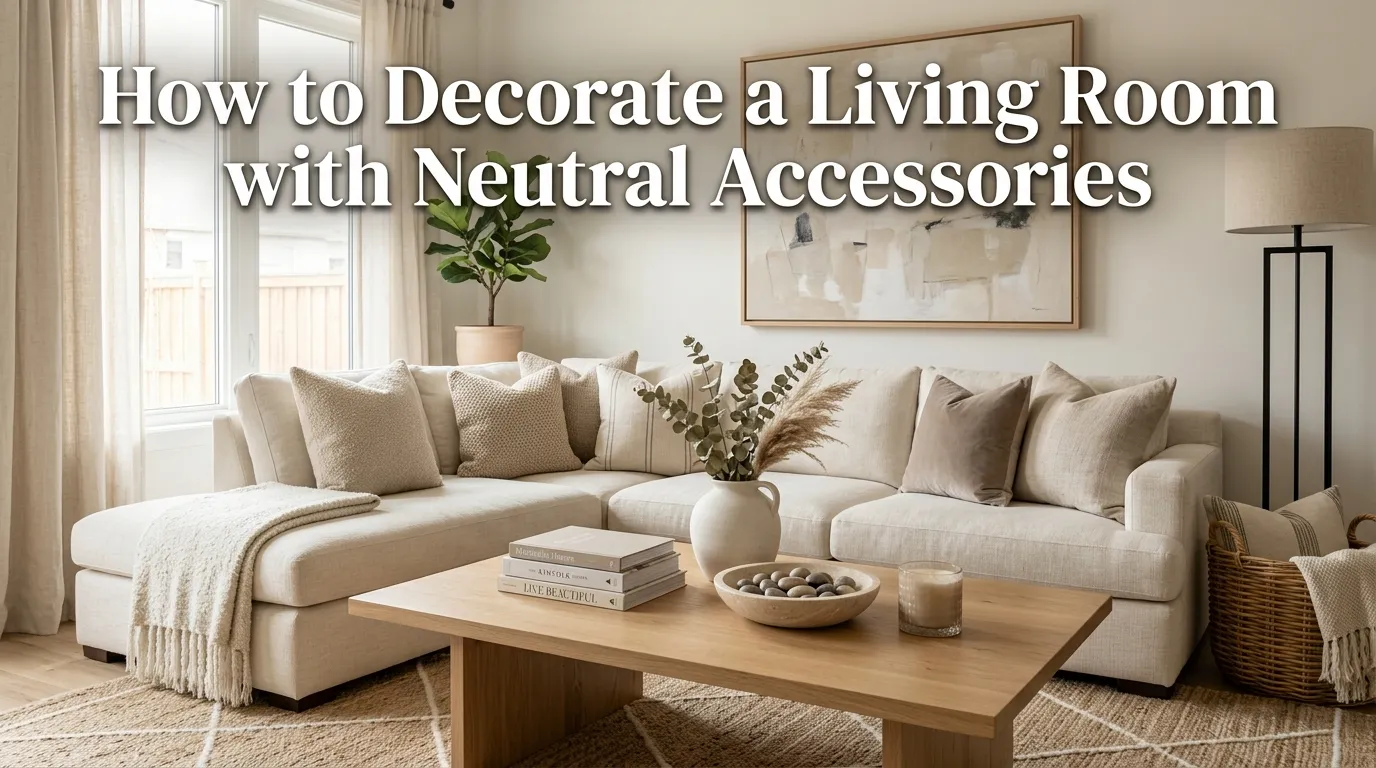
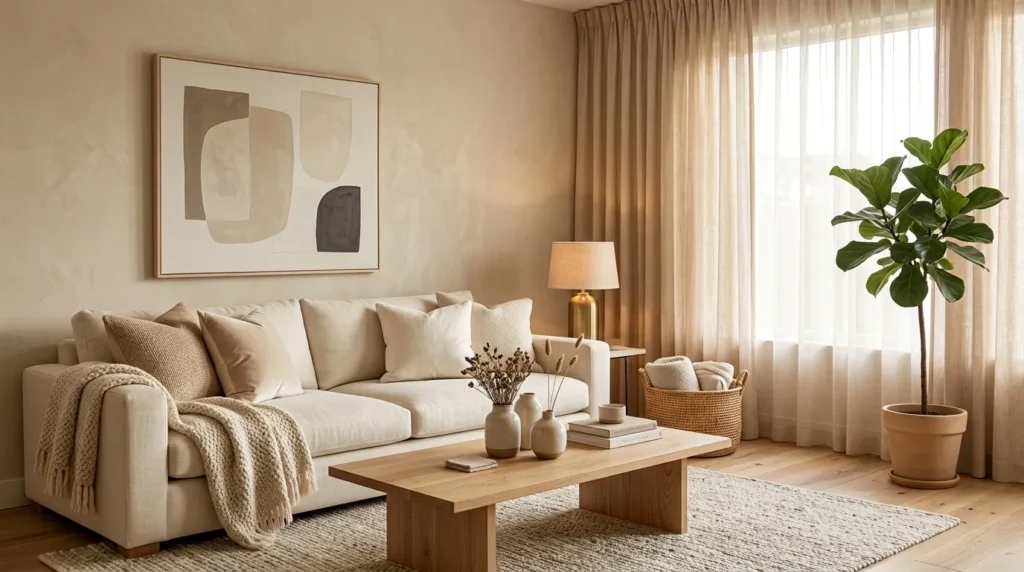
Neutral accessories can make a living room feel calm, sophisticated, and welcoming without relying on bold colors. The beauty of a neutral palette is that it gives you plenty of flexibility to layer different textures, materials, and shades while maintaining a cohesive appearance.
A neutral room doesn’t have to mean everything is white or beige. Warm ivory, cream, taupe, greige, soft brown, muted gray, and natural wood can all contribute to a layered neutral scheme.
In my experience, the secret to making neutral décor interesting is texture. When color is intentionally restrained, materials such as linen, wool, rattan, ceramic, wood, boucle, and woven fibers become much more important.
Accessories are also an easy way to refresh your living room without replacing major furniture pieces. A new collection of cushions, a textured throw, a ceramic vase, or a carefully styled coffee table can change the atmosphere considerably.
The goal is to create variation without visual clutter. By combining different heights, shapes, materials, and neutral tones, you can create a living room that feels collected rather than overly coordinated.
These ideas will help you build a warm and sophisticated neutral living room using accessories that are both beautiful and practical.
Table of Contents
- Layer Neutral Cushions
- Add a Textured Throw
- Style With Ceramic Vases
- Use Natural Wood Accents
- Introduce Woven Baskets
- Create a Neutral Gallery Wall
- Add Soft Area Lighting
- Style the Coffee Table
- Layer Neutral Curtains
- Add Natural Greenery
1. Layer Neutral Cushions
Quick Benefits
- Adds comfort
- Creates texture
- Builds visual depth
- Easy to update
- Works with existing furniture
Why It Works
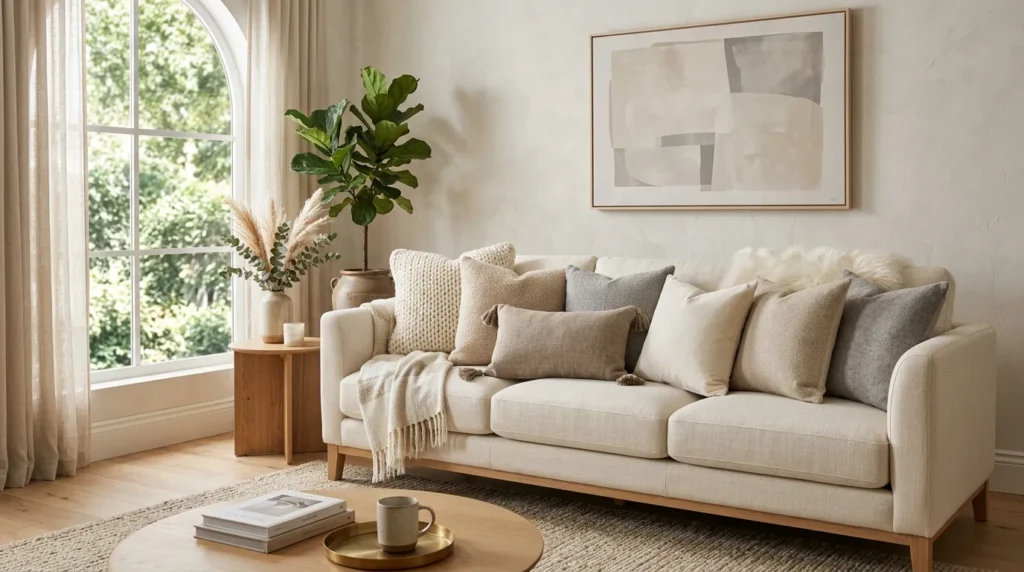
Cushions are one of the simplest ways to introduce multiple neutral shades without changing your furniture. Combining cream, beige, taupe, and soft gray can create depth while keeping the overall palette calm.
Different fabrics also make the arrangement more interesting. Linen, boucle, cotton, velvet, and woven textures can coexist beautifully.
I’ve found that varying texture is often more effective than adding more colors.
How To Style It
Start with two or three complementary neutral tones. Mix cushion sizes and shapes while keeping the color palette controlled.
Place larger pillows toward the back and smaller decorative cushions toward the front.
2. Add a Textured Throw
Quick Benefits
- Creates softness
- Adds warmth
- Introduces texture
- Makes seating inviting
- Easy to change
Why It Works
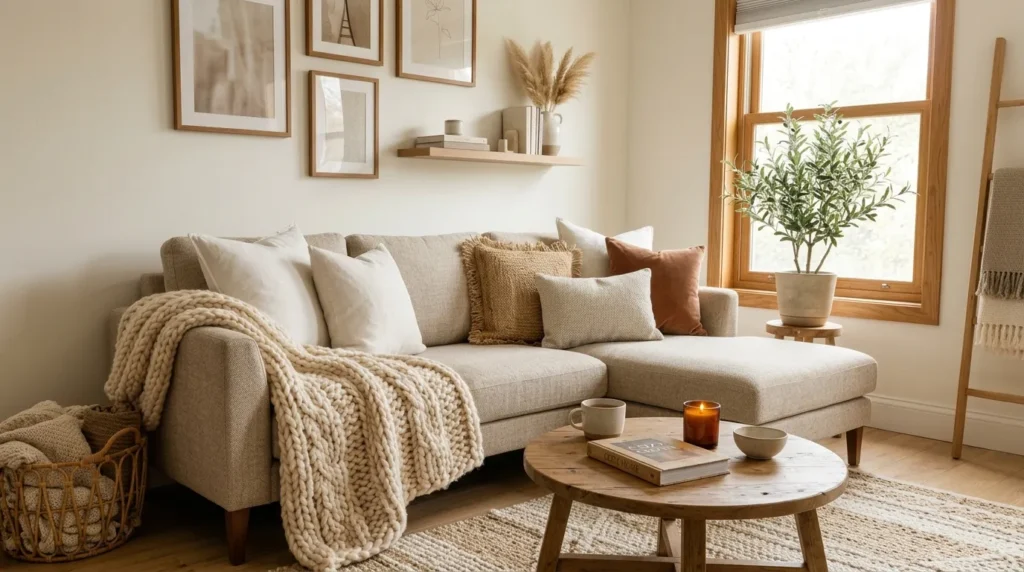
A throw can make a neutral sofa feel much more relaxed and layered. Because it occupies a relatively small area, it can introduce a new texture without disrupting the room’s color scheme.
Chunky knits, linen, cotton, and woven throws all create different visual effects.
I’ve found that casually draping a throw often looks more natural than arranging it too perfectly.
How To Style It
Choose a throw one or two shades different from the sofa. Drape it over the arm or corner of the sofa.
For a more layered look, combine a textured throw with cushions in related neutral shades.
3. Style With Ceramic Vases
Quick Benefits
- Adds sculptural interest
- Creates height
- Looks sophisticated
- Works with many styles
- Easy to rearrange
Why It Works
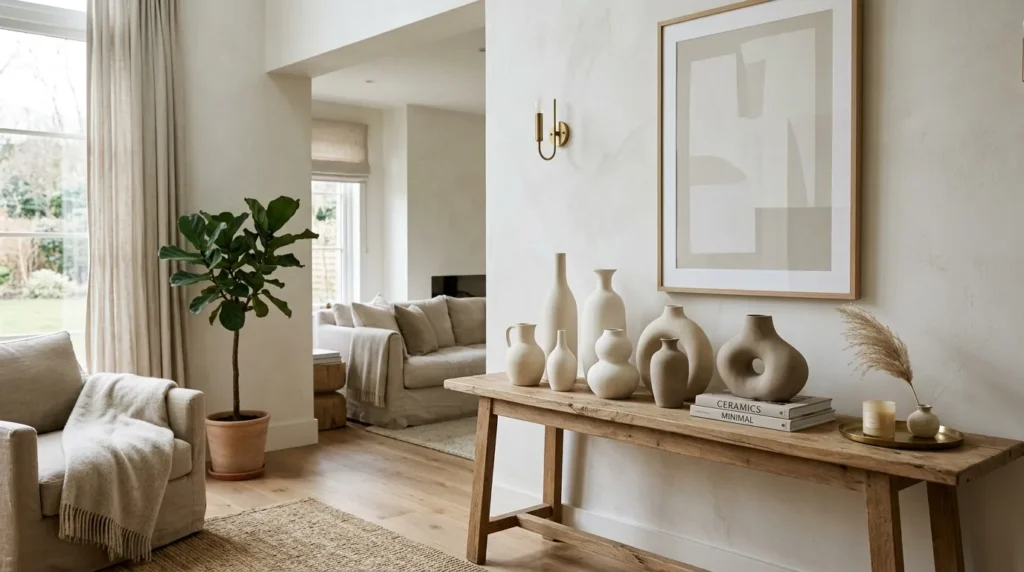
Ceramic accessories can add shape and subtle contrast to a neutral room. Matte white, cream, beige, stone, and soft gray ceramics create interest without introducing strong color.
Different silhouettes can make a shelf, console, or coffee table arrangement feel more collected.
I’ve found that combining a few imperfect or organic shapes creates a more relaxed appearance.
How To Style It
Group vases in different heights but similar color families. Add dried branches, fresh greenery, or leave some empty for a sculptural look.
Avoid filling every surface with accessories.
4. Use Natural Wood Accents
Quick Benefits
- Adds warmth
- Introduces organic texture
- Balances cool neutrals
- Works with many styles
- Creates visual depth
Why It Works
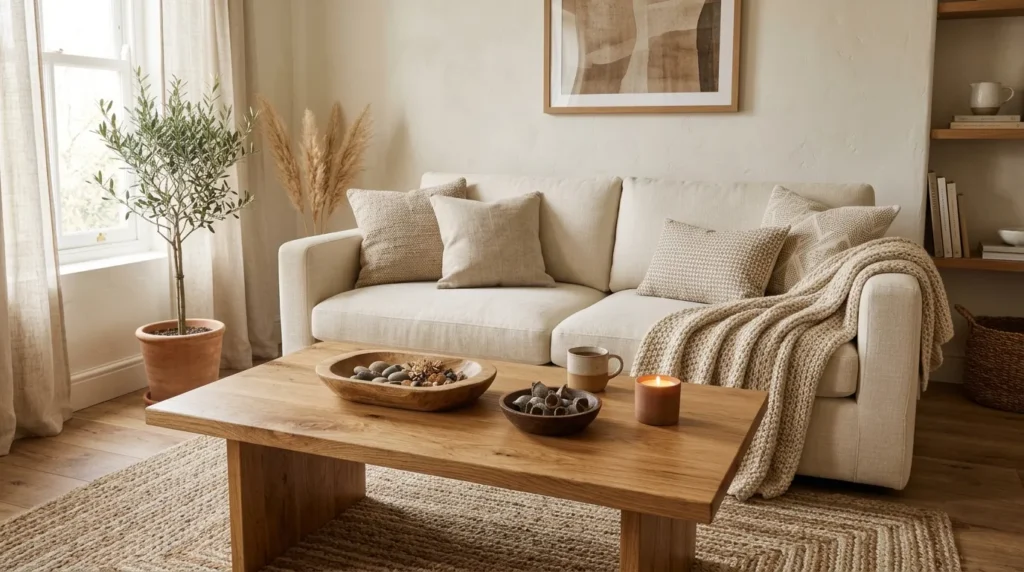
Natural wood prevents a neutral room from feeling flat or overly pale. Its grain and warm undertones create contrast while remaining within a natural color palette.
Wood can appear through trays, stools, picture frames, bowls, side tables, or decorative objects.
I’ve found that one or two consistent wood tones can make a neutral room feel significantly warmer.
How To Style It
Choose a wood tone that complements your flooring and furniture. Use it in a few strategic locations rather than introducing many unrelated finishes.
Pair wood with cream textiles and ceramic accessories.
5. Introduce Woven Baskets
Quick Benefits
- Adds storage
- Creates texture
- Reduces clutter
- Looks decorative
- Works in small spaces
Why It Works
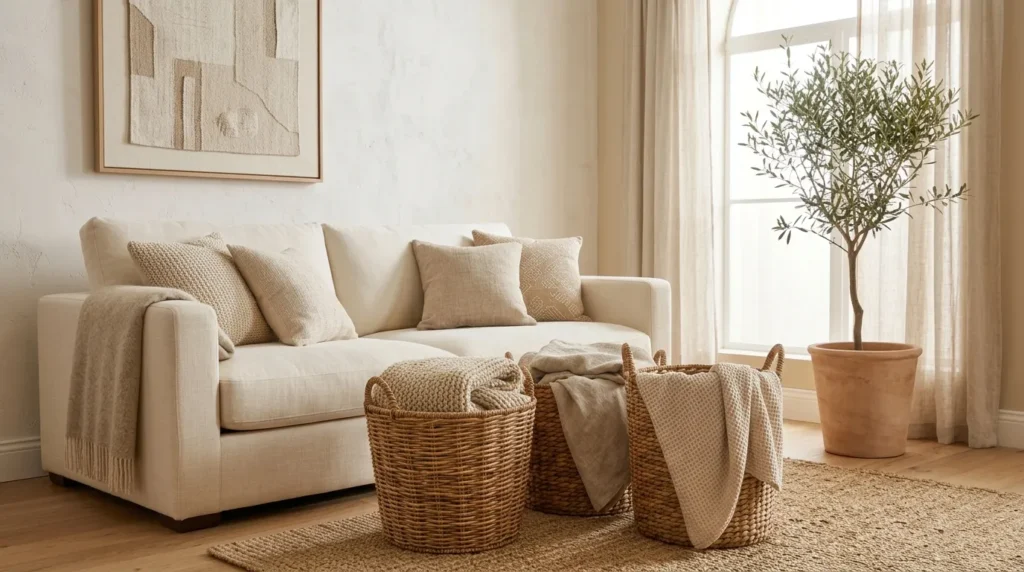
Woven baskets combine practical storage with natural texture. They can hold blankets, magazines, toys, or other everyday items while contributing to the overall neutral aesthetic.
Materials such as rattan, seagrass, and natural fibers work especially well with warm neutral interiors.
I’ve found that large baskets beside a sofa can make an otherwise empty corner feel intentional.
How To Style It
Choose baskets in natural beige, tan, or soft brown tones. Place one beside the sofa or beneath a console.
Use matching or complementary baskets for a more coordinated appearance.
6. Create a Neutral Gallery Wall
Quick Benefits
- Adds personality
- Fills blank walls
- Creates visual interest
- Works with neutral palettes
- Easy to customize
Why It Works
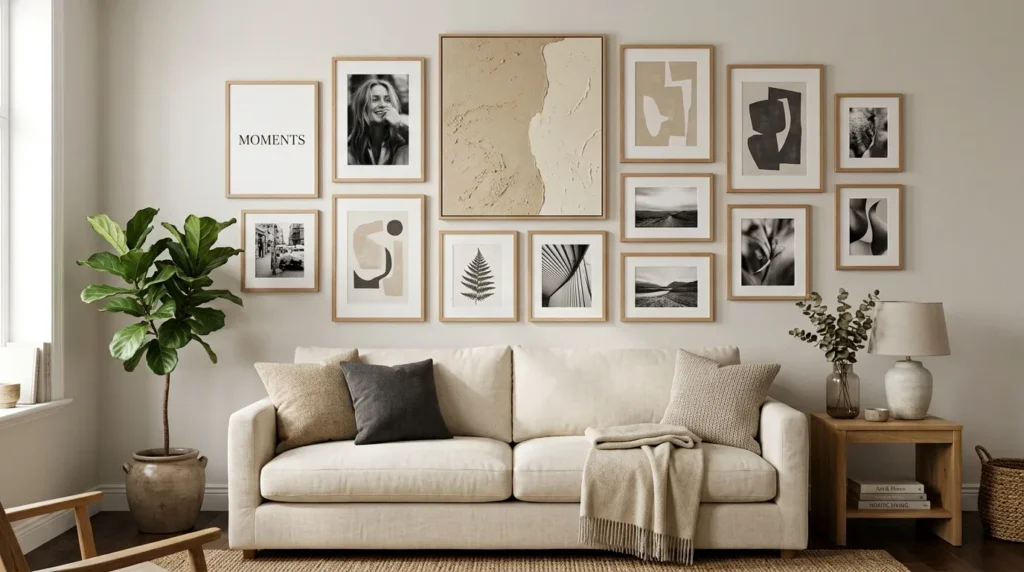
A gallery wall gives a neutral living room an opportunity to display personality without introducing a strong color scheme. Black-and-white photography, line drawings, abstract prints, botanical artwork, and soft beige illustrations can all work beautifully together.
The key is creating cohesion through color, framing, or subject matter. The artwork doesn’t have to match perfectly.
I’ve found that mixing different frame sizes makes a neutral gallery wall feel collected rather than overly formal.
How To Style It
Choose artwork with related tones such as ivory, beige, charcoal, muted brown, or soft gray. Mix frame styles carefully while maintaining one connecting element.
Arrange the pieces on the floor first to find a balanced composition before hanging them.
7. Add Soft Area Lighting
Quick Benefits
- Creates ambiance
- Adds warmth
- Highlights décor
- Makes evenings inviting
- Improves functionality
Why It Works
Lighting is especially important in neutral interiors because it influences how the colors and textures appear throughout the day.
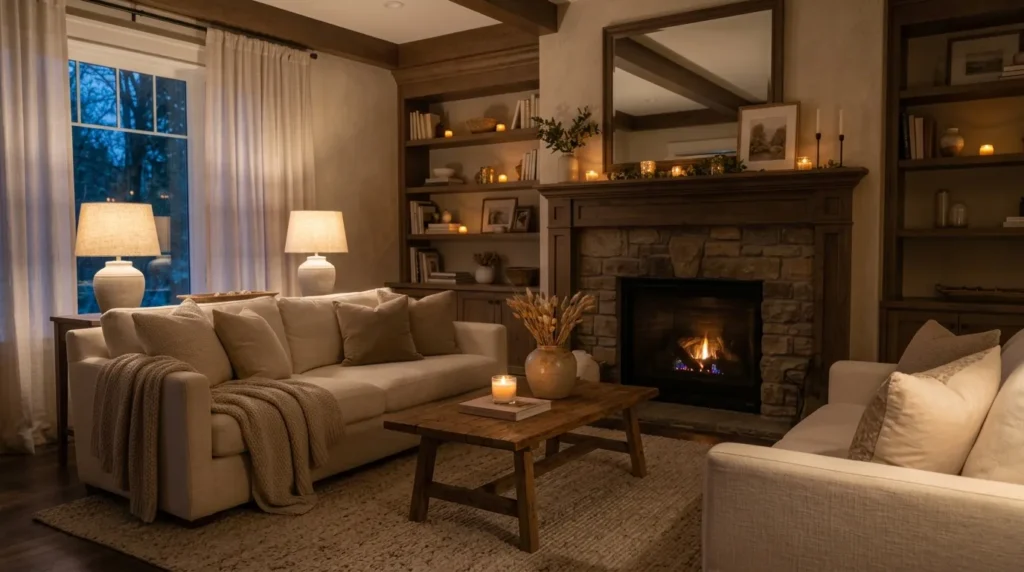
Warm table lamps, floor lamps, sconces, and small decorative lights can create layers of illumination while making neutral furnishings feel warmer.
I’ve found that several smaller light sources often create a more inviting atmosphere than relying on one bright overhead fixture.
How To Style It
Use warm-toned bulbs and position lamps at different heights around the room. Place one beside the sofa and another on a console or side table.
Choose lamps with ceramic, linen, wood, or woven finishes that complement the accessories.
8. Style the Coffee Table
Quick Benefits
- Creates a focal point
- Adds personality
- Keeps surfaces organized
- Introduces texture
- Easy to refresh
Why It Works
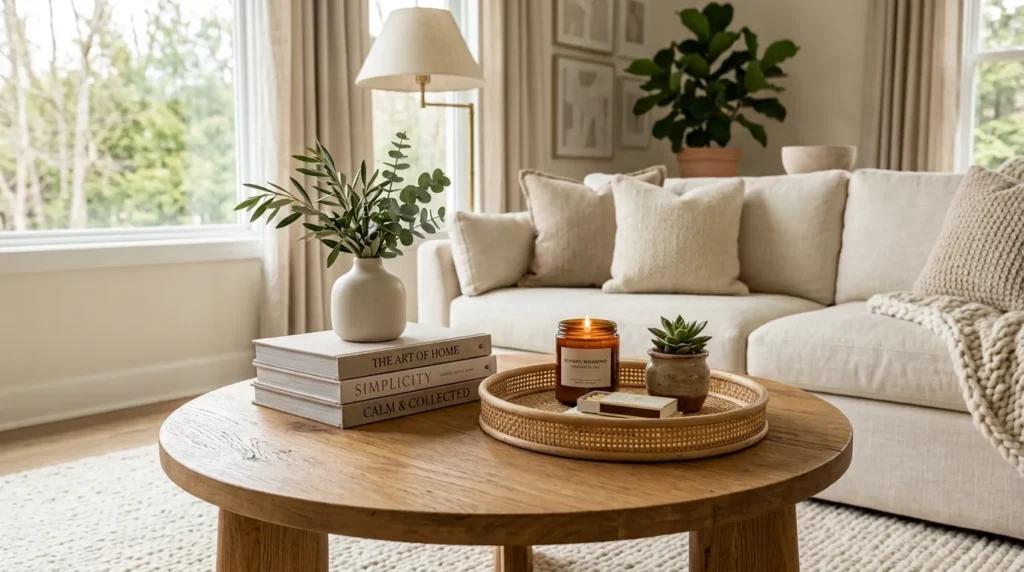
A thoughtfully styled coffee table can bring together the entire neutral palette. Books, trays, ceramics, candles, and natural objects can create layers without overwhelming the room.
The trick is varying height and shape while maintaining enough empty space for everyday use.
I’ve found that grouping objects in a tray makes a coffee table feel organized while allowing everything to be moved easily when needed.
How To Style It
Start with a decorative tray, then add a stack of books, a ceramic object, and a small vase or bowl.
Use three to five pieces rather than covering the entire surface.
9. Layer Neutral Curtains
Quick Benefits
- Softens windows
- Adds height
- Creates warmth
- Improves privacy
- Makes rooms feel finished
Why It Works
Curtains are often overlooked when decorating with accessories, but they can significantly influence the overall atmosphere of a neutral living room.
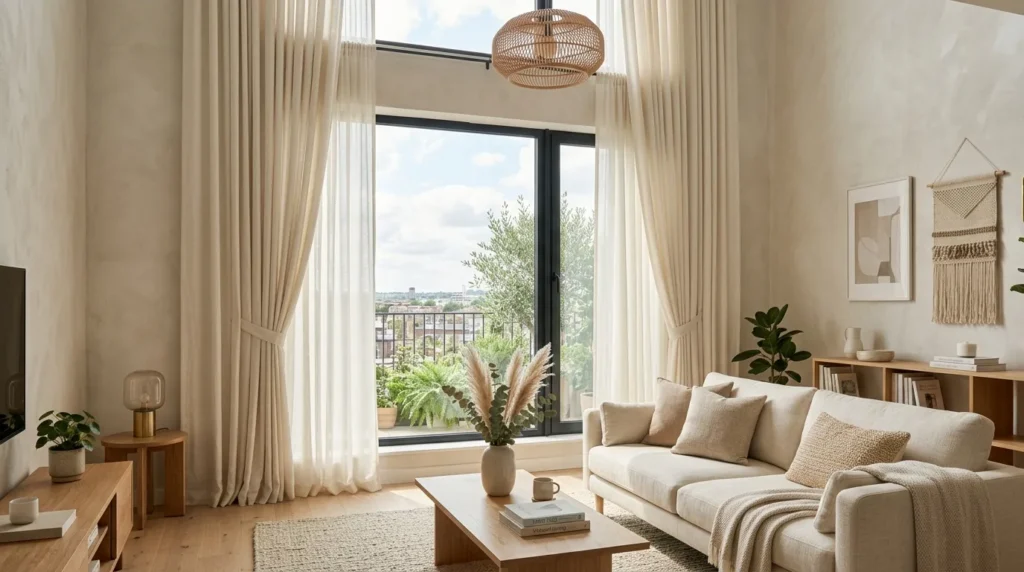
Linen, cotton, and lightweight textured fabrics create softness while maintaining the understated palette.
I’ve found that hanging curtains higher and wider than the window frame can make the room feel more spacious.
How To Style It
Choose curtains in ivory, cream, oatmeal, beige, or soft greige. Select a fabric with subtle texture rather than a busy pattern.
Hang the curtain rod close to the ceiling and extend it beyond the window frame where practical.
10. Add Natural Greenery
Quick Benefits
- Adds life
- Creates contrast
- Refreshes neutrals
- Adds organic texture
- Works with many styles
Why It Works
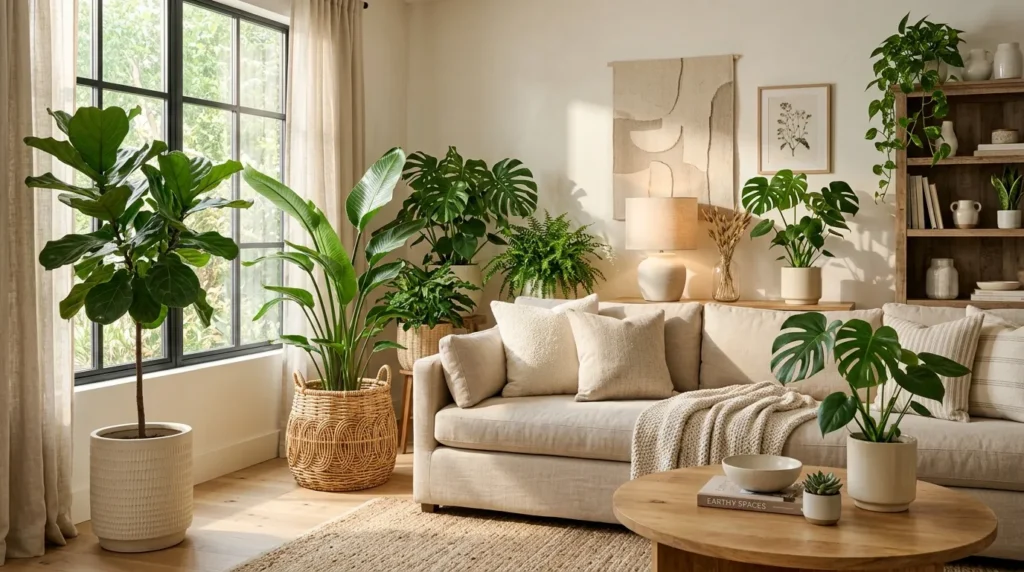
Greenery introduces a small amount of natural color while keeping the overall design grounded. Plants also add shape and texture that can make neutral interiors feel more dynamic.
If maintaining live plants isn’t practical, high-quality faux greenery or dried botanical arrangements can provide a similar decorative effect.
I’ve found that greenery looks particularly effective when placed near wood and woven accessories.
How To Style It
Choose plants that suit your available natural light. Place larger greenery near a sofa or empty corner and use smaller plants on shelves or tables.
Use ceramic, stone, woven, or neutral planters to maintain the cohesive palette.
Frequently Asked Questions
How do you decorate a neutral living room without making it boring?
Layer different textures, materials, shapes, and neutral shades. Linen, wood, ceramics, woven fibers, greenery, and artwork can create visual interest without bright colors.
What colors work best with neutral living room décor?
Cream, ivory, beige, taupe, greige, soft gray, warm brown, and muted green all work well within a neutral scheme.
How do you add warmth to a neutral living room?
Use natural wood, warm lighting, woven accessories, cream textiles, brass details, and subtle earthy tones.
What accessories look good on a neutral sofa?
Layered cushions, textured throws, woven pillows, and a small decorative lumbar pillow can add comfort and dimension.
How many accessories should a living room have?
There isn’t a fixed number. Focus on intentional groupings and leave enough negative space so the room doesn’t feel cluttered.
Can a neutral living room have color?
Absolutely. Small amounts of muted green, terracotta, dusty blue, or warm brown can add personality while maintaining the neutral foundation.
Conclusion
Decorating a living room with neutral accessories is less about choosing one shade of beige and more about creating layers. Texture, natural materials, soft lighting, artwork, greenery, and carefully selected accessories can make the space feel rich and inviting.
Start with the largest surfaces, such as curtains and cushions, then gradually add smaller elements like ceramics, books, baskets, and greenery.
The most beautiful neutral rooms usually combine several related shades instead of relying on a single color. Give each accessory room to breathe, repeat materials throughout the space, and avoid adding pieces simply to fill an empty surface.
With thoughtful layering, neutral accessories can create a living room that feels comfortable, sophisticated, timeless, and easy to update.