
Why Deep 14-Inch Floating Shelves Sag at the Front Lip Over Time?
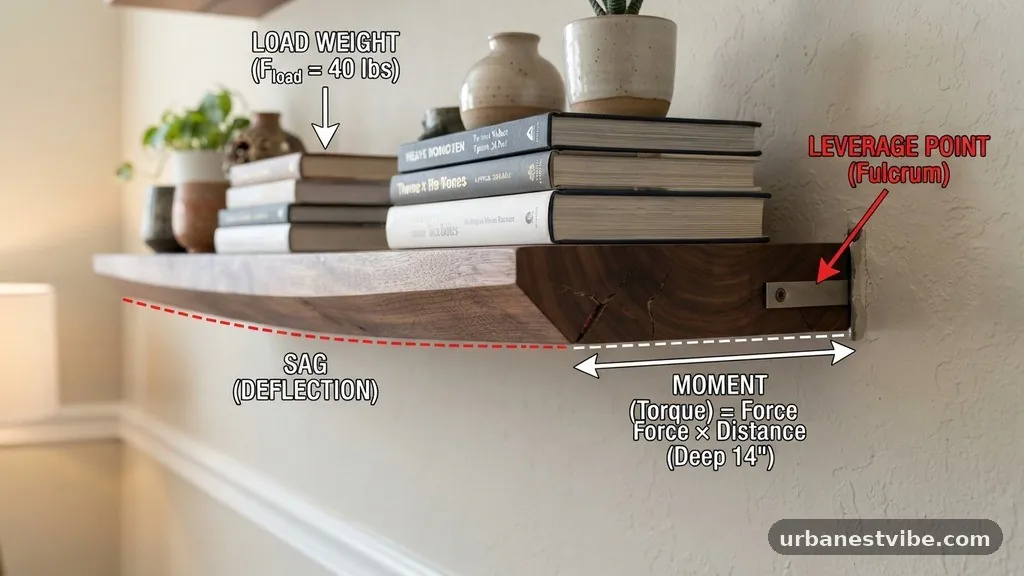
Understanding why deep 14-inch floating shelves sag at the front lip over time is essential for anyone hoping to maintain a clean, modern aesthetic in their home. When shelves extend significantly from the wall, the physics of leverage begins to work against the mounting hardware, often causing the material to tilt downward under its own weight or the pressure of stored items.
By identifying the root causes of this structural failure—ranging from inadequate stud contact to internal bracket fatigue—you can prevent further damage to your walls and ensure your storage remains secure. This article explores the mechanical reasons behind this common household issue and provides actionable steps to restore your shelves to a perfectly level position.
The Physics of Leverage on Deep Shelves

When you install a shelf that extends 14 inches from the wall, you are creating a significant lever arm. Any weight placed toward the outer edge of the shelf creates a rotational force, or torque, that pulls on the top mounting points while pushing the bottom of the bracket into the drywall. The further out the load sits, the greater the stress on the connection points.
Many homeowners underestimate how quickly this force accumulates. If you have a shelf that is 14 inches deep, the center of gravity of your books or decor is likely several inches away from the wall.
This distance acts as a multiplier for the force applied to the fasteners. Over time, that constant pressure causes the wood or the bracket assembly to flex just enough to become noticeable.
A common mistake is assuming that the shelf material itself is the primary culprit. While particle board or hollow-core shelves are certainly more prone to bowing, even solid wood will eventually succumb to gravity if the mounting mechanism isn’t designed to handle the specific leverage of a 14-inch depth. The sag usually originates at the point where the rod enters the wall or where the bracket plate meets the stud.
Identifying Inadequate Stud Attachment
The most frequent reason for a shelf tilting forward is a failure to secure the mounting hardware directly into the wooden studs. Drywall alone, even when reinforced with heavy-duty plastic or metal anchors, is rarely sufficient to support the torque generated by a 14-inch deep shelf. Drywall is a brittle material that crumbles under the sustained tension of a levered load.
If your brackets are mounted only into the drywall, the screws will gradually widen the hole as the shelf sags. This creates a feedback loop where the sag worsens the loose connection, which in turn allows for more sag. You can check your current installation by pressing firmly on the front edge of the shelf; if you see the bracket plate pulling away from the wall, your anchors are likely failing.
To ensure long-term stability, you must locate the studs behind your drywall using a reliable stud finder. Once located, the mounting hardware must be driven deep into the center of the wood. If your shelf design does not align with your wall stud spacing, you may need to install a horizontal backing board—a piece of wood screwed into the studs—to provide a solid mounting surface for your shelf brackets.
The Role of Bracket Quality and Design

Not all floating shelf hardware is created equal. Many inexpensive, mass-produced shelf kits come with thin, flimsy steel rods that are designed for shallow shelves, not those reaching 14 inches. These rods are often made of soft metals that bend under the weight of even moderate loads, leading to a permanent downward tilt.
When selecting hardware for a deep shelf, look for high-gauge steel rods that are specifically rated for the depth of your project. The rod should be long enough to penetrate at least two-thirds of the way into the shelf material itself. If the rod only extends a few inches into the shelf, the leverage will cause the wood to compress at the entry point, creating a gap that manifests as a sag at the front lip.
Another issue is the design of the backplate. A plate that is too small or thin will flex under the load.
Ideally, you want a backplate that spans multiple studs and provides a wide surface area to distribute the pressure against the wall. You can find more information on load-bearing standards through resources like the American Wood Council, which provides data on structural wood connections and load capacities.
Material Fatigue and Shelf Deflection
The material used for your shelf plays a massive role in how it handles stress over time. If you are using hollow-core shelving or low-density particle board, the shelf will eventually bow in the middle or compress at the wall connection. These materials lack the internal structural integrity to resist the bending forces inherent in a 14-inch deep design.
Solid wood is the preferred choice for deep shelves because it offers better resistance to long-term deflection. However, even solid wood can sag if it is not thick enough. A 14-inch deep shelf should ideally be at least 1.5 to 2 inches thick to minimize the risk of the material itself bending under its own weight.
If you notice the shelf material is bowing between the brackets, it indicates that the span between your supports is too wide. Even if the brackets are perfectly level, the shelf will droop if the material between them cannot support the weight of the items placed on it. Adding an additional bracket in the center of the span is the only way to correct this specific type of sagging.
Checking for Proper Installation Level
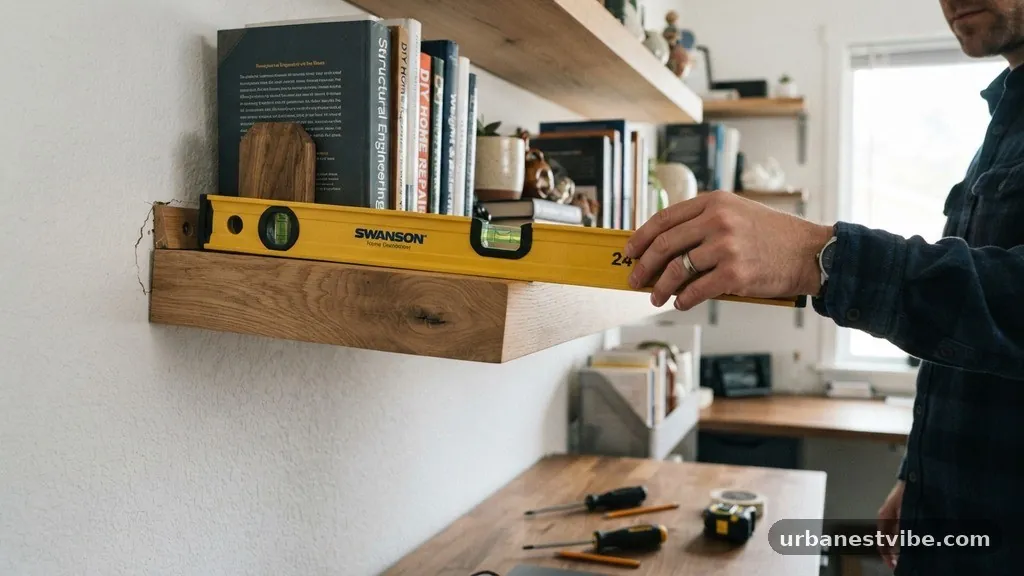
Sometimes, a shelf appears to be sagging when it was actually installed slightly out of level from the start. If the rods were mounted at a slight downward angle, the shelf will naturally rest in a tilted position. This is often caused by the drill bit “walking” when you first start boring into the wall studs, or by the weight of the shelf causing the fasteners to shift during the initial tightening phase.
To fix this, you need to remove the shelf and inspect the mounting rods. Use a torpedo level to ensure the rods are perfectly perpendicular to the wall.
If they are angled downward, you can sometimes use metal shims or a wrap of thin tape around the base of the rod to adjust the angle slightly upward. The goal is for the rods to be perfectly level or even angled a hair upward to compensate for the weight they will eventually carry.
Avoid the common mistake of over-tightening the screws once the shelf is on the rods. If the shelf is a tight fit, forcing it onto the rods can cause the wood to gouge or the bracket to shift. Instead, ensure the rods are positioned correctly before sliding the shelf into place.
The Importance of Weight Distribution
The way you load your shelf directly impacts how quickly it begins to sag. If you place your heaviest items—such as large books, stone decor, or ceramic vases—at the very front edge of the 14-inch shelf, you are maximizing the torque on the mounting hardware. This is the fastest way to induce sagging in even a well-installed shelf.
To preserve the level of your shelves, place heavier items as close to the wall as possible. Use the outer edges for lighter decor, such as picture frames or small plants. By keeping the center of gravity closer to the wall, you significantly reduce the rotational force acting on the rods.
Be mindful of the total weight you are placing on the shelf. Every bracket has a maximum weight capacity, which usually accounts for the weight of the shelf itself.
Overloading the shelf beyond its capacity will inevitably lead to structural failure. If you have a collection of heavy items, consider using a larger number of smaller shelves rather than one deep, heavily loaded 14-inch shelf.
Fixing Sagging Without Removing the Entire System
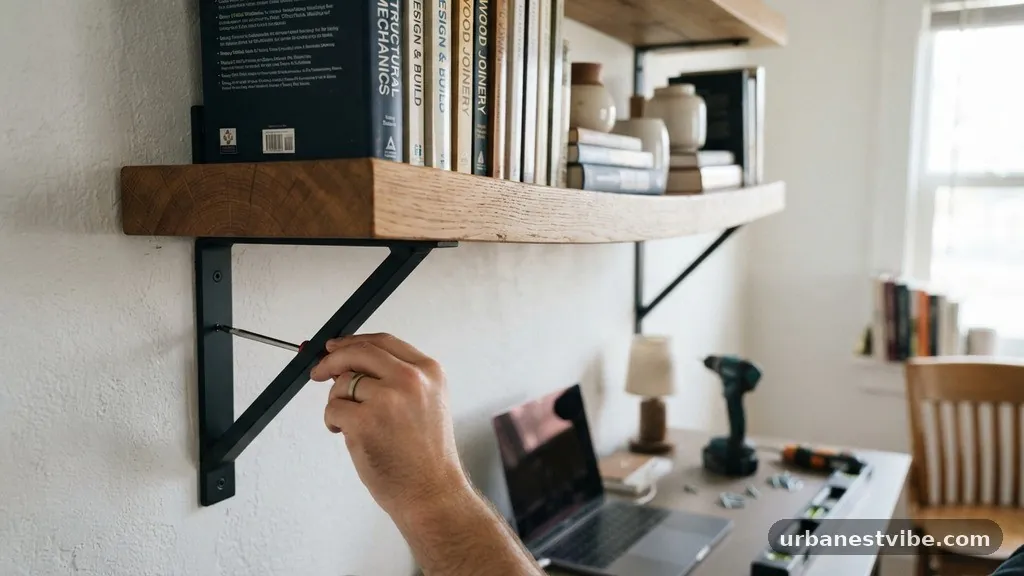
If your shelf is already sagging, you might be able to correct it without tearing the entire installation out of the wall. If the issue is simply that the bracket has pulled slightly away from the wall, you can try installing additional screws into the backplate to pull it tighter against the studs. Sometimes, a well-placed shim behind the bottom of the bracket can force the front of the shelf back to a level position.
However, if the rods themselves are bent, shimming will only be a temporary fix. You will eventually need to remove the shelf and replace the mounting hardware with a sturdier alternative. If the holes in the wall have become enlarged, you will need to move the entire shelf installation by a few inches to find fresh wood in the studs.
A common mistake is trying to prop up the front edge with decorative corbels or brackets that weren’t part of the original design. While this does solve the sag, it defeats the purpose of a “floating” shelf. If you must use support brackets to keep the shelf level, it is a sign that your original mounting system was not designed for the depth of the shelf.
When to Replace the Mounting Hardware
At a certain point, hardware fatigue becomes irreversible. If the steel rods are permanently bent, there is no way to straighten them back to their original structural integrity. Metal that has been stressed to the point of bending has undergone work hardening, making it brittle and more likely to snap if you try to bend it back.
If you find yourself in this position, it is time to invest in high-quality, heavy-duty floating shelf rods. These are often sold as individual components that you can install directly into your wall studs. Look for rods that have a large, circular backplate with multiple mounting holes, as this provides the best distribution of force against the wall.
When replacing the hardware, take the opportunity to ensure your shelf material is still sound. If the holes where the rods enter the wood have become oval-shaped, the shelf will never hold firmly, regardless of how good the new hardware is. You may need to fill these holes with wood epoxy or dowels and re-drill them to ensure a tight, friction-fit connection.
Advanced Techniques for Long-Term Stability
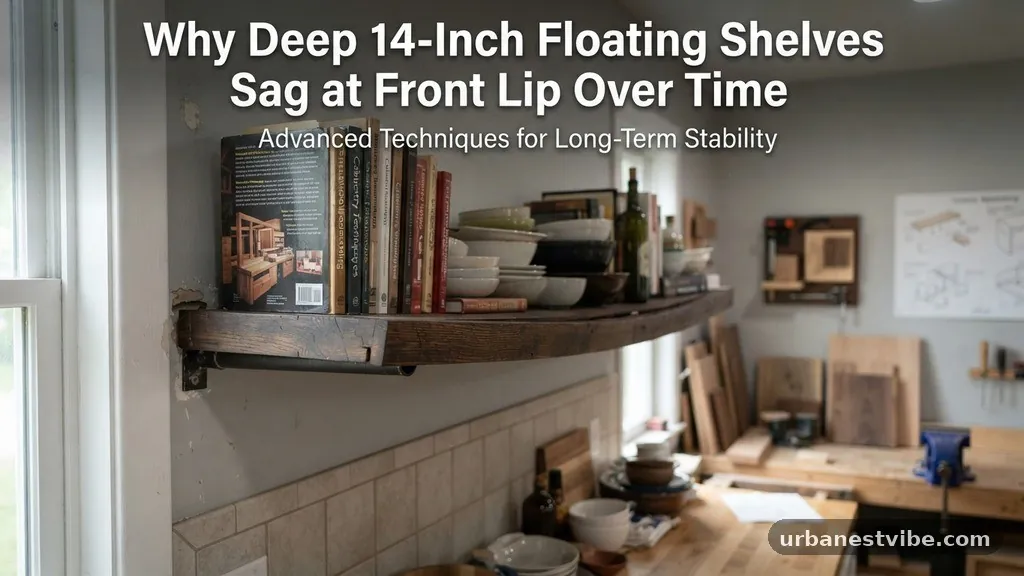
For those who want to guarantee their 14-inch deep shelves stay level for years, there are advanced installation techniques that go beyond standard hardware. One such method is the use of a “french cleat” combined with internal rod supports. While this technically isn’t a purely floating look, it provides the most secure foundation for deep shelving.
Another option is to use a recessed mounting plate. By carving out a section of the back of the shelf, you can sink the mounting bracket into the wood itself.
This eliminates the gap between the wall and the shelf, which reduces the leverage and provides a much stronger connection. This requires some woodworking skill but is highly effective for deep, heavy shelves.
You can also consider adding a “tension plate” to the top of the shelf, which connects to the wall studs and pulls the shelf upward. This counteracts the downward force of the weight on the front lip. These types of custom modifications are often necessary for shelves that are intended to hold significant weight over long periods.
Maintenance and Periodic Inspections
Even a perfectly installed shelf requires occasional maintenance. Over time, the vibrations in your home, changes in humidity, and the natural settling of the house can cause fasteners to loosen slightly. It is a good practice to check your shelves every six months.
Use a level to ensure they are still true. If you notice a slight tilt, check the screws on the backplate to see if they have backed out of the studs.
A simple turn with a screwdriver can often restore the shelf to its original position before the sag becomes permanent. Humidity is a major factor for wood; in summer, wood expands, and in winter it contracts, which can affect the tightness of the joint where the rod enters the shelf.
Never ignore the early signs of sagging. A small tilt today will become a significant droop next year.
By addressing the issue as soon as you notice it, you prevent the drywall from being damaged and the shelf material from being permanently deformed. Consistent, minor adjustments are much easier than a complete re-installation.
FAQ
How can I tell if my floating shelf is sagging because of the hardware or the wood?
If the shelf is tilting but the bracket plate remains perfectly flush against the wall, the issue is likely the rod or the wood material. If the entire assembly—including the bracket plate—is pulling away from the wall, the problem is with your anchors or stud connection.
Is it possible to use drywall anchors for a 14-inch deep shelf?
It is strongly discouraged. Even the strongest toggle bolts have limits, and the leverage generated by a 14-inch depth will almost certainly cause them to fail or tear through the drywall over time. Always mount into solid wood studs for deep shelving.
Are floating shelves inherently unstable compared to traditional bracketed shelves?
Floating shelves are structurally disadvantaged because they lack the diagonal support that traditional brackets provide. By removing the triangle of support, you rely entirely on the strength of the connection point at the wall, which makes them less capable of holding heavy loads without proper, heavy-duty hardware.
What is the ideal thickness for a 14-inch deep floating shelf?
For a shelf of this depth, you should aim for a thickness of at least 1.5 to 2 inches. This provides enough “meat” for the mounting rods to grip securely and helps the wood resist the bending force that occurs when weight is placed toward the front lip.
Can temperature and humidity cause floating shelves to sag?
Yes, wood is hygroscopic and will expand and contract with seasonal changes. This movement can loosen the fit between the mounting rod and the wood shelf, creating a slight wobble that eventually turns into a permanent sag if the rod is not re-secured.
Maintaining Your Shelving System
Ensuring your deep 14-inch floating shelves remain level requires a combination of proper initial installation and periodic maintenance. By anchoring your brackets into solid studs, choosing thick, high-quality wood, and using heavy-duty steel rods, you can mitigate the forces that cause sagging. Always keep the heaviest items closest to the wall to minimize the leverage acting on your hardware.
If you do notice a slight tilt, check your fasteners immediately to stop the problem before it causes permanent damage to your walls. Keeping these factors in mind will help you enjoy the clean, modern look of your storage for years to come. If you have any specific questions about your hardware or shelf material, feel free to reach out and share your project details.