
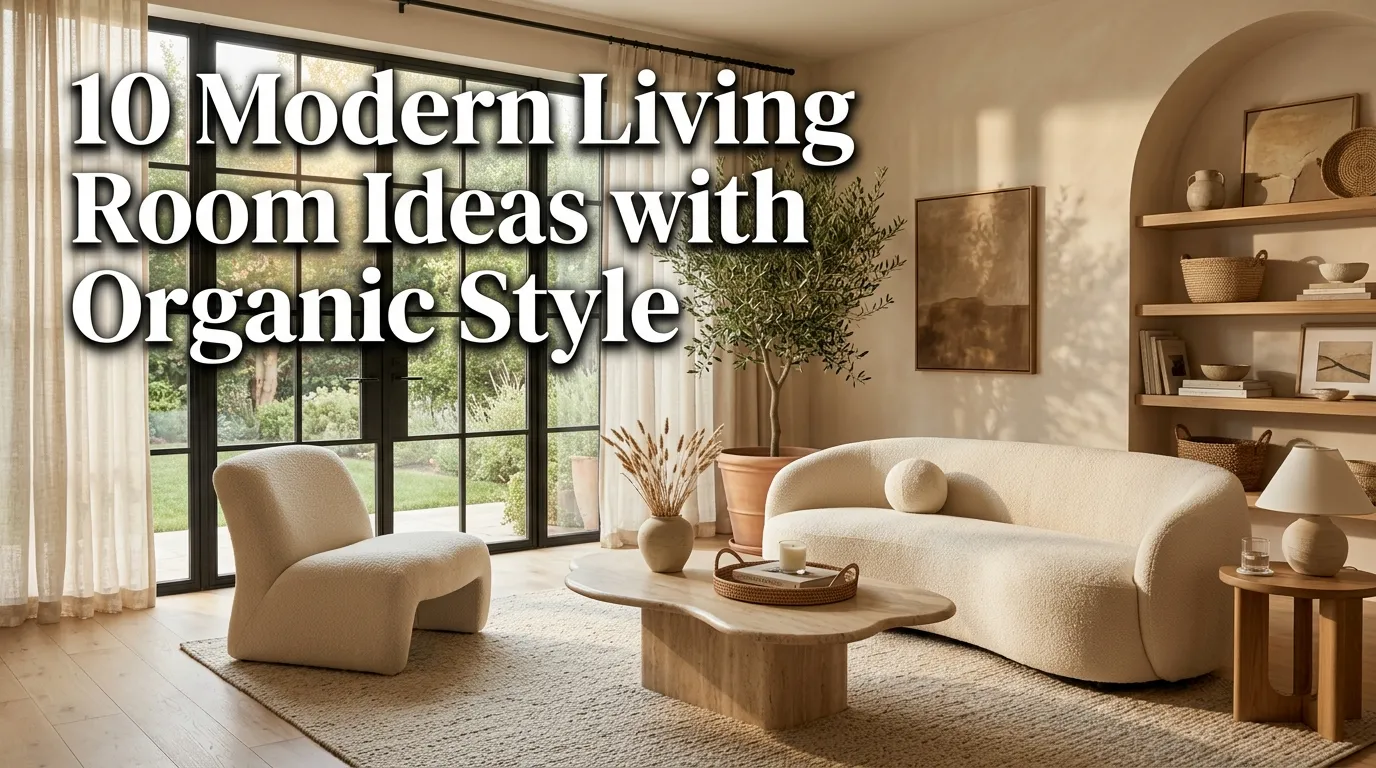
10 Modern Living Room Ideas with Organic Style
Modern living rooms are no longer just about clean lines, sleek furniture, and minimal decoration. Today, homeowners are looking for spaces that feel warm, comfortable, and connected to nature. Organic style brings together the best parts of modern design with natural materials, earthy colors, and calming textures to create a room that feels both stylish and welcoming.
Many people love the look of modern interiors but worry they may feel too cold or impersonal. In my experience, the secret is adding organic elements that bring softness and character into the space. Natural wood, stone finishes, linen fabrics, woven accents, and indoor greenery can completely change the atmosphere while maintaining a sophisticated modern look.
Organic modern design works beautifully for today’s homes because it focuses on balance. Instead of filling a room with unnecessary décor, this style encourages thoughtful choices—pieces that are functional, beautiful, and connected to everyday living. A comfortable sofa, a handcrafted coffee table, warm lighting, and natural textures can create a space that feels like a peaceful retreat after a busy day.
Whether you live in a spacious home, a city apartment, or a smaller living area, organic style can be adapted to your needs. The beauty of this approach is that it does not depend on expensive renovations or trendy furniture. Simple updates like adding a jute rug, switching to linen curtains, or introducing earthy tones can make a noticeable difference.
In this guide, you’ll discover 10 Modern Living Room Ideas with Organic Style that combine contemporary design with natural warmth. These ideas will help you create a timeless living space that feels elegant, comfortable, and inspired by the beauty of the outdoors.
Table of Contents
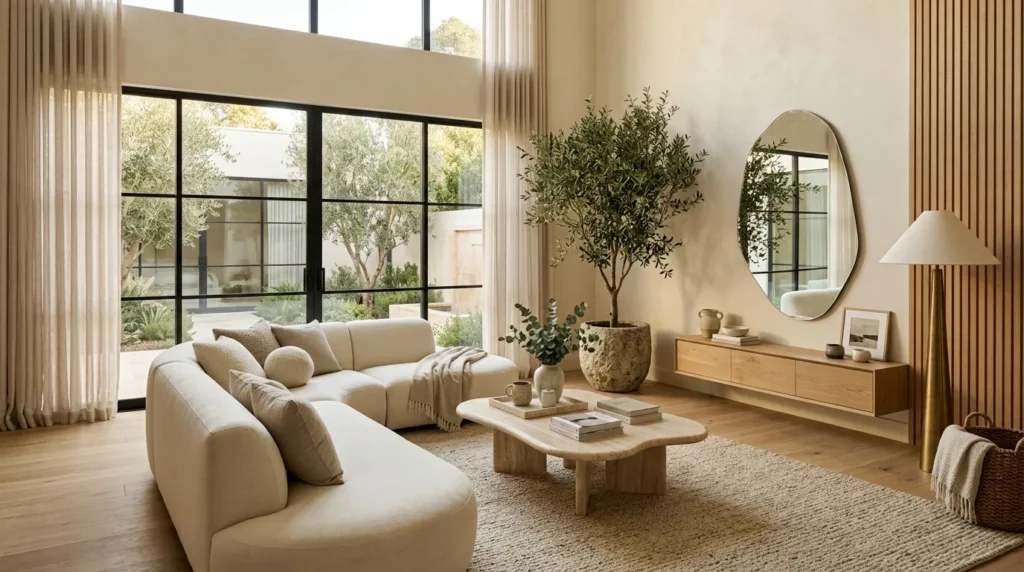
1. Natural Wood Elements
Bring warmth and character into modern interiors with organic wood finishes.
2. Earthy Color Palette
Create a calming atmosphere with nature-inspired neutral shades.
3. Textured Fabric Layers
Add softness and depth through cozy natural textiles.
4. Stone Accent Details
Introduce timeless beauty with natural stone-inspired features.
5. Organic Furniture Shapes
Use curved silhouettes and handcrafted designs for a softer modern look.
6. Indoor Greenery
Connect your living room with nature through beautiful plants.
7. Minimal Styling Approach
Create a peaceful space using intentional décor choices.
8. Woven Natural Accents
Add warmth through baskets, rugs, and handcrafted pieces.
9. Warm Ambient Lighting
Enhance the organic mood with layered lighting.
10. Biophilic Design Touches
Create a deeper connection between your home and nature.
1. Natural Wood Elements
Quick Benefits
- Adds warmth to modern interiors
- Creates a natural focal point
- Works with many design styles
- Makes spaces feel more inviting
- Provides timeless visual appeal
Why It Works
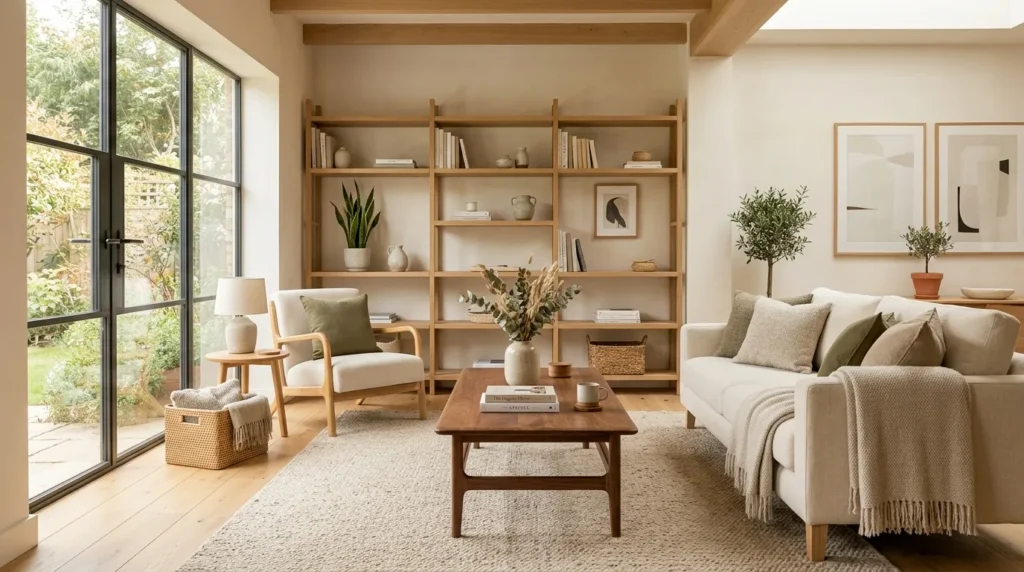
Natural wood is one of the defining elements of organic modern design because it brings warmth, texture, and authenticity into a room. While modern interiors often feature smooth surfaces and simple forms, wood prevents the space from feeling overly polished or sterile.
I’ve noticed that adding even a few wood elements can completely change how a living room feels. The natural grain patterns create visual movement and introduce a sense of craftsmanship that mass-produced materials often lack. Light oak, walnut, reclaimed wood, and bamboo all work beautifully because they complement neutral colors while adding personality.
Designers often use wood strategically rather than everywhere. A wooden coffee table, floating shelves, media console, or accent wall can provide enough warmth without overwhelming the clean modern aesthetic. The goal is creating balance between contemporary simplicity and natural comfort.
How To Style It
Start with one statement wood piece, such as a light oak coffee table or a walnut media console. Choose furniture with visible grain patterns and simple silhouettes to maintain the modern feel.
Pair wooden elements with soft neutral upholstery, such as a cream linen sofa or beige accent chairs. Add ceramic accessories, stone objects, or woven baskets to complement the organic texture.
For a more dramatic look, consider a vertical wood slat wall behind the television or sofa. Keep the surrounding décor minimal so the natural material becomes the main feature. Mixing different wood tones can work beautifully, but staying within warm natural shades creates a more cohesive appearance.
2. Earthy Color Palette
Quick Benefits
- Creates a relaxing atmosphere
- Makes modern rooms feel warmer
- Works well with natural materials
- Provides timeless decorating flexibility
- Enhances the organic aesthetic
Why It Works
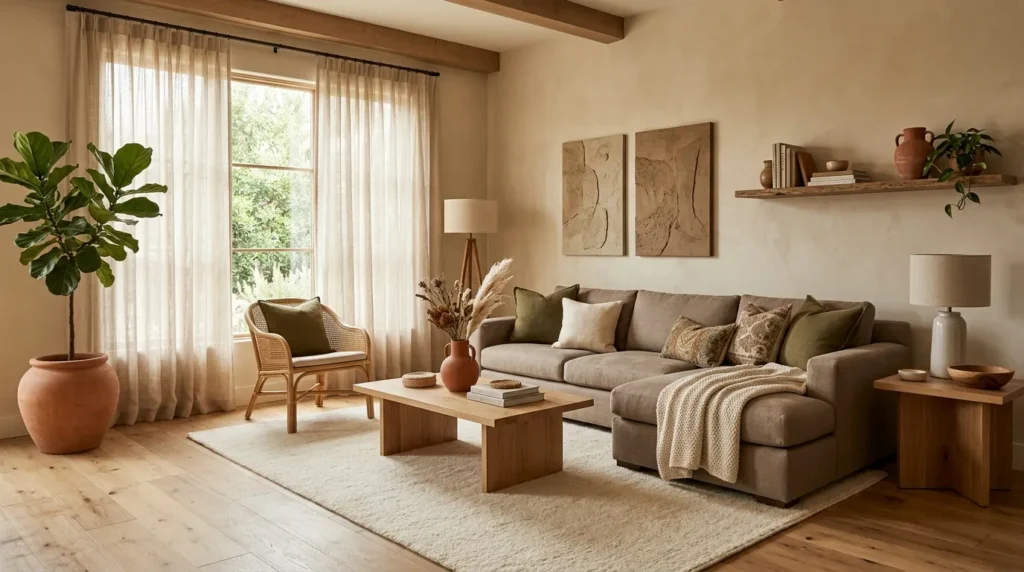
Color plays a major role in creating an organic modern living room. Earth-inspired shades such as warm beige, sand, clay, olive green, taupe, and soft brown create a connection to nature while maintaining a sophisticated appearance.
A mistake many homeowners make is assuming modern design requires cool whites and gray tones only. While those colors can look beautiful, warmer neutrals often create a more comfortable environment. Organic modern spaces rely on subtle layers of color rather than dramatic contrasts.
I’ve seen rooms feel instantly more welcoming simply by replacing cooler tones with warmer earthy shades. These colors work because they mimic natural landscapes and create a sense of calm. They also provide the perfect background for wood furniture, greenery, and textured fabrics.
How To Style It
Begin with a neutral foundation using warm white walls, beige upholstery, or soft taupe curtains. Add depth through accent colors like olive green pillows, terracotta pottery, or caramel-colored throws.
Avoid using too many competing shades. Instead, select three to five complementary tones and repeat them throughout the room. For example, combine cream walls, a beige sofa, walnut furniture, and muted green accessories.
Natural artwork featuring landscapes, abstract earth tones, or botanical designs can reinforce the connection to nature while keeping the room modern and elegant.
3. Textured Fabric Layers
Quick Benefits
- Makes modern spaces feel cozy
- Adds visual depth
- Creates a luxurious atmosphere
- Improves comfort
- Softens clean architectural lines
Why It Works
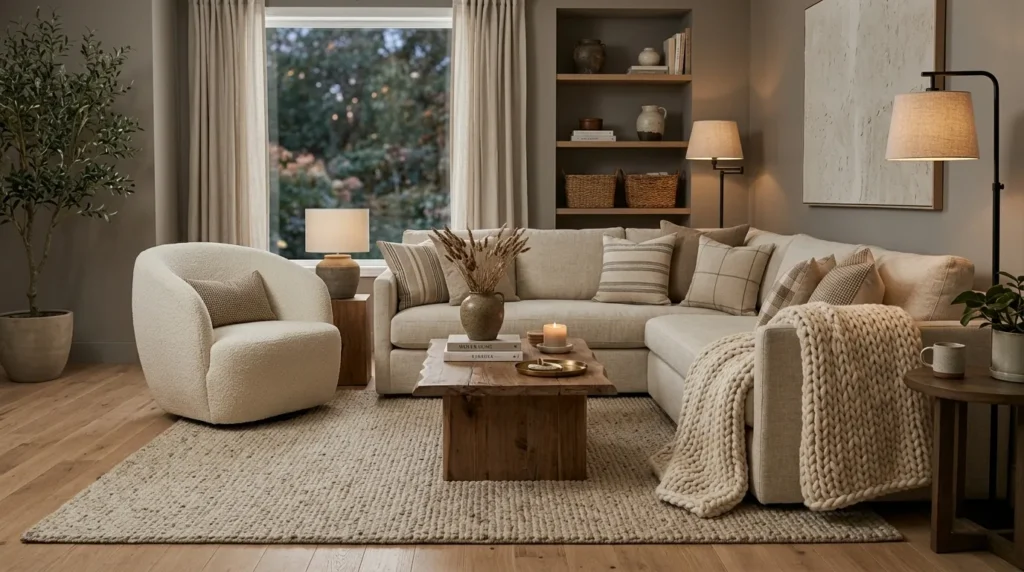
Organic modern style depends heavily on texture because natural materials create interest without requiring bold colors. Layered fabrics help balance the simplicity of modern furniture by introducing softness and comfort.
One thing that works especially well is combining multiple natural textiles together. Linen, cotton, wool, boucle, and woven fabrics each bring a different feeling to the room. Together, they create a space that feels relaxed and thoughtfully designed.
Without texture, a neutral living room can sometimes appear flat. Adding tactile materials creates dimension and encourages people to interact with the space. This is why designers often focus on fabrics when creating modern homes that still feel inviting.
How To Style It
Layer a linen sofa with cotton throw pillows, a wool blanket, and a textured area rug. Choose fabrics in similar neutral shades rather than introducing too many colors.
Boucle accent chairs add softness while maintaining a modern appearance. Woven ottomans or fabric-covered benches can provide additional seating without making the room feel crowded.
Mix smooth and rough textures together. For example, pair a polished stone coffee table with a chunky knit throw or a sleek sofa with a handmade woven rug. These contrasts create the relaxed luxury that defines organic modern interiors.
4. Stone Accent Details
Quick Benefits
- Adds natural elegance
- Creates a timeless focal point
- Brings outdoor-inspired beauty indoors
- Complements modern furniture
- Increases visual texture
Why It Works
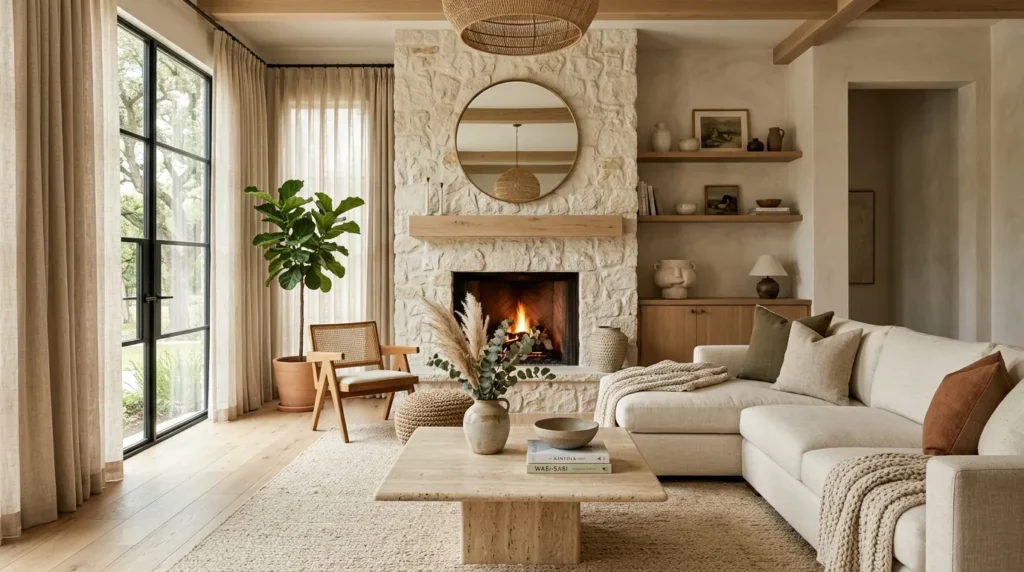
Stone is one of the most beautiful materials for creating an organic modern living room because it adds a sense of permanence and natural beauty. Unlike manufactured finishes that can feel temporary, stone introduces unique patterns, textures, and variations that make each space feel one-of-a-kind.
I’ve noticed that stone elements work especially well in modern interiors because they soften the clean simplicity of contemporary furniture. A smooth marble surface, textured limestone feature, or travertine accessory creates a connection to nature while maintaining an elegant appearance.
The key is using stone thoughtfully. Too much can make a room feel heavy, but small details can create a sophisticated balance. Designers often combine stone with warm woods, soft fabrics, and neutral colors to achieve that relaxed yet refined organic look.
How To Style It
Introduce stone through smaller decorative pieces if you want a simple update. A travertine coffee table, marble side table, stone vase, or ceramic accessories with natural textures can instantly elevate the room.
For a larger transformation, consider a stone fireplace surround, textured stone accent wall, or natural stone flooring. Balance heavier materials with softer elements like linen curtains, plush rugs, and comfortable upholstery.
Choose stones with warm undertones such as beige travertine, cream limestone, or soft gray marble. These shades pair beautifully with organic modern palettes and help maintain a cozy atmosphere rather than creating a cold, formal feeling.
5. Organic Furniture Shapes
Quick Benefits
- Creates a softer modern look
- Improves visual flow
- Makes spaces feel more comfortable
- Adds designer-inspired style
- Balances straight architectural lines
Why It Works
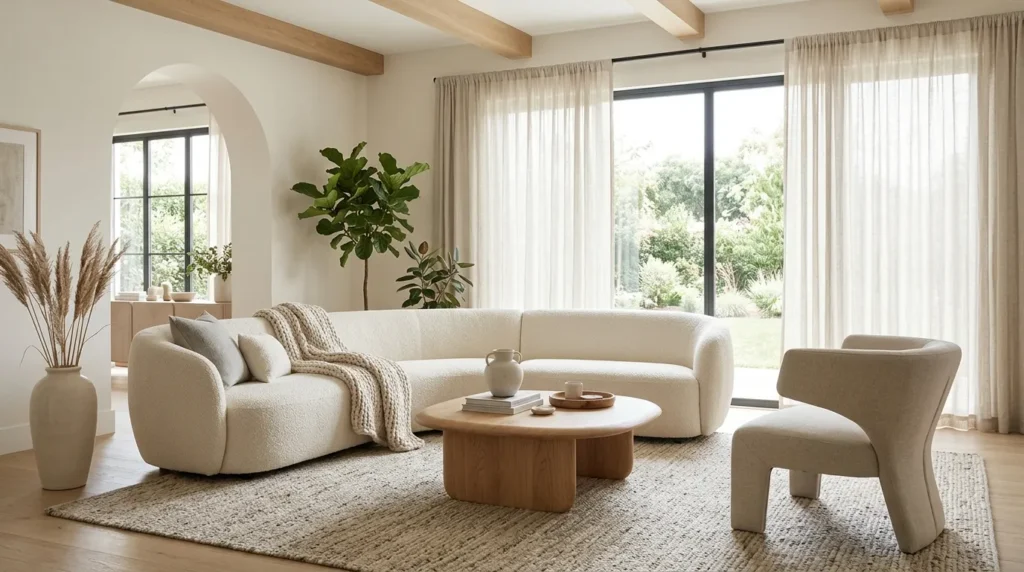
Organic modern design is moving away from sharp, rigid furniture shapes and embracing softer silhouettes inspired by nature. Curved sofas, rounded coffee tables, and sculptural chairs create movement while making the room feel more relaxed and approachable.
In my experience, furniture shape has a bigger impact on a room than many homeowners realize. A simple curved chair or oval coffee table can completely change the energy of a space by making it feel less formal and more inviting.
Natural environments rarely contain perfect straight lines, which is why organic shapes feel comforting. They create a smoother visual transition throughout the room while maintaining the simplicity that modern design is known for.
The goal isn’t to fill the room with unusual furniture. Instead, choose a few pieces with gentle curves that create balance and encourage comfortable conversation.
How To Style It
Start with one curved statement piece, such as a rounded sofa, boucle accent chair, or oval coffee table. Keep the rest of the furniture simple to prevent the room from feeling overly decorative.
Pair curved furniture with natural materials like wood, stone, and woven textiles. A circular rug beneath a round coffee table can reinforce the organic feeling while visually connecting the different elements.
For smaller spaces, choose furniture with rounded edges instead of bulky designs. A curved accent chair in a corner or a softly shaped ottoman can introduce the organic style without taking away valuable floor space.
6. Indoor Greenery
Quick Benefits
- Brings nature indoors
- Adds refreshing color
- Improves visual balance
- Softens modern interiors
- Creates a peaceful atmosphere
Why It Works
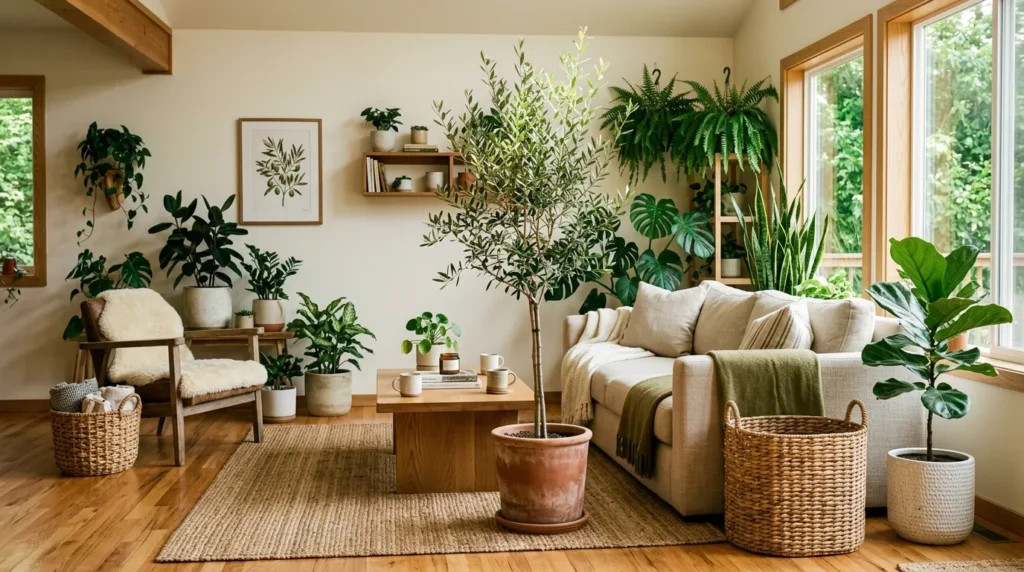
Plants are essential in organic modern design because they create a direct connection between indoor spaces and the natural world. Their organic shapes, rich textures, and natural colors add life to neutral interiors while keeping the overall look calm and sophisticated.
I’ve seen even the most minimalist living rooms become warmer and more welcoming with the addition of greenery. Plants help break up large furniture pieces and soften the straight lines often found in modern architecture.
Beyond appearance, greenery also creates a feeling of freshness and relaxation. Large leafy plants, small tabletop arrangements, and hanging varieties can all contribute to a more balanced living space.
The best approach is choosing plants that fit your lifestyle rather than adding too many at once. A few healthy, well-positioned plants usually create more impact than a crowded collection.
How To Style It
Place a large floor plant such as an olive tree, fiddle leaf fig, or rubber plant beside a sofa or empty corner to add height and structure. Use woven baskets or textured ceramic planters to reinforce the organic style.
For shelves and coffee tables, choose smaller plants like pothos, snake plants, or succulents in neutral-colored pots. Group plants with natural accessories such as wooden bowls, stone objects, or handmade ceramics.
Position greenery near windows whenever possible so plants receive natural light. The combination of sunlight, plants, and natural materials creates the peaceful atmosphere that makes organic modern interiors so appealing.
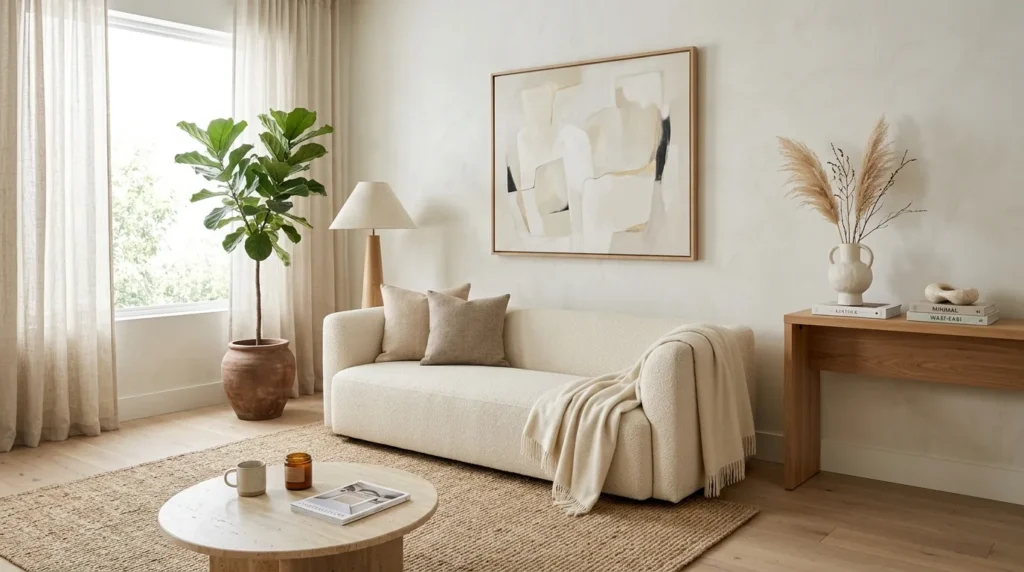
7. Minimal Styling Approach
Quick Benefits
- Creates a peaceful environment
- Reduces visual clutter
- Highlights meaningful pieces
- Makes cleaning easier
- Enhances modern simplicity
Why It Works
Organic modern style is built around intentional choices rather than excessive decoration. Minimal styling does not mean a room should feel empty—it means every item has a purpose, whether functional, beautiful, or meaningful.
One mistake many homeowners make is adding too many decorative pieces because they want the room to feel finished. However, overcrowding can hide the beauty of natural materials and make a small living room feel stressful.
I’ve noticed that the most successful modern organic spaces often have fewer objects but stronger design choices. A beautiful ceramic vase, handcrafted bowl, or unique artwork can create more impact than a shelf filled with random accessories.
This approach allows furniture, textures, and architectural details to become the main focus while maintaining a calm and welcoming atmosphere.
How To Style It
Begin by removing unnecessary items and keeping only décor that contributes to the room’s overall feeling. Choose a few statement accessories instead of many small decorations.
Style surfaces using the rule of three: combine objects with different heights, shapes, and textures. For example, place a ceramic vase beside stacked books and a small wooden sculpture.
Keep storage solutions natural and attractive. Woven baskets, wooden cabinets, and built-in shelving help organize everyday items while maintaining the clean organic aesthetic.
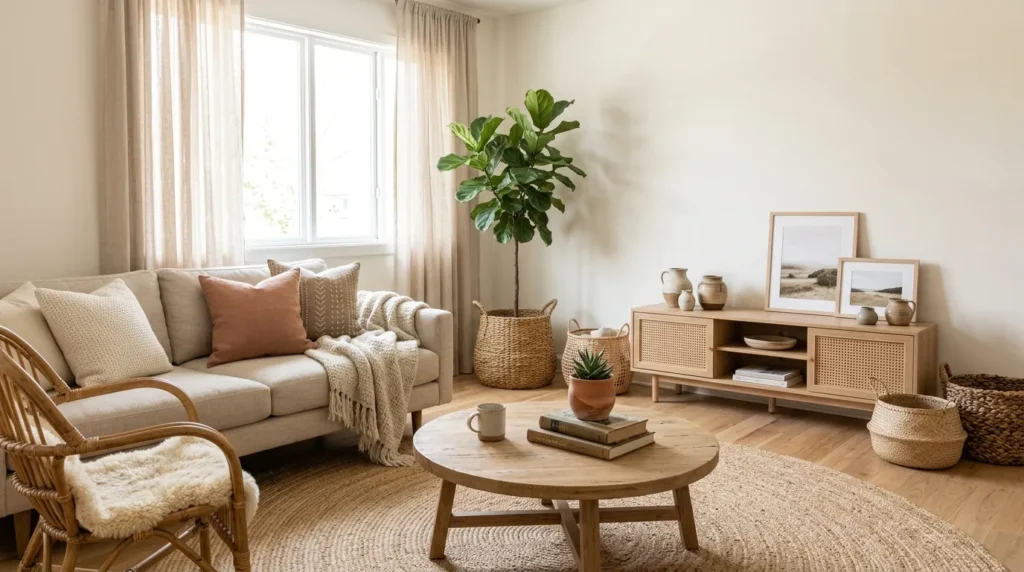
8. Woven Natural Accents
Quick Benefits
- Adds handmade warmth
- Introduces natural texture
- Softens modern furniture
- Creates a relaxed atmosphere
- Works with multiple décor styles
Why It Works
Woven materials are one of the easiest ways to bring organic character into a modern living room. Materials like rattan, seagrass, jute, cane, and wicker add handcrafted beauty while keeping the space connected to nature. These elements create visual warmth that balances the sleek surfaces often found in contemporary interiors.
In my experience, woven accents are especially helpful when a modern room feels too polished or lacks personality. Their natural imperfections and earthy textures make the space feel more comfortable and lived-in without creating clutter.
Organic modern design is all about balance. Smooth surfaces like glass, metal, and stone become much more inviting when paired with softer handmade materials. A woven basket, textured rug, or rattan accent chair can introduce just enough warmth to make the entire room feel welcoming.
The best part is that woven décor works in both large and small spaces. You don’t need a complete redesign—adding a few carefully selected pieces can create a noticeable difference.
How To Style It
Start with a natural fiber rug made from jute, sisal, or wool to anchor the seating area. These materials add texture underfoot and create a strong foundation for an organic modern look.
Add woven storage baskets beside the sofa for blankets, magazines, or children’s toys. Choose baskets in natural beige, tan, or soft brown shades to maintain a cohesive palette.
For furniture, consider a rattan accent chair, cane cabinet doors, or a woven ottoman. Pair these pieces with modern upholstery and simple décor to keep the overall style balanced.
Complete the look with smaller woven accessories such as trays, lampshades, or decorative bowls. These details create layers of texture while maintaining the clean, sophisticated feeling of modern organic design.
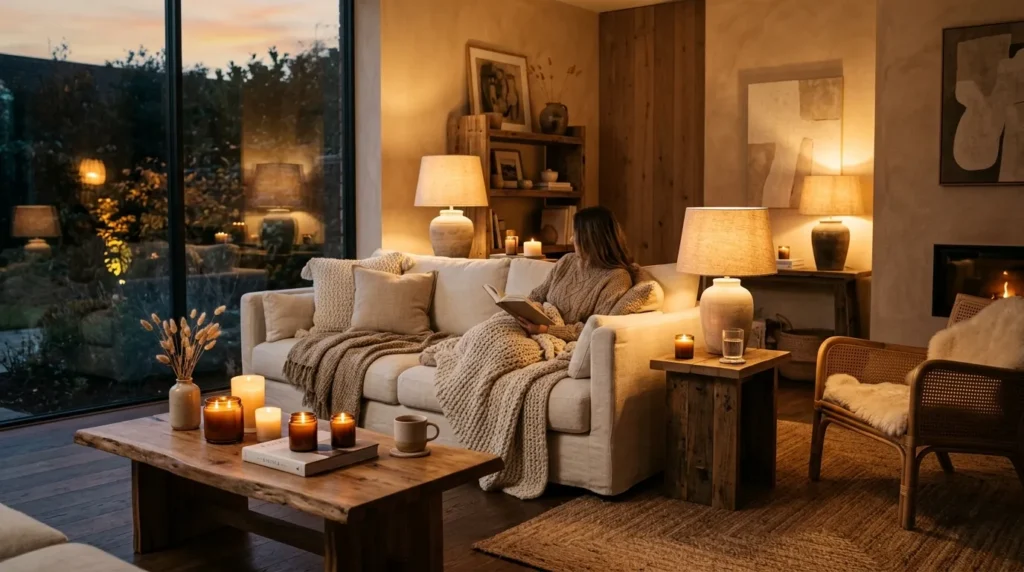
9. Warm Ambient Lighting
Quick Benefits
- Creates a cozy evening atmosphere
- Enhances natural textures
- Makes the room feel more inviting
- Adds depth and dimension
- Improves everyday comfort
Why It Works
Lighting plays a major role in how an organic modern living room feels throughout the day. While natural sunlight creates brightness and openness, warm artificial lighting creates the relaxing atmosphere people want in the evening.
A common mistake many homeowners make is depending only on one overhead light. This often creates harsh shadows and removes the cozy feeling that organic interiors are known for. Layered lighting allows different areas of the room to serve different purposes while adding warmth.
I’ve noticed that the most comfortable living rooms usually have several sources of soft light rather than one strong fixture. Floor lamps, table lamps, wall sconces, and candles create a gentle glow that highlights wood grains, textured fabrics, and natural materials.
Warm lighting also enhances neutral color palettes. Beige, cream, and brown tones appear richer and more inviting under soft illumination, making the entire room feel calmer and more luxurious.
How To Style It
Create layers by combining different lighting sources at different heights. Place a tall floor lamp beside a sofa, add a table lamp on a console, and use decorative lighting on shelves or cabinets.
Choose fixtures made from organic materials such as linen shades, ceramic bases, wood details, brushed brass, or matte finishes. These materials naturally complement the organic modern style.
Use warm white bulbs around 2700K–3000K to create a comfortable glow instead of a bright, cool appearance. Add candles or lantern-style décor for extra ambiance during evenings.
For a designer-inspired effect, highlight specific areas of the room, such as artwork, plants, or architectural features. Good lighting should not only illuminate the room—it should enhance the textures and details that make the space special.
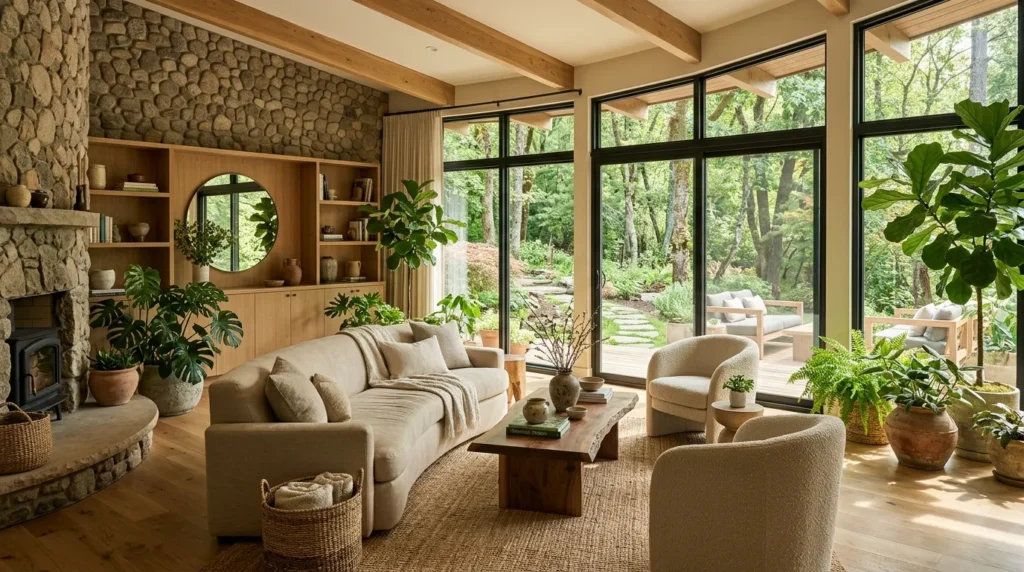
10. Biophilic Design Touches
Quick Benefits
- Strengthens connection with nature
- Creates a peaceful environment
- Improves visual harmony
- Makes interiors feel healthier
- Adds timeless appeal
Why It Works
Biophilic design takes organic modern style one step further by intentionally bringing natural elements into everyday living spaces. The idea is based on creating environments that help people feel connected to nature through materials, colors, shapes, and natural patterns.
I’ve seen this approach become increasingly popular because homeowners are looking for spaces that feel restorative rather than simply attractive. After busy days, a living room designed with natural influences can feel like a personal retreat.
Biophilic interiors focus on more than just adding plants. They include natural sunlight, organic shapes, earthy colors, water-inspired details, natural textures, and views toward outdoor spaces whenever possible.
This design philosophy works beautifully with modern interiors because both styles value simplicity and intentional choices. Instead of filling a room with decoration, biophilic design focuses on creating a peaceful experience.
How To Style It
Begin by maximizing your connection to outdoor views. Keep windows open, use lightweight curtains, and arrange seating where you can enjoy natural scenery.
Introduce natural materials throughout the room with wood furniture, stone accessories, linen fabrics, and woven details. Choose artwork featuring landscapes, botanical prints, or abstract designs inspired by nature.
Add plants at different heights to create a layered effect. Combine tall floor plants with smaller tabletop greenery to create visual movement.
You can also include organic shapes through curved furniture, rounded mirrors, and sculptural décor. These small details help create a living room that feels balanced, calming, and connected to the natural world.
Frequently Asked Questions
1. What is organic modern living room style?
Organic modern style combines contemporary design with natural materials, earthy colors, and comfortable textures. It focuses on creating a clean but warm environment using elements like wood, stone, linen, plants, and handcrafted décor. The goal is a balanced space that feels stylish, peaceful, and connected to nature.
2. How do I make a modern living room feel warmer?
Add natural textures and warm materials such as wood furniture, woven rugs, linen curtains, soft throws, and indoor plants. Warm lighting and earthy colors also help create a more inviting atmosphere. Even small changes, like adding a textured pillow or natural accent piece, can make a modern room feel more comfortable.
3. What colors are best for organic modern interiors?
The best colors include warm neutrals and earth-inspired shades such as beige, cream, taupe, sand, olive green, terracotta, and soft brown. These colors create a calm foundation and pair beautifully with natural materials like wood, stone, and woven fabrics.
4. Can organic modern style work in a small living room?
Yes, organic modern design works especially well in small spaces because it focuses on simplicity and functionality. Choosing light colors, multifunctional furniture, natural textures, and minimal décor can help a smaller room feel open, comfortable, and visually balanced.
5. What materials are commonly used in organic modern design?
Popular materials include natural wood, stone, linen, cotton, wool, rattan, jute, bamboo, ceramic, and clay. These materials add texture and warmth while creating a connection to nature. Combining several natural materials is what gives organic modern interiors their layered and relaxed appearance.
6. How can I decorate organically without making my home look rustic?
The key is balancing natural materials with modern shapes. Choose clean-lined furniture, simple layouts, and minimal accessories while adding warmth through wood, stone, textiles, and greenery. This creates a sophisticated organic modern look instead of a traditional rustic style.
Conclusion
Creating an organic modern living room is about finding the perfect balance between contemporary simplicity and natural warmth. The most beautiful spaces are not always the ones filled with the newest trends—they are the ones designed around comfort, functionality, and materials that feel authentic.
By introducing natural wood, earthy colors, layered textures, woven accents, greenery, and warm lighting, you can create a living room that feels both elegant and inviting. These elements work together to soften modern design while maintaining the clean, sophisticated look many homeowners love.
One of the best things about this style is its flexibility. You don’t need to completely redesign your home to embrace organic modern décor. Start with one meaningful change, such as adding a natural fiber rug, replacing cool lighting with warmer bulbs, or bringing in a beautiful plant. Small updates can gradually transform your space.
The goal is to create a room that supports your everyday lifestyle—a place where you can relax, entertain guests, and enjoy the comfort of home. When modern design meets the beauty of natural elements, your living room becomes more than just a decorated space. It becomes a peaceful retreat that feels timeless for years to come.
Related Articles
- 10 Modern Farmhouse Living Room Ideas with Cozy Details
- 10 Neutral Living Room Ideas for a Timeless Home
- 10 Small Living Room Layout Ideas to Maximize Space
- 10 Minimalist Home Decor Ideas for a Clutter-Free Space
- 10 Natural Bedroom Ideas with Organic Modern Style