
10 DIY Coffee Tables That Anyone Can Build
A coffee table can completely change the look and functionality of a living room, but buying the perfect one can sometimes be surprisingly expensive. Building your own gives you the opportunity to create a piece that fits your exact space, style, and budget.
The good news is that a DIY coffee table doesn’t need to involve complicated woodworking. Many attractive designs use simple materials such as basic lumber, wooden crates, reclaimed boards, hairpin legs, or even an existing tabletop.
In my experience, the best DIY furniture projects are the ones that balance appearance with practicality. A coffee table should look good, but it should also provide enough surface area for everyday use without making the room feel crowded.
You can create a rustic farmhouse table with reclaimed wood, a modern design with clean lines, or a compact table with hidden storage. Even simple finishes can make inexpensive materials look thoughtfully designed.
Before building, measure the space around your sofa and consider how much room you need to walk comfortably. Then choose a design that complements your existing furniture rather than competing with it.
These DIY coffee table ideas are designed to give you inspiration for creating an affordable, functional centerpiece for your living room.
Table of Contents
- Build a Simple Wood Table
- Make a Crate Coffee Table
- Create a Reclaimed Wood Table
- Add Hairpin Legs
- Build a Farmhouse Table
- Make a Pallet Coffee Table
- Create a Storage Table
- Build a Round Coffee Table
- Make a Minimalist Table
- Add a Lift-Top Design
1. Build a Simple Wood Table
Quick Benefits
- Beginner-friendly
- Affordable materials
- Easy to customize
- Fits many styles
- Simple construction
Why It Works
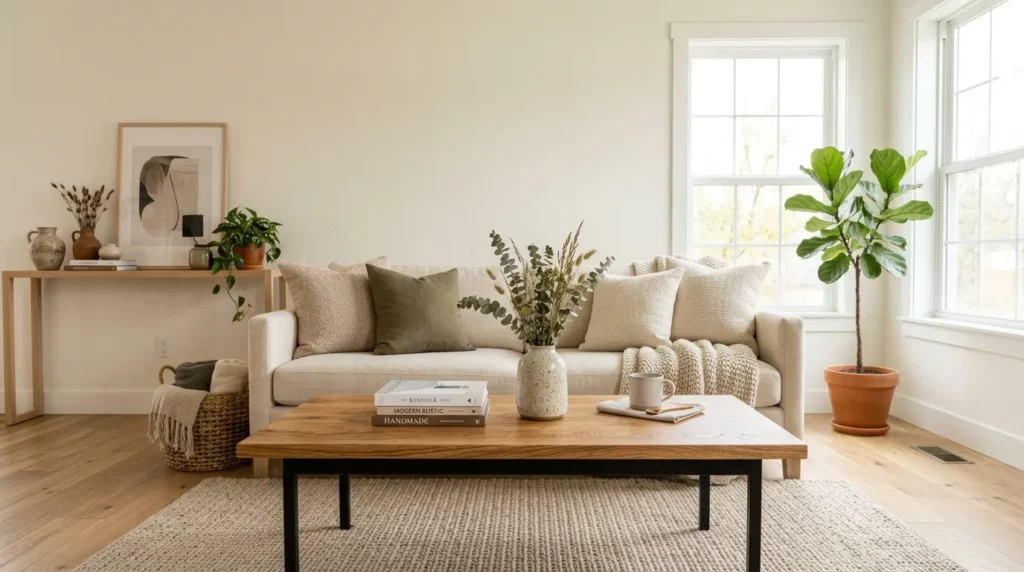
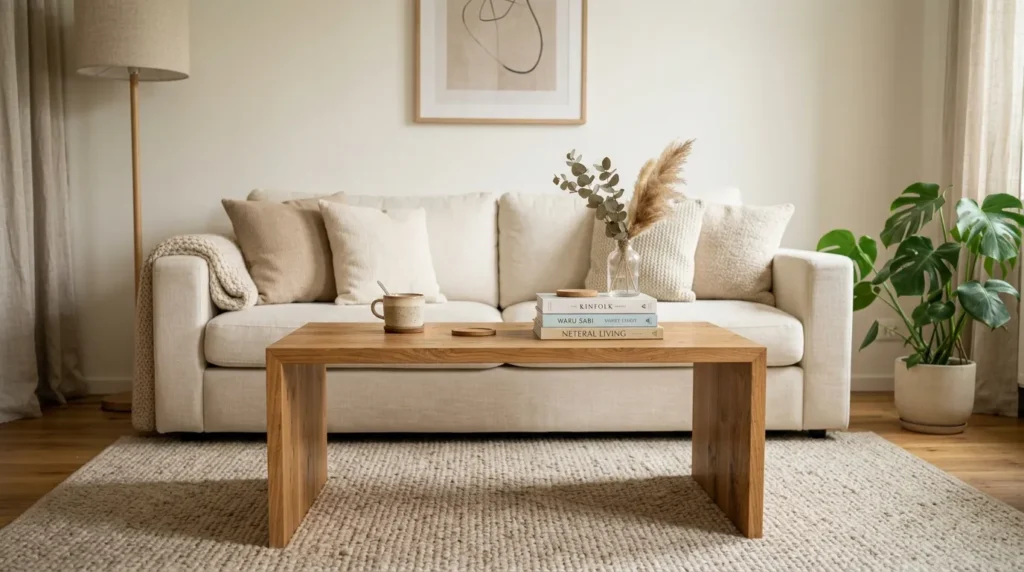
A basic wood coffee table is one of the most approachable furniture projects for beginners. A simple rectangular top paired with sturdy legs can create a timeless piece without complicated joinery.
The beauty of this design is its flexibility. You can stain the wood for a traditional appearance, paint it for a farmhouse look, or leave the natural grain visible for a modern organic aesthetic.
I’ve found that simple proportions often make homemade furniture look more sophisticated.
How To Style It
Choose lumber that is straight and suitable for furniture use. Sand all surfaces thoroughly before applying your chosen finish.
Keep the tabletop relatively simple and pair it with a neutral sofa, textured rug, and minimal accessories.
2. Make a Crate Coffee Table
Quick Benefits
- Adds storage
- Uses inexpensive materials
- Easy to customize
- Creates rustic character
- Beginner-friendly
Why It Works
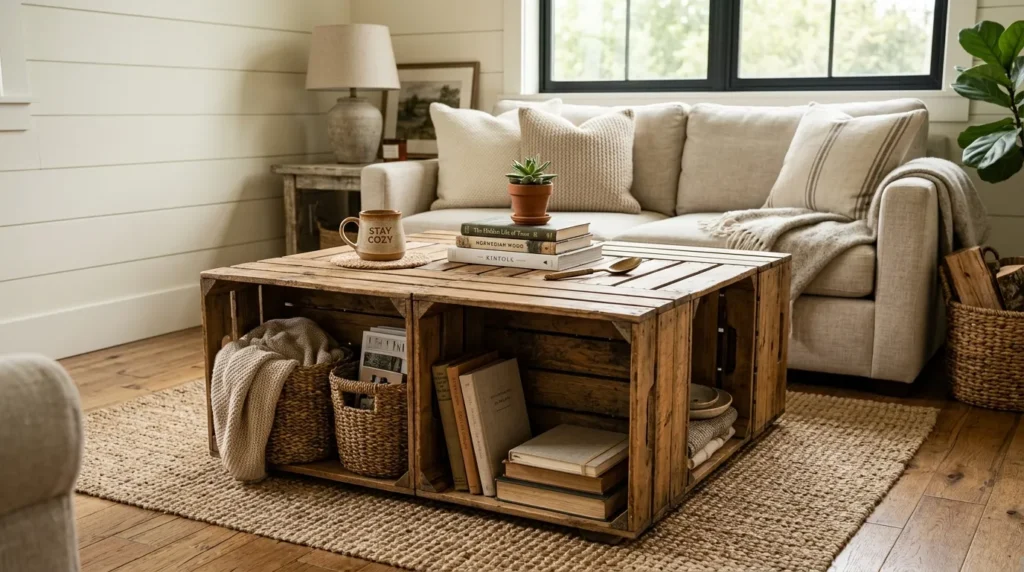
Wooden crates can be transformed into a practical coffee table with built-in storage. Their open compartments provide convenient space for books, blankets, games, or decorative baskets.
The crate design also naturally creates texture and visual interest.
I’ve found that this type of table works especially well in casual living rooms where practicality is just as important as appearance.
How To Style It
Arrange sturdy wooden crates around a central frame or tabletop and secure the components appropriately.
Use baskets or storage boxes inside the openings to keep smaller items organized while maintaining a tidy appearance.
3. Create a Reclaimed Wood Table
Quick Benefits
- Adds character
- Reuses materials
- Creates natural texture
- Works with farmhouse décor
- Each piece feels unique
Why It Works
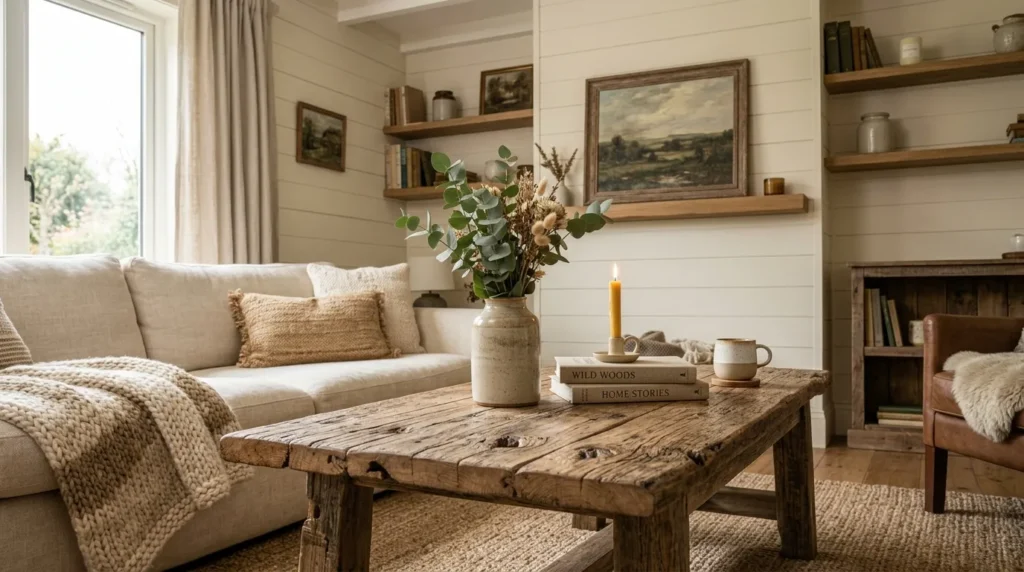
Reclaimed wood brings natural variation that is difficult to reproduce with new materials. Knots, grain patterns, and subtle imperfections can make a coffee table feel authentic and full of character.
This style works beautifully with farmhouse, rustic, industrial, and organic interiors.
I’ve found that reclaimed wood looks best when its natural imperfections remain visible rather than being covered with a heavy finish.
How To Style It
Use properly prepared reclaimed boards and inspect them carefully before construction. Sand rough surfaces and choose a protective finish appropriate for the intended use.
Pair the table with soft upholstery, woven textures, and neutral décor.
4. Add Hairpin Legs
Quick Benefits
- Creates a modern look
- Easy to assemble
- Visually lightweight
- Works with wood tops
- Saves floor space visually
Why It Works
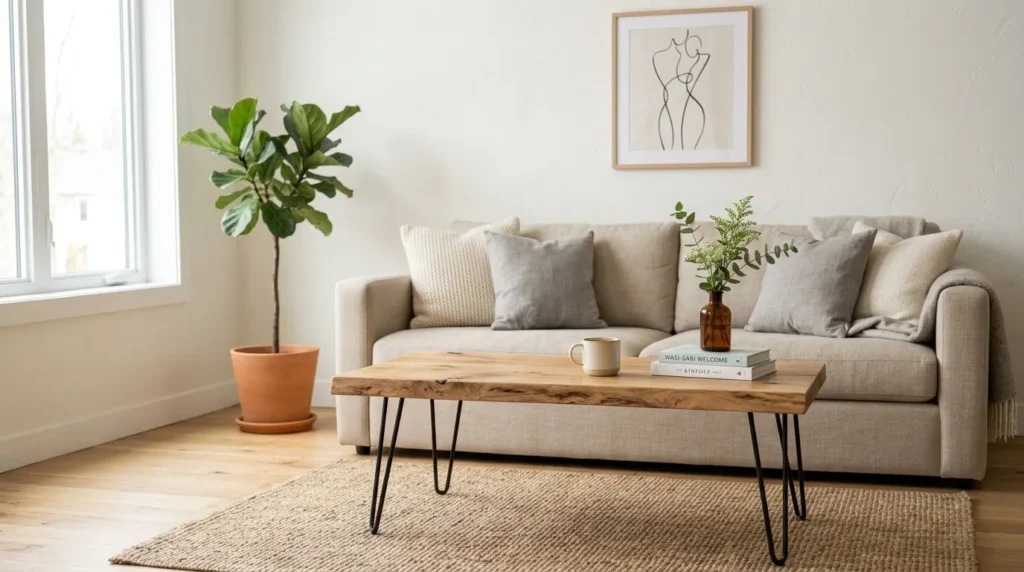
Hairpin legs create an airy appearance because their thin metal structure allows more of the floor to remain visible beneath the table.
They pair particularly well with wooden tops and can turn a basic board into a stylish modern coffee table.
I’ve found that this combination works beautifully in small living rooms because the furniture doesn’t appear overly heavy.
How To Style It
Choose a solid tabletop with a finish that complements your room. Attach sturdy hairpin legs at evenly measured positions.
Keep the accessories on top minimal to preserve the lightweight appearance.
5. Build a Farmhouse Table
Quick Benefits
- Adds warmth
- Works with casual interiors
- Provides a substantial centerpiece
- Easy to personalize
- Timeless style
Why It Works
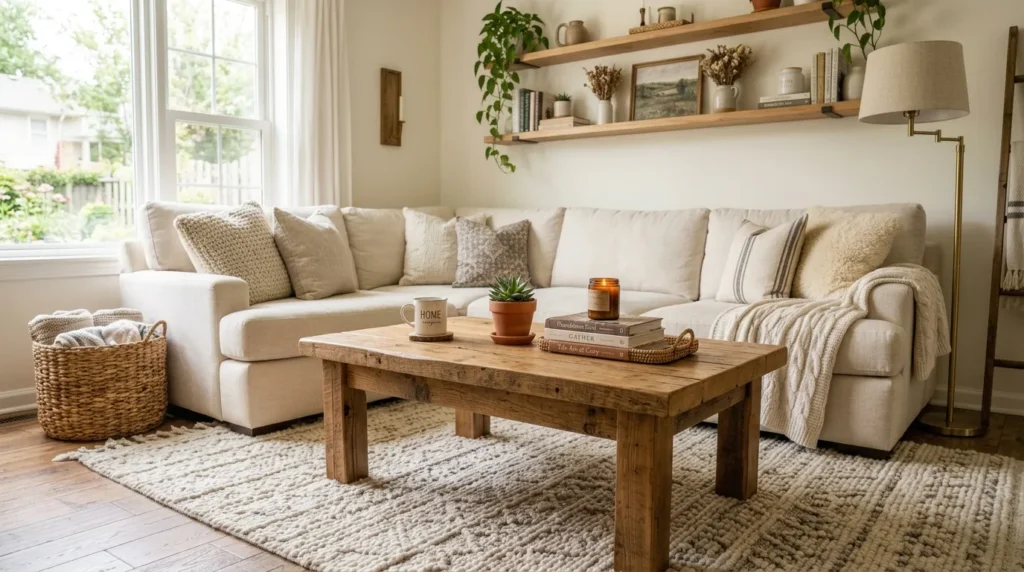
A farmhouse coffee table can bring warmth and texture to a living room through chunky wood construction, simple lines, and a slightly weathered finish.
The style works especially well with neutral upholstery, woven baskets, cotton textiles, and natural accessories.
I’ve found that farmhouse furniture looks more current when the finish is subtle rather than heavily distressed.
How To Style It
Use sturdy wood and a straightforward rectangular or square design. Consider a natural stain, soft white base, or muted neutral finish.
Decorate with a simple tray, coffee-table books, a small vase, or a bowl.
6. Make a Pallet Coffee Table
Quick Benefits
- Budget-friendly
- Reuses materials
- Rustic character
- Easy to customize
- Great for casual spaces
Why It Works
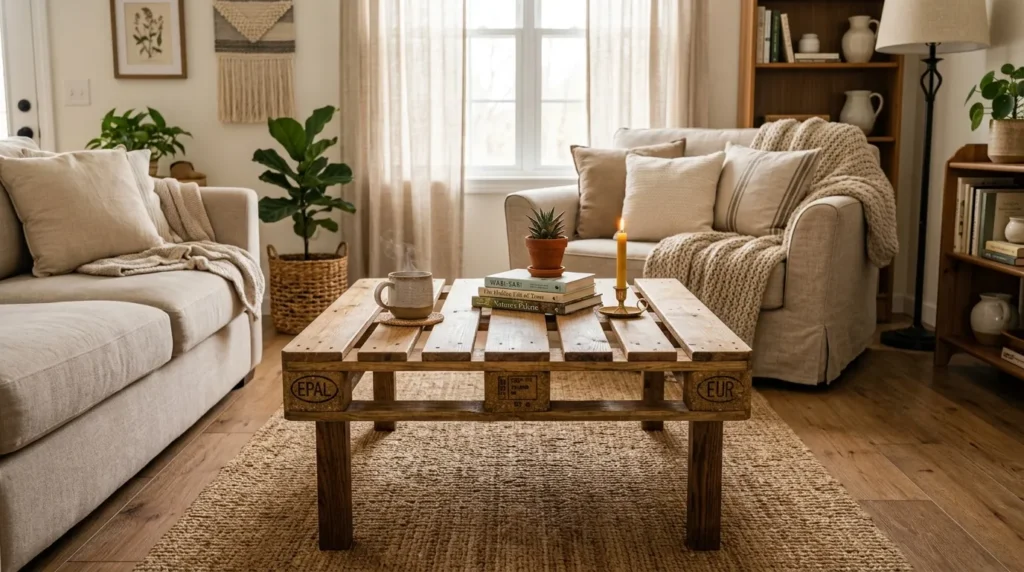
Wood pallets can provide an inexpensive starting point for a rustic coffee table. Their naturally rough structure creates texture and can work especially well in relaxed farmhouse, industrial, or outdoor-inspired interiors.
The key is preparing the material properly. Pallets should be suitable for reuse, structurally sound, and thoroughly cleaned before becoming furniture.
I’ve found that adding simple legs or casters can turn a basic pallet into a much more functional table.
How To Style It
Sand the wood thoroughly and apply a suitable protective finish. Add sturdy legs or appropriately rated casters if mobility is important.
Keep the tabletop styling simple with a tray, books, or a small plant.
7. Create a Storage Table
Quick Benefits
- Hides clutter
- Adds functionality
- Maximizes small spaces
- Keeps essentials nearby
- Looks organized
Why It Works
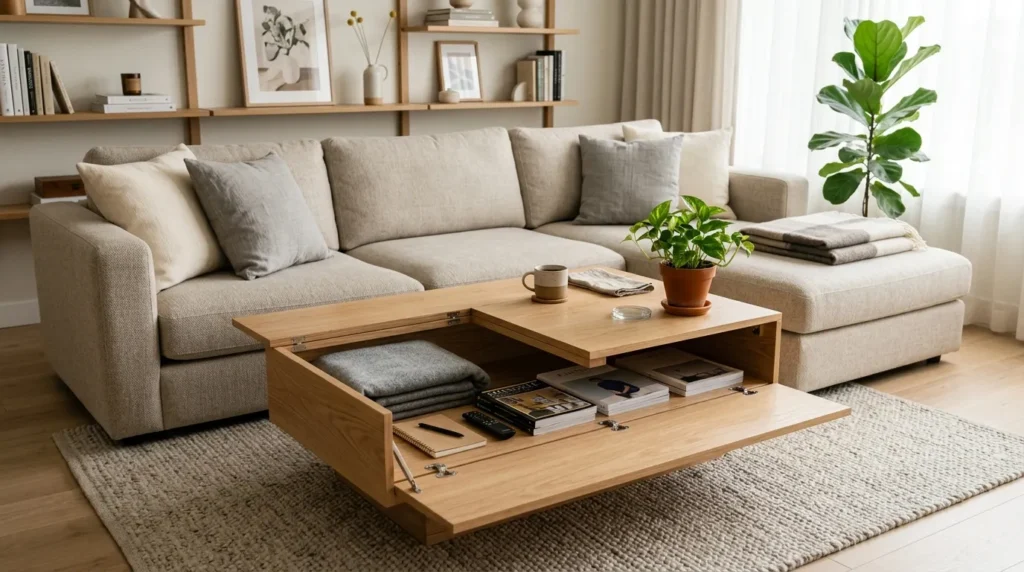
A coffee table with built-in storage is especially useful in smaller living rooms where every piece of furniture needs to work harder.
A liftable top, lower shelf, drawers, or enclosed compartments can provide space for blankets, remotes, books, and everyday items.
I’ve found that concealed storage is particularly valuable when you want the living room to look clean without constantly putting things away in another room.
How To Style It
Choose a design with enough storage for your everyday items without making the table overly bulky.
Use baskets or fabric containers inside open compartments to create a more polished appearance.
8. Build a Round Coffee Table
Quick Benefits
- Softens square furniture
- Improves circulation
- Works in compact rooms
- Creates visual interest
- Family-friendly shape
Why It Works
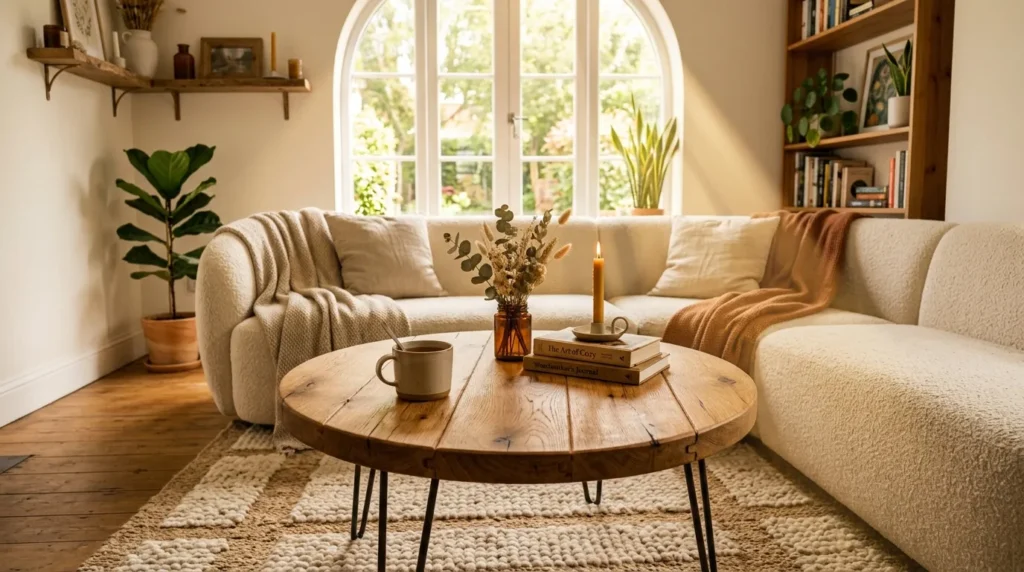
A round coffee table can make a living room feel less rigid because it eliminates sharp corners and introduces a softer silhouette.
It’s also useful where people need to move around the table frequently, especially in compact seating arrangements.
I’ve found that round tables work particularly well with sectional sofas and curved furniture.
How To Style It
Use a circular tabletop with sturdy legs positioned for proper balance. Sand the edges carefully and apply a durable finish.
Add a round tray, books, or a low arrangement of greenery to reinforce the shape.
9. Make a Minimalist Table
Quick Benefits
- Clean appearance
- Easy to coordinate
- Works in modern interiors
- Visually lightweight
- Timeless design
Why It Works
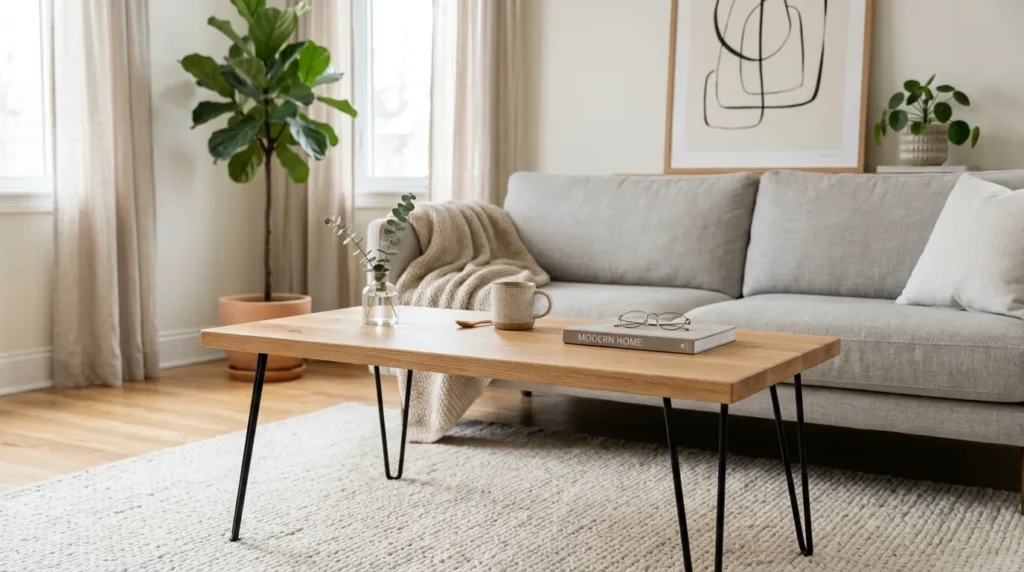
Minimalist coffee tables rely on proportion, material, and clean lines rather than elaborate details. This makes them particularly suitable for modern and contemporary living rooms.
A simple rectangular or square top with slim legs can create a polished look while keeping the surrounding space visually open.
I’ve found that the quality of the finish matters more than decorative complexity.
How To Style It
Choose a restrained material palette such as natural wood, painted wood, or wood combined with simple metal legs.
Keep tabletop accessories limited to a few intentional pieces.
10. Add a Lift-Top Design
Quick Benefits
- Provides hidden storage
- Creates a temporary workspace
- Adds versatility
- Useful for small rooms
- Keeps essentials accessible
Why It Works
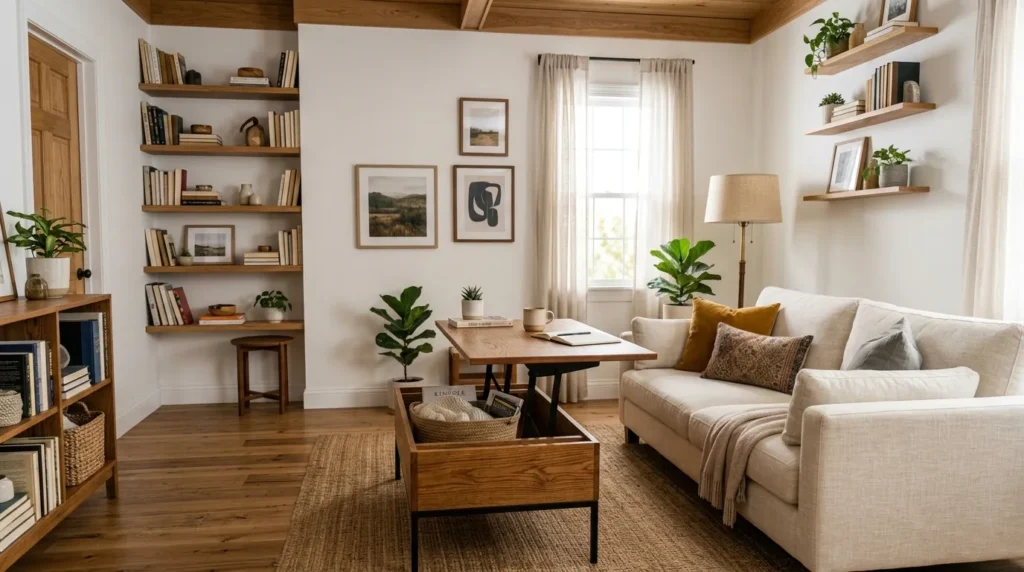
A lift-top coffee table combines several functions in one piece of furniture. The top can rise to create a more comfortable surface for working, eating, writing, or using a laptop.
The enclosed storage area also helps keep everyday items out of sight.
I’ve found this design particularly practical for multipurpose living rooms where the same space needs to support several activities.
How To Style It
Use sturdy lift-top hardware designed for furniture and follow the manufacturer’s installation requirements carefully.
Choose a finish that coordinates with your sofa, rug, and other wood elements so the table feels integrated into the room.
Frequently Asked Questions
What is the easiest DIY coffee table to build?
A simple wooden tabletop with pre-made legs is one of the easiest options because it requires relatively few components and straightforward assembly.
How much does it cost to build a DIY coffee table?
The cost varies depending on the materials, hardware, finish, and tools you already have. Using reclaimed wood or basic lumber can reduce the overall expense.
What wood is best for a DIY coffee table?
Pine, oak, maple, and other furniture-suitable lumber can work well. Choose based on your desired appearance, durability, budget, and available tools.
Can beginners build a coffee table?
Yes. Simple designs using pre-made legs and straightforward tabletop construction are accessible to many beginners.
How high should a coffee table be?
A coffee table is generally most comfortable when its height is close to the seat height of the surrounding sofa or chairs. Measure your furniture before building.
How do I make a DIY coffee table look expensive?
Focus on clean proportions, smooth sanding, quality hardware, a consistent finish, and restrained styling. Good finishing work can make simple materials look much more polished.
Conclusion
Building your own coffee table is an approachable way to create furniture that fits your living room while controlling the budget and design. From simple wood tables to storage pieces, pallet designs, round tables, and lift-top options, there are plenty of ways to customize the project.
The most important step is choosing a design that matches your space. Consider the size of your sofa, walking paths, storage needs, and overall decorating style before selecting materials.
Start with a straightforward construction if you’re new to DIY furniture, then focus on careful sanding, secure assembly, and a durable finish.
A thoughtfully built coffee table doesn’t need to look complicated. With good proportions and clean finishing, even a simple DIY design can become a beautiful centerpiece for your living room.