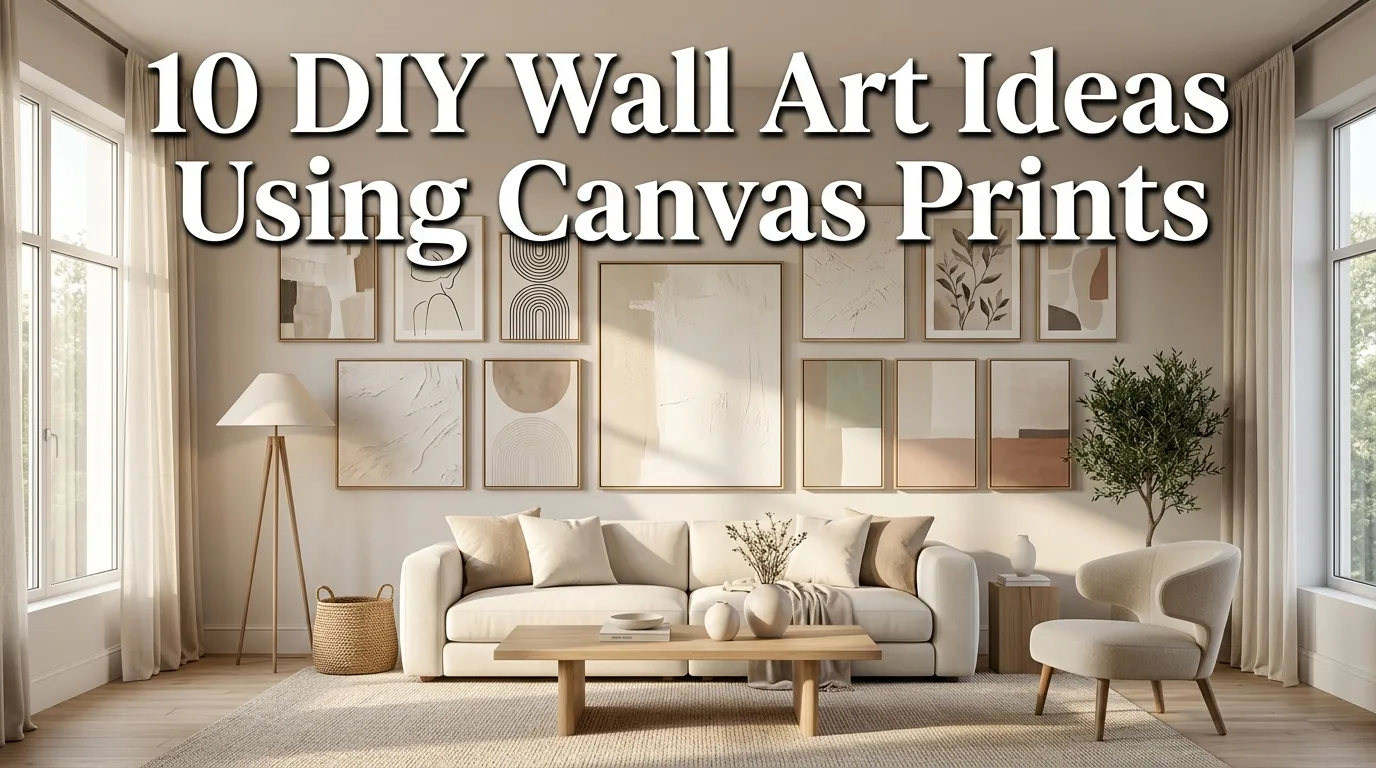
10 DIY Wall Art Ideas Using Canvas Prints
Blank walls can make a room feel unfinished, but decorating them doesn’t have to mean spending a fortune on original artwork. Canvas prints provide an affordable foundation for creating personalized wall décor that looks thoughtfully designed.
The best part about DIY canvas art is how flexible it can be. You can transform a basic printed canvas with paint, fabric, texture, wood trim, or simple decorative details. A few inexpensive supplies can turn an ordinary print into something that feels custom-made for your home.
In my experience, the most successful DIY wall art projects don’t try to do too much. A simple abstract design, tonal texture, or carefully chosen color palette can have a much stronger impact than an overly complicated project.
Canvas also works beautifully across different decorating styles. Neutral artwork can complement a modern living room, while botanical prints can bring softness to a bedroom or entryway. You can even coordinate your DIY artwork with existing furniture, rugs, and accent colors.
Whether you’re decorating a new home, refreshing a tired wall, or looking for a weekend project, these canvas ideas can help you create attractive artwork without requiring advanced artistic skills.
Table of Contents
- Paint Over a Canvas Print
- Create Textured Abstract Art
- Add a Fabric Overlay
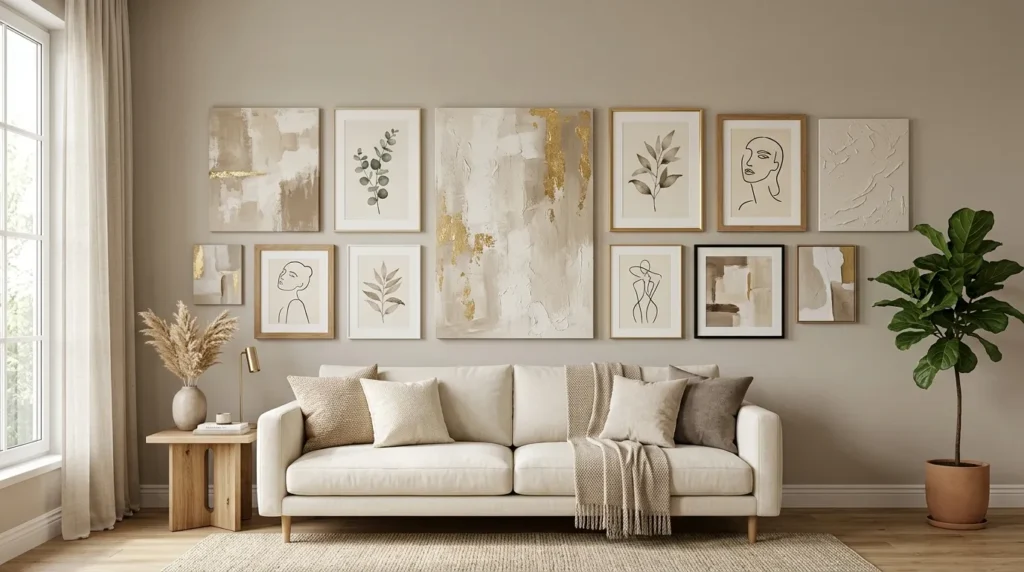
- Make a Neutral Gallery Canvas
- Add a Wood Frame
- Create a Botanical Canvas
- Try a Minimalist Line Design
- Layer Metallic Details
- Make a Color Block Canvas
- Create Oversized Canvas Art
1. Paint Over a Canvas Print
Quick Benefits
- Uses affordable materials
- Easy to customize
- Creates unique artwork
- Refreshes old prints
- Works with many styles
Why It Works
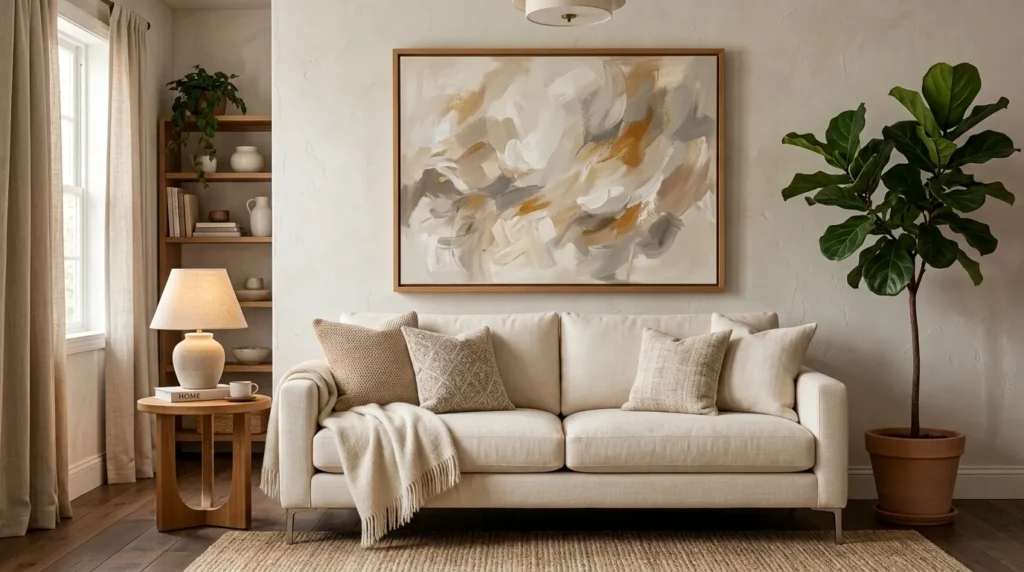
Painting over an existing canvas print gives you a ready-made surface while allowing you to completely change its appearance. This is particularly useful when you already have artwork that no longer matches your décor.
You don’t have to cover the entire print. Soft layers of paint can allow portions of the original design to remain visible, creating depth.
I’ve found that neutral paint colors are particularly forgiving for beginners.
How To Style It
Choose acrylic paint in two or three coordinating shades. Apply thin layers with a brush, sponge, or palette knife.
Let each layer dry before adding another, and experiment on a small section first to understand how the colors interact.
2. Create Textured Abstract Art
Quick Benefits
- Adds dimension
- Looks artistic
- Uses simple materials
- Works with neutral décor
- Creates a custom appearance
Why It Works
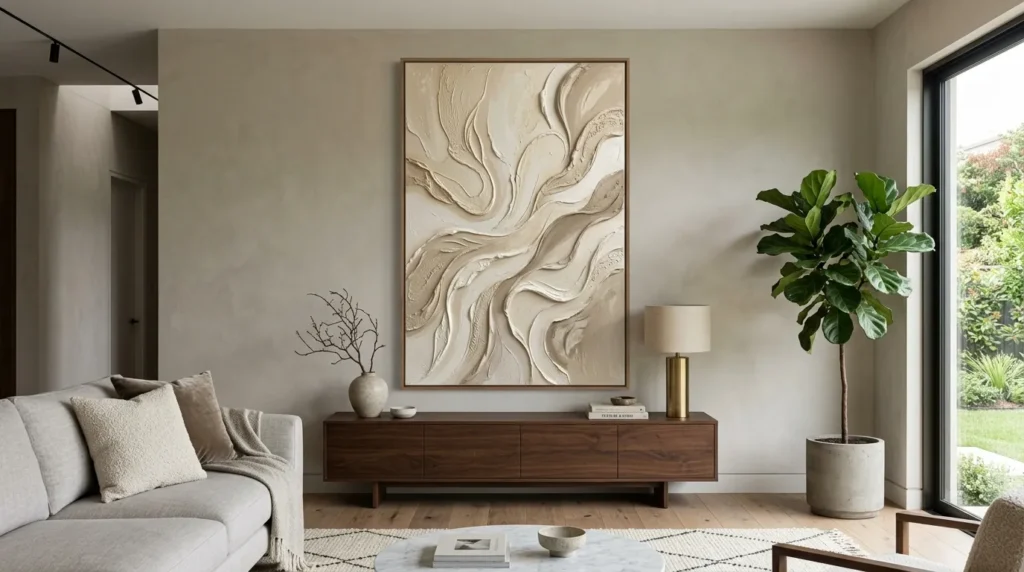
Texture can make inexpensive canvas art feel much more substantial. Modeling paste, textured mediums, or thick acrylic paint can create raised shapes that catch light throughout the day.
Abstract designs are especially forgiving because there is no requirement to create a perfect image.
I’ve found that simple organic shapes often look more sophisticated than highly detailed patterns.
How To Style It
Create a neutral base using cream, beige, or soft gray. Add raised lines, curves, or organic forms using a palette knife.
Keep the colors restrained and allow the texture to provide most of the visual interest.
3. Add a Fabric Overlay
Quick Benefits
- Adds softness
- Creates texture
- Easy to customize
- Works with neutral interiors
- Can reuse textiles
Why It Works
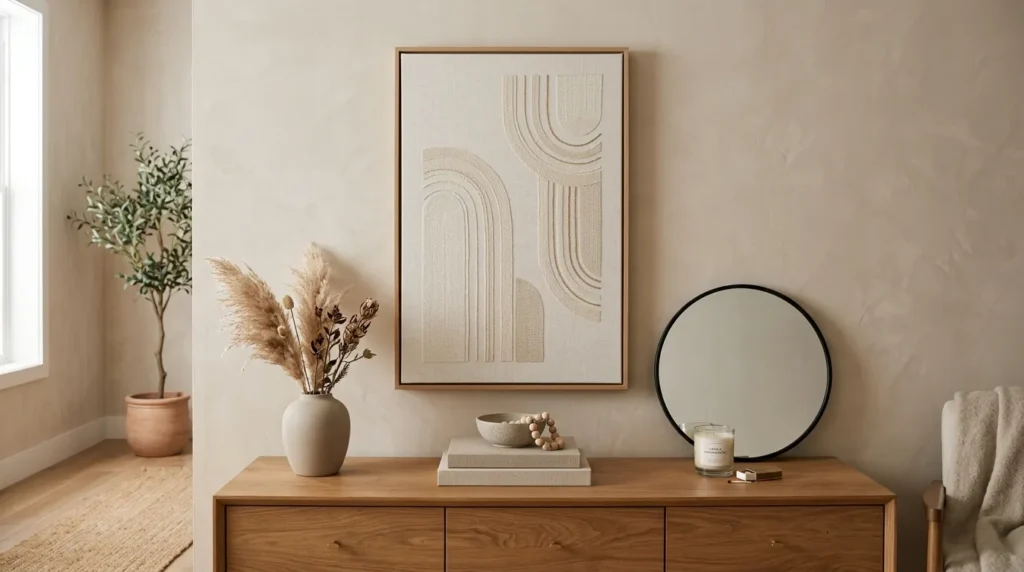
Fabric can completely change the character of a canvas. Linen, cotton, muslin, or other suitable textiles can introduce a tactile quality that painted artwork doesn’t provide.
This approach works particularly well in bedrooms and living rooms where soft textures are already part of the design.
I’ve found natural-looking fabrics especially effective for creating an organic, relaxed aesthetic.
How To Style It
Choose a fabric that complements your room’s existing colors. Stretch it smoothly over the canvas and secure it neatly at the back.
You can leave the fabric plain or add simple painted lines or shapes.
4. Make a Neutral Gallery Canvas
Quick Benefits
- Creates cohesion
- Works with many styles
- Easy to coordinate
- Looks sophisticated
- Ideal for gallery walls
Why It Works
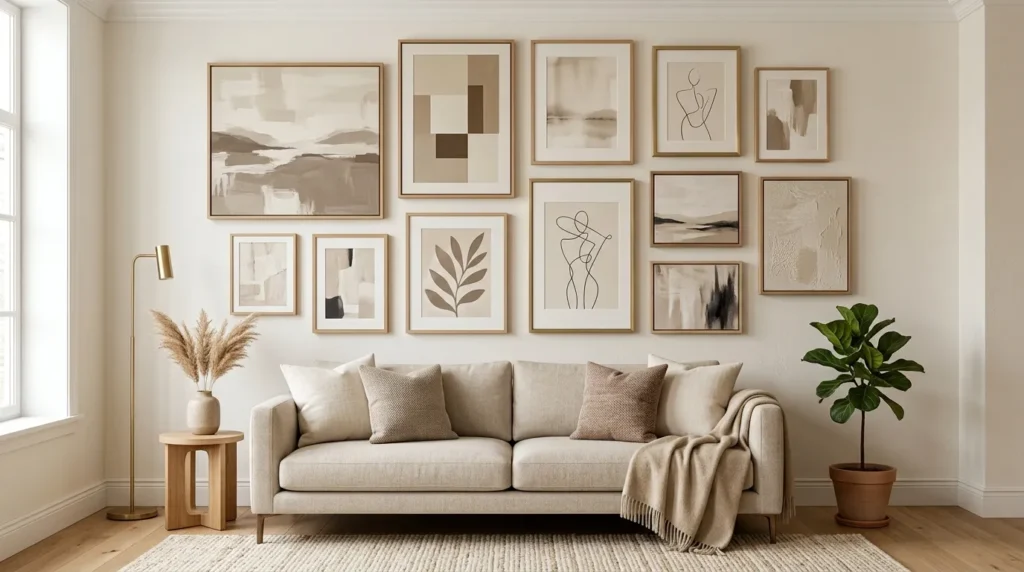
A collection of neutral canvas artwork can create a polished gallery wall without requiring every piece to match exactly.
Cream, beige, taupe, charcoal, and soft brown can work together while maintaining a calm visual connection.
I’ve found that combining different textures and compositions within one color family creates more interest than using identical artwork.
How To Style It
Create several canvases using related colors but slightly different designs. Mix abstract forms, subtle lines, and textured surfaces.
Use similar frames or leave the canvases frameless for a cleaner contemporary look.
5. Add a Wood Frame
Quick Benefits
- Looks finished
- Adds warmth
- Creates structure
- Elevates inexpensive art
- Works with modern décor
Why It Works
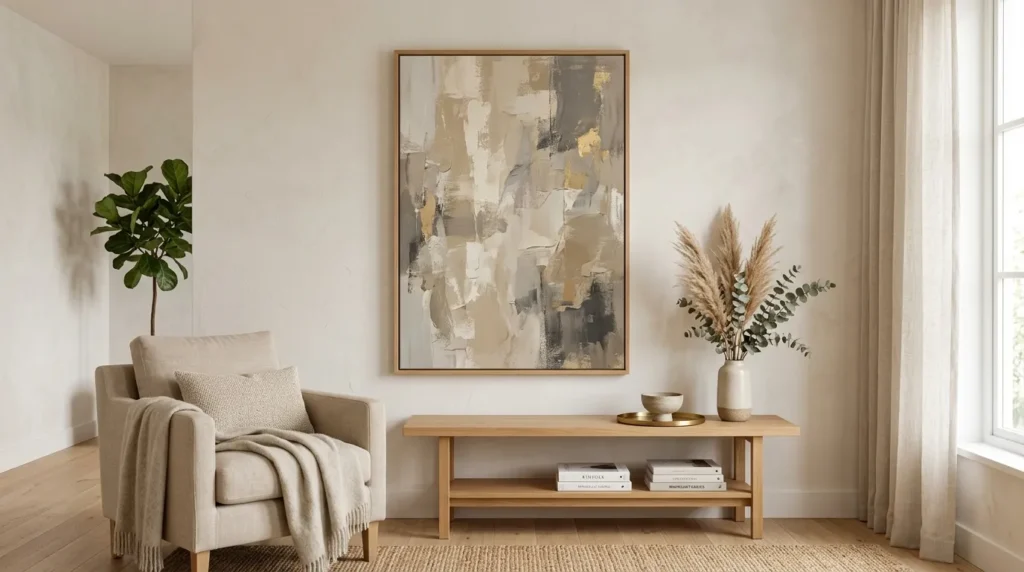
A simple wood frame can make a basic canvas print look significantly more polished. Natural wood also introduces warmth and organic texture to contemporary interiors.
This technique works particularly well when your room already contains wood furniture or flooring.
I’ve found that slim frames create a cleaner appearance than overly decorative molding.
How To Style It
Choose a wood tone that complements existing furniture. Light oak works beautifully with neutral interiors, while walnut can create stronger contrast.
Keep the frame simple and let the artwork remain the focal point.
6. Create a Botanical Canvas
Quick Benefits
- Adds natural character
- Brings in soft color
- Works in many rooms
- Easy to personalize
- Creates a calming feel
Why It Works
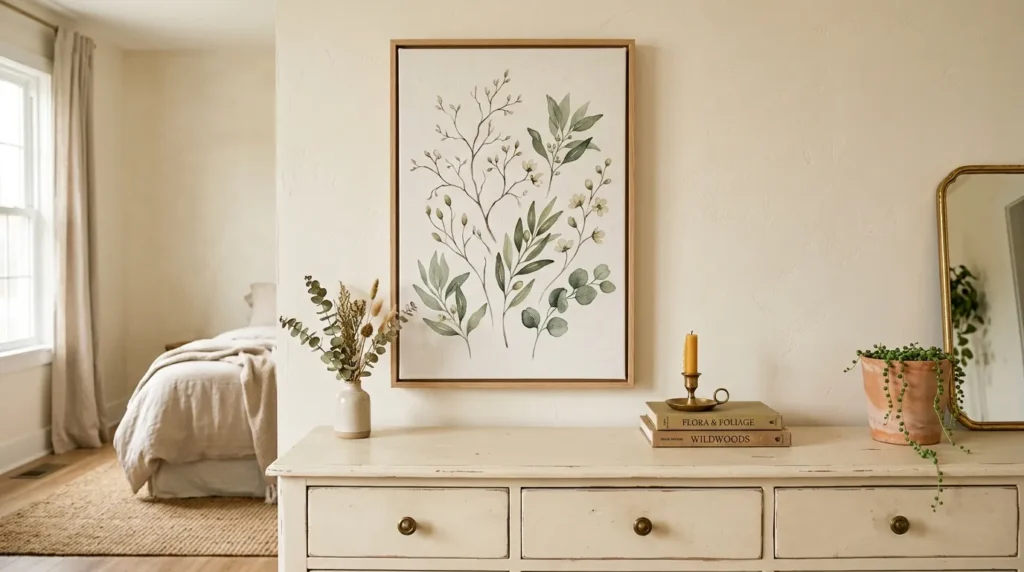
Botanical artwork brings an organic quality to a room without requiring real plants or complicated décor. Leaves, branches, flowers, and simple botanical silhouettes can all create attractive canvas designs.
The look can range from modern and minimalist to traditional and cottage-inspired depending on the colors and composition.
I’ve found that muted botanical tones work especially well when the surrounding room already has natural wood, woven textures, or greenery.
How To Style It
Start with a light neutral canvas and choose one botanical theme. Paint simple leaves or use a botanical print as the foundation.
Keep the colors soft and coordinate them with nearby pillows, rugs, or curtains.
7. Try a Minimalist Line Design
Quick Benefits
- Simple to create
- Looks contemporary
- Uses minimal materials
- Works in small spaces
- Complements neutral décor
Why It Works
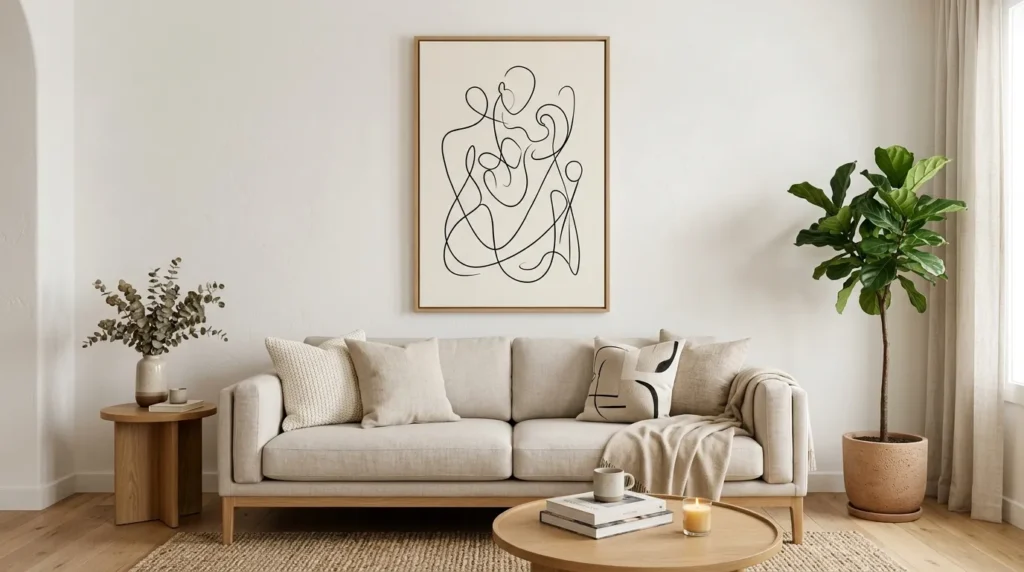
Minimalist line art can make a strong statement without overwhelming a room. Simple faces, abstract figures, botanical forms, and continuous lines are all suitable subjects.
The limited composition also makes this one of the easiest DIY canvas projects for beginners.
I’ve found that black or charcoal lines against a warm white background create a particularly timeless result.
How To Style It
Use a pencil to lightly sketch the design before applying paint or a permanent art medium. Keep the lines intentionally simple.
Display one large piece or create a pair of related canvases for a balanced arrangement.
8. Layer Metallic Details
Quick Benefits
- Adds subtle luxury
- Catches the light
- Creates dimension
- Updates simple artwork
- Works with neutral palettes
Why It Works
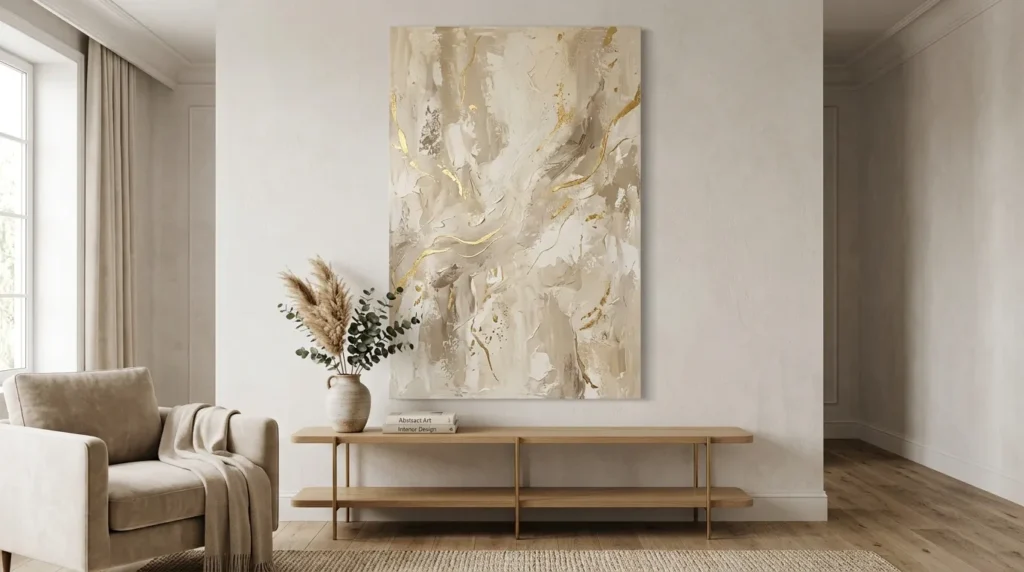
Small metallic accents can make simple canvas artwork feel more sophisticated. Gold, brass, or soft bronze details can complement existing hardware, lighting, or accessories.
The goal is subtlety. Too much metallic paint can overpower the artwork, while a few carefully placed details create elegant highlights.
I’ve found that metallic accents work especially well on abstract and textured canvas designs.
How To Style It
Start with a neutral base and add small metallic lines, dots, brush marks, or geometric shapes.
Repeat the metallic finish elsewhere in the room so the artwork feels connected to the overall design.
9. Make a Color Block Canvas
Quick Benefits
- Easy for beginners
- Creates bold impact
- Uses simple shapes
- Easy to coordinate
- Refreshes plain walls
Why It Works
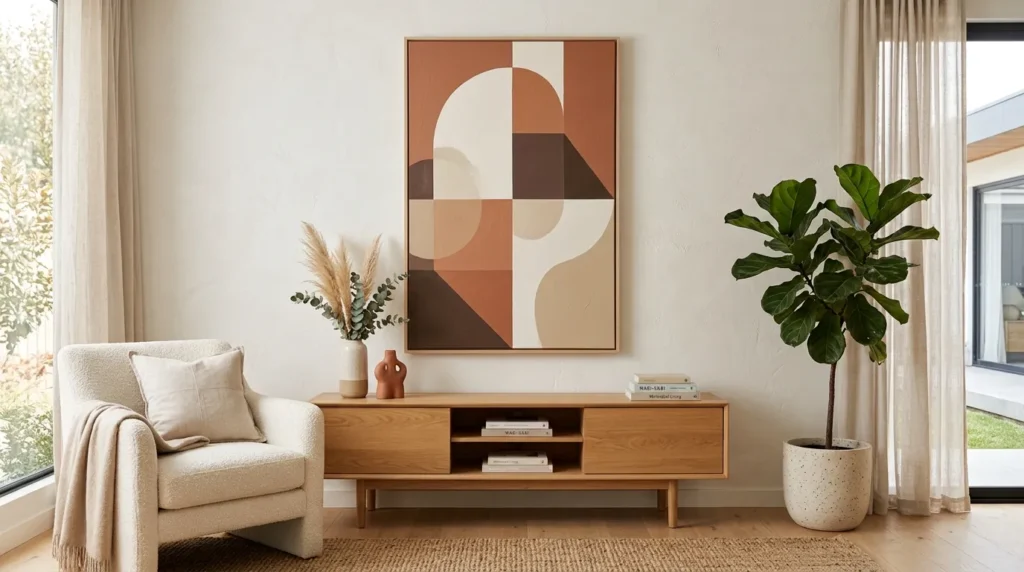
Color blocking offers a straightforward way to create modern artwork without complicated painting techniques. Geometric shapes can add structure and personality while allowing you to control exactly which colors appear in the room.
This is especially useful when you want your artwork to reinforce an existing accent color.
I’ve found that using three or four related shades produces a more sophisticated result than using many contrasting colors.
How To Style It
Choose a limited palette inspired by your room. Use painter’s tape to create clean geometric sections, then apply the colors one at a time.
Allow each section to dry before carefully removing the tape.
10. Create Oversized Canvas Art
Quick Benefits
- Makes a statement
- Fills large walls
- Creates a focal point
- Reduces the need for multiple pieces
- Looks designer-inspired
Why It Works
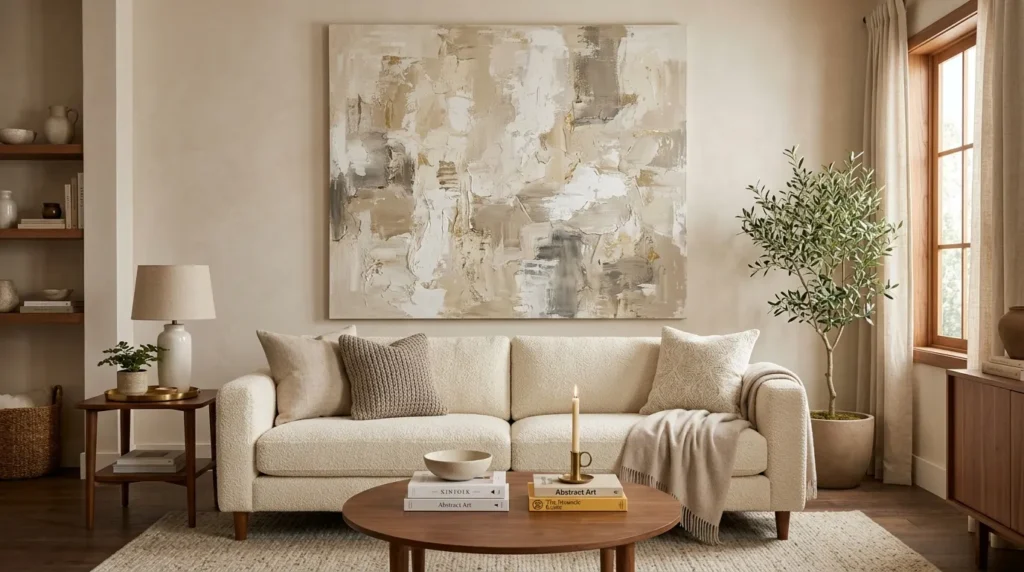
One oversized canvas can often create more impact than a collection of small artworks. A large piece gives the wall a strong visual anchor while keeping the overall arrangement simple.
This works particularly well above sofas, beds, dining tables, and large consoles.
I’ve found that oversized neutral artwork can make a room feel more sophisticated without introducing excessive visual clutter.
How To Style It
Choose a canvas that is proportionate to the furniture beneath it. Use an abstract, botanical, textured, or minimalist design that complements the room.
Leave sufficient wall space around the artwork so it feels intentional rather than cramped.
Frequently Asked Questions
What can I use to make DIY canvas wall art?
Common supplies include blank or printed canvases, acrylic paint, brushes, palette knives, fabric, wood trim, painter’s tape, texture mediums, and decorative materials.
How do I make cheap canvas art look expensive?
Use a restrained color palette, add texture, choose a simple composition, and finish the piece with a clean wood frame or professional-looking presentation.
What paint works best on canvas?
Acrylic paint is a versatile choice for many DIY canvas projects because it dries relatively quickly and works well for layered designs.
How can I make canvas art match my home?
Pull colors from existing furniture, rugs, curtains, pillows, or accessories and use those shades as the foundation for your artwork.
Is DIY canvas art good for beginners?
Yes. Abstract shapes, color blocking, simple line art, and textured designs are especially approachable for beginners.
How should I decorate a large blank wall?
One oversized canvas, a coordinated gallery wall, or several large complementary pieces can fill a large wall while maintaining a cohesive appearance.
Conclusion
DIY canvas wall art is an affordable way to personalize your home while creating décor that feels intentional and unique. You don’t need advanced painting skills or expensive materials to create something beautiful.
Start with a simple idea such as neutral texture, botanical artwork, minimalist lines, or color blocking. Then add details that connect the piece to the colors and materials already present in your room.
The best DIY artwork doesn’t necessarily look handmade in a complicated way. It looks considered, balanced, and suited to the space.
With a canvas, a few basic supplies, and some creativity, you can turn an ordinary blank wall into one of the most memorable features in your home.