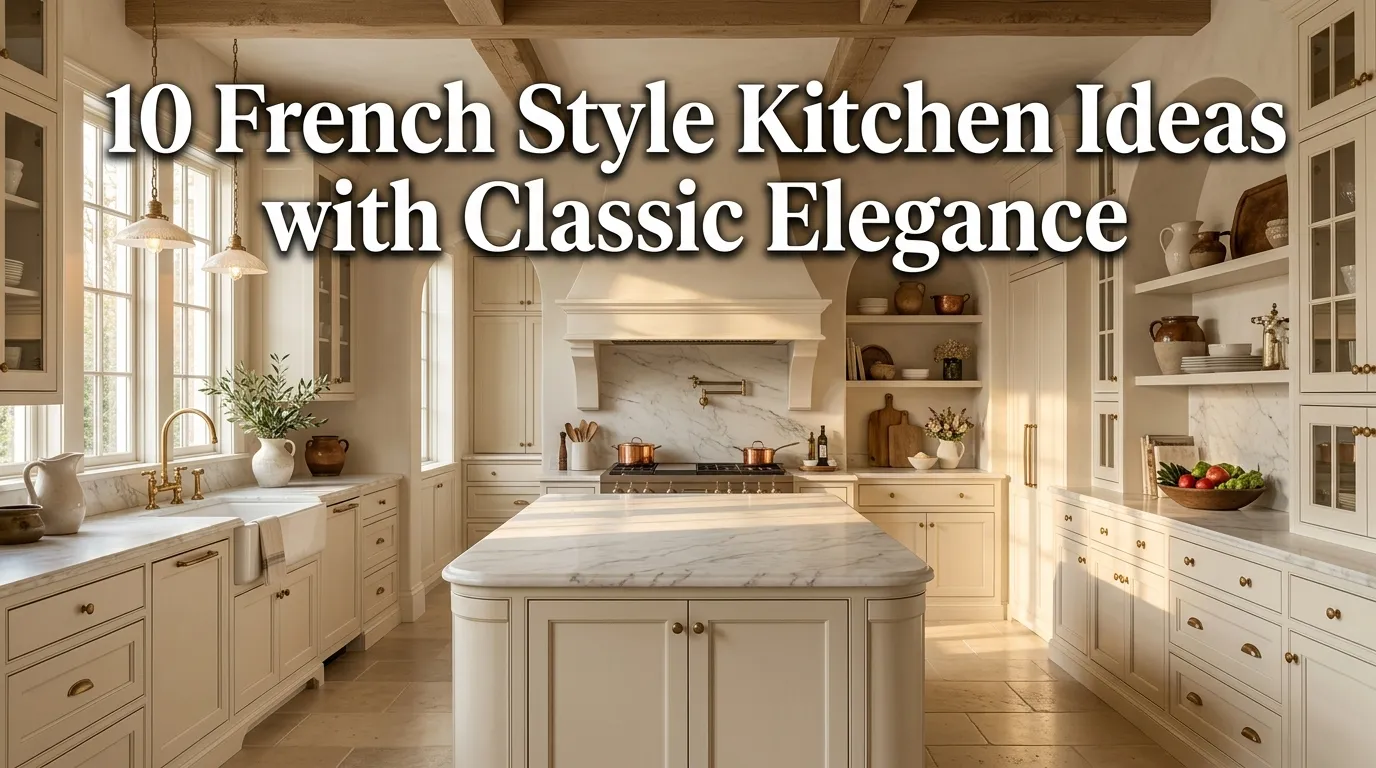
10 French Style Kitchen Ideas with Classic Elegance
There’s a reason French-style kitchens have stayed popular for decades while other trends have come and gone — they’re built on proportion, warmth, and quiet detail rather than whatever’s currently trending. In my experience, most kitchens that feel flat aren’t missing expensive materials; they’re missing the layered, considered touches that make a French-inspired kitchen feel collected rather than assembled from a single catalog.
I’ve noticed that the kitchens people save most often on Pinterest under “French kitchen” or “French country” aren’t necessarily the largest or most renovated. They’re the ones with a handful of specific, recognizable elements — warm cabinetry, aged brass, open shelving, a statement hood — used with restraint rather than piled on all at once. That balance is exactly what makes the style feel elegant instead of themed.
This guide walks through ten ideas that bring authentic French classic elegance into a kitchen, whether you’re planning a full renovation or updating what you already have. A mistake many homeowners make is trying to achieve this look through a single dramatic change, like an expensive range, when the real effect comes from several smaller, coordinated details working together — hardware, lighting, tile, and cabinetry finishes that all speak the same design language.
Whether you’re working with an existing kitchen layout or planning from scratch, these ideas are meant to be practical. Several can be done in stages, without a full gut renovation, and none require importing furniture from Provence to get the feeling right. You’ll find real reasoning behind each choice and enough detail to actually plan and execute it in your own space.
By the end of this article, you’ll have a clear list of French-inspired kitchen ideas that bring warmth, texture, and timeless elegance into a room your family already spends most of its time in.
Table of Contents
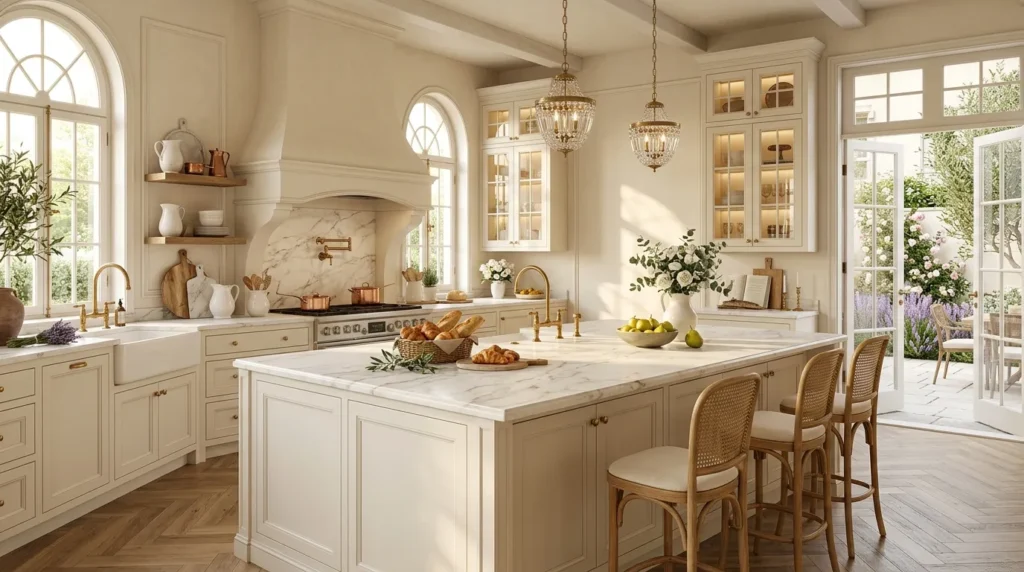
- Marble Countertop Elegance — The classic surface that anchors a French kitchen’s look.
- Warm Cream Cabinetry — A softer alternative to stark white for timeless warmth.
- Ornate Brass Hardware — Small details that add old-world character throughout.
- Open Plate Shelving — Displaying dishware the way French kitchens traditionally have.
- Farmhouse Apron Sink — A functional centerpiece with unmistakable French country roots.
- Statement Range Hood — The focal point that anchors the whole cooking wall.
- Herringbone Tile Floors — A classic pattern that adds movement and craftsmanship.
- Antique-Inspired Lighting — Fixtures that bring warmth and old-world detail overhead.
- Curved Cabinet Details — Softening straight lines with classic architectural curves.
- Fresh Herb Garden — A small, living touch rooted in French culinary tradition.
1. Marble Countertop Elegance
Quick Benefits
- Adds instant classic elegance and visual weight
- Provides a naturally veined, one-of-a-kind surface
- Pairs beautifully with both light and dark cabinetry
- Ages with character rather than looking dated
- A recognizable hallmark of French kitchen design
Why It Works
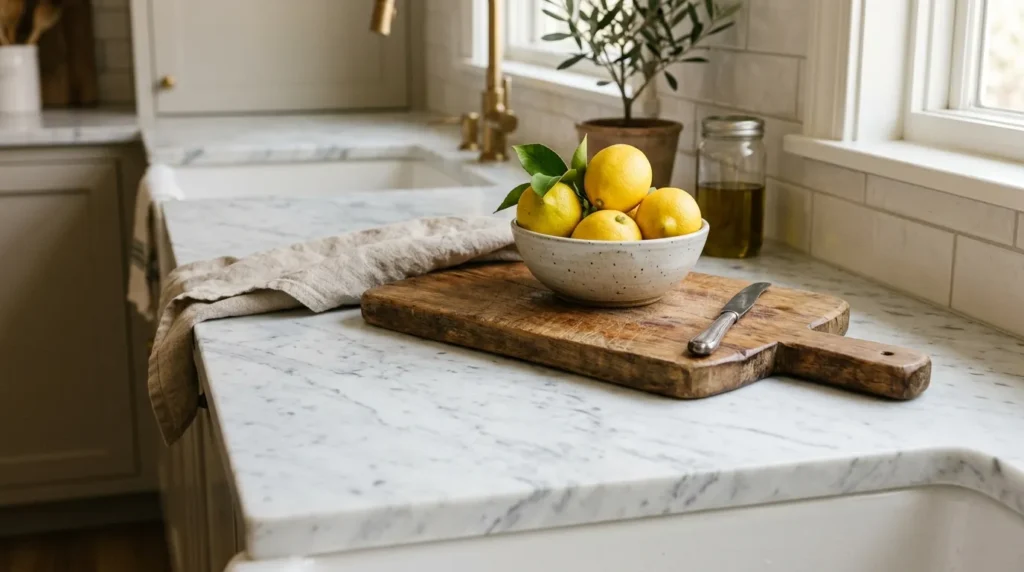
Marble has been central to French kitchen design for generations, prized as much for its cool, workable surface for pastry as for its veined, timeless beauty. A mistake many homeowners make is choosing a marble look-alike with busy, artificial-looking veining; authentic marble or a high-quality quartz with subtle, natural-looking veining reads as far more elegant and far less trend-driven than a bold, high-contrast pattern.
How To Style It
Choose a soft white or warm cream marble with gentle gray veining for the most timeless, French-inspired look, and consider a honed rather than polished finish for a softer, more matte elegance. If full marble countertops aren’t in the budget, a smaller marble island top or a marble backsplash section behind the range delivers much of the same visual impact. Pair the stone with simple, unfussy edge profiles — a gentle bullnose or eased edge — rather than an ornate edge that can compete with the marble’s natural pattern.
2. Warm Cream Cabinetry
Quick Benefits
- Softer and warmer than stark white cabinetry
- Timeless rather than tied to a passing trend
- Pairs beautifully with brass and marble accents
- Hides everyday marks better than pure white
- Works in both traditional and transitional kitchens
Why It Works
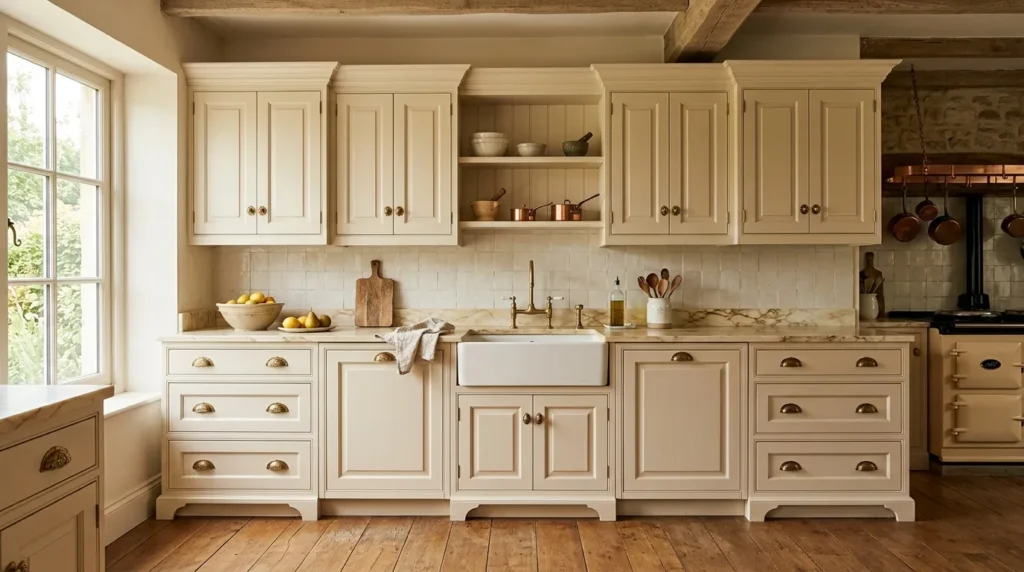
Stark white cabinetry has its place, but true French kitchen design tends to lean toward warmer, creamier tones that feel aged and lived-in rather than brand new. One thing that works especially well is choosing a cream with a slight yellow or beige undertone rather than a cool, gray-based off-white, since warmer creams are what give French kitchens their signature soft, buttery glow, especially under warm lighting.
How To Style It
Use a soft cream on perimeter cabinetry, and consider a deeper complementary tone — sage green, soft blue, or warm charcoal — on a kitchen island for classic French contrast without overwhelming the room. Choose a painted, slightly matte finish over high-gloss lacquer, since matte finishes read as more traditional and hand-finished. Simple raised or recessed panel door styles, rather than flat slab fronts, reinforce the classic French silhouette this cabinetry color is meant to support.
3. Ornate Brass Hardware
Quick Benefits
- Adds old-world detail without major renovation
- Elevates even simple cabinetry instantly
- Easy and affordable to swap on existing cabinets
- Warms up the whole kitchen’s color story
- A quick way to test the French aesthetic
Why It Works
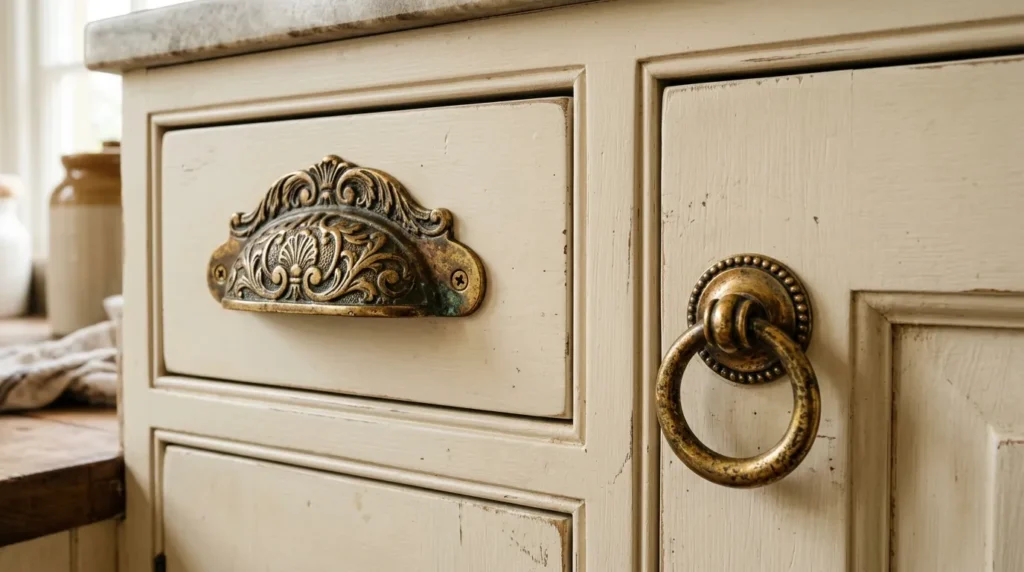
Hardware is jewelry for a kitchen, and French design has always leaned toward ornate, detailed brass — cup pulls, ringed knobs, and fluted or beaded details — over the plain, minimal bar pulls common in more modern kitchens. That’s why many designers recommend upgrading hardware early in a French-inspired refresh; it’s one of the lowest-cost, highest-impact changes available and can be done in an afternoon on existing cabinetry.
How To Style It
Choose an aged or unlacquered brass finish rather than a bright, shiny gold, since the warmer, slightly muted tone of aged brass is what gives French kitchens their sense of history rather than looking newly installed. Use cup pulls or small ringed pulls on drawers and simple knobs on doors for a traditional, layered hardware story. Extend the same finish to faucets, cabinet hinges if visible, and lighting fixtures so the metal tone feels intentional throughout the room rather than isolated to the cabinetry.
4. Open Plate Shelving
Quick Benefits
- Displays dishware as part of the room’s decor
- Adds warmth and personality to plain wall space
- Keeps everyday items within easy reach
- A traditional hallmark of French country kitchens
- Works well alongside upper cabinets or in place of them
Why It Works
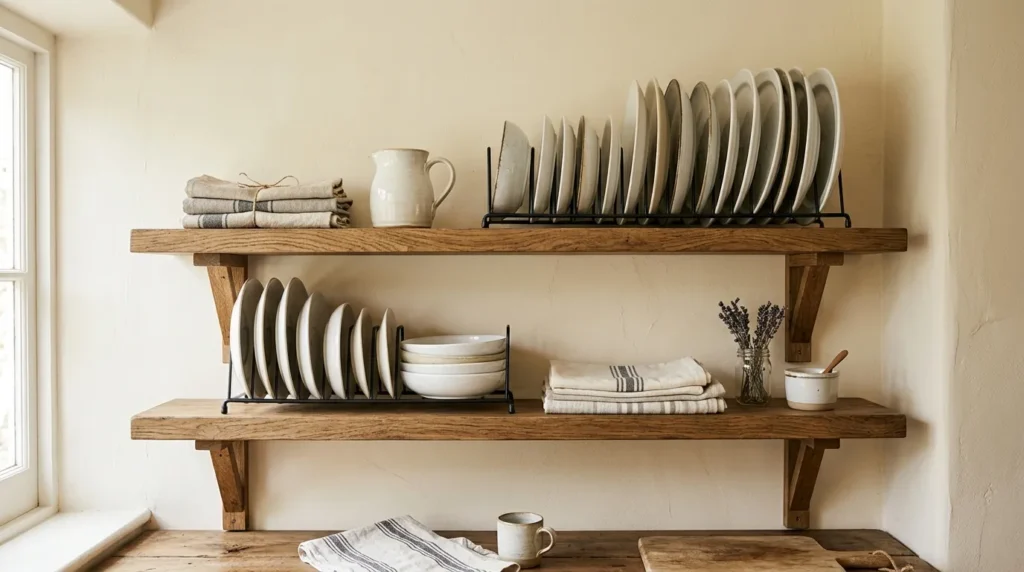
Open shelving lined with stacked plates, bowls, and the occasional pitcher is one of the most recognizable elements of a French country kitchen, rooted in a longstanding tradition of displaying well-loved dishware rather than hiding it behind closed doors. I’ve seen this idea transform a plain wall into one of the kitchen’s most charming features, simply by treating everyday dishes as intentional decor.
How To Style It
Install one or two wood or painted shelves above a counter run, spaced generously enough to stack plates upright using a plate rack or simple wire stand. Mix a cohesive but not perfectly matched collection of white, cream, and lightly patterned dishware for an authentic, collected-over-time look rather than a uniform showroom set. Balance the display with a few non-dish items — a small pitcher, a stack of linen napkins, a bundle of dried herbs — so the shelf reads as styled rather than purely storage.
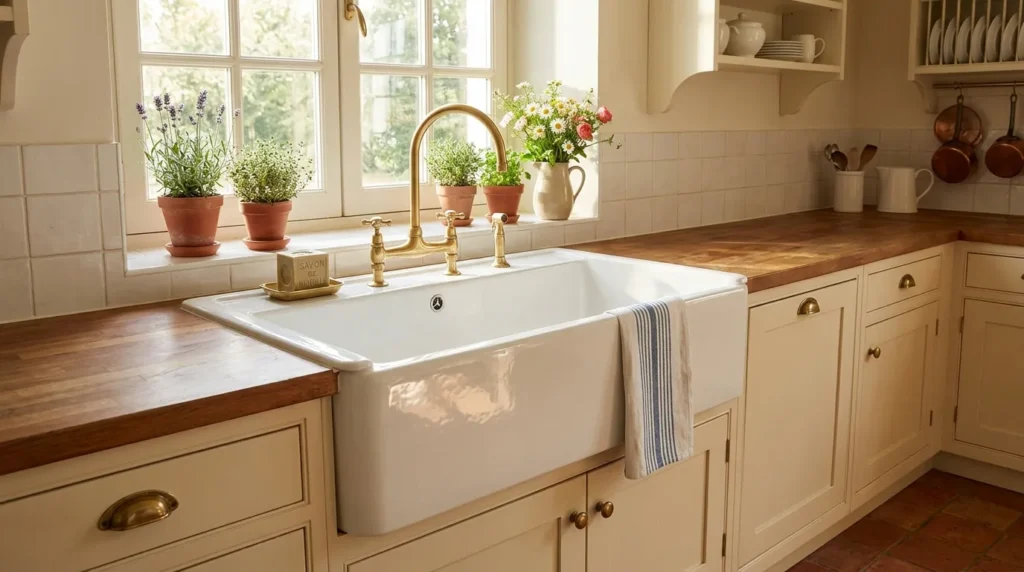
5. Farmhouse Apron Sink
Quick Benefits
- Adds a strong, functional focal point
- Provides generous basin space for everyday cooking
- A recognizable, authentic French country element
- Pairs beautifully with marble and brass accents
- Works in both large and moderately sized kitchens
Why It Works
The farmhouse or apron-front sink, with its exposed front panel extending past the cabinetry, has deep roots in French and European kitchen design, originally valued for its deep basin and practical durability. In my experience, it remains one of the most effective single fixtures for anchoring a French-inspired kitchen, because its scale and shape read as intentional and substantial rather than standard-issue.
How To Style It
Choose a fireclay or enameled cast iron sink in white or cream to match your cabinetry’s warmth, and pair it with a gooseneck or bridge-style faucet in the same aged brass finish used elsewhere in the room. Position the sink beneath a window when possible, since natural light at the sink is both a practical and classic French kitchen feature. Flank the sink with simple, unfussy cabinetry so the sink itself remains the visual focus of that wall.
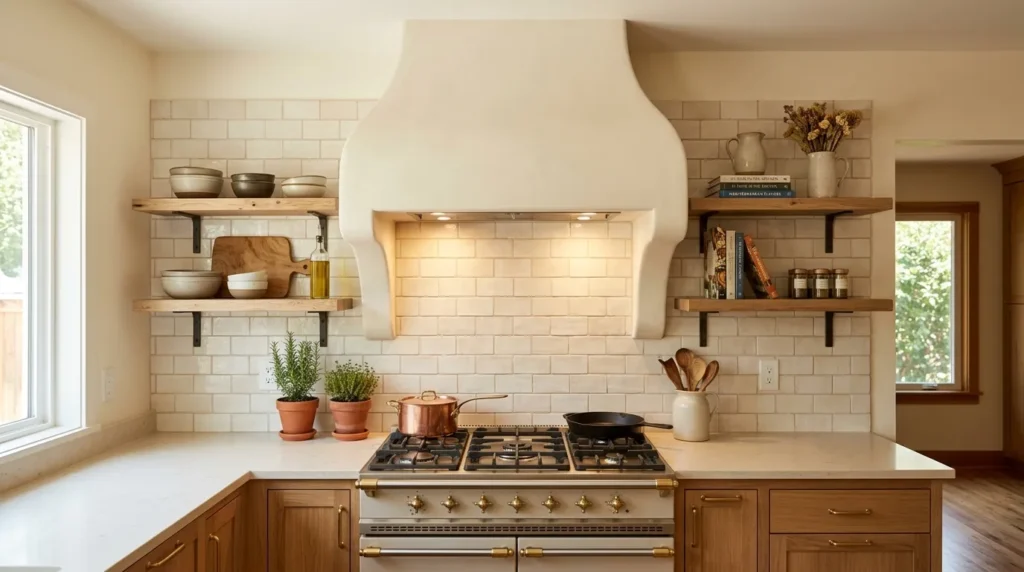
6. Statement Range Hood
Quick Benefits
- Anchors the entire cooking wall visually
- Adds architectural interest above the range
- Available in plaster, wood, or metal finishes
- A hallmark feature of classic French kitchens
- Elevates even a simple range beneath it
Why It Works
In French kitchen design, the range and its hood are treated as the heart of the room, often given more architectural attention than any other single element. A mistake many homeowners make is choosing a flat, minimal hood that disappears into the wall; a substantial plaster, wood-trimmed, or curved metal hood does the opposite, drawing the eye and giving the whole cooking wall a sense of occasion.
How To Style It
Choose a hood shape that echoes other curves in the room — a gently arched or stepped silhouette pairs especially well with curved cabinet details — in a plaster or painted finish that matches or complements your cabinetry. Flank the hood with simple open shelving or a small run of cabinetry rather than crowding it with competing details. If a custom hood isn’t in the budget, a hood cover kit installed over an existing vent can achieve much of the same visual impact.
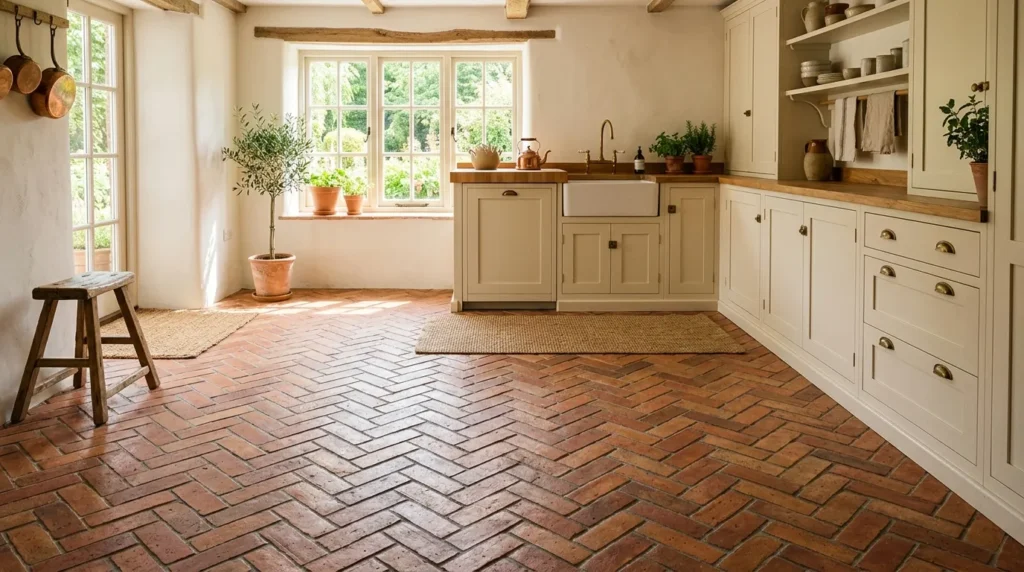
7. Herringbone Tile Floors
Quick Benefits
- Adds movement and craftsmanship underfoot
- A classic pattern rooted in French architectural tradition
- Works with both stone and wood-look materials
- Pairs beautifully with simple, neutral cabinetry
- Elevates even budget-friendly tile options
Why It Works
Herringbone flooring — laid in a distinctive zigzag pattern — has long been associated with French parquet flooring and later with French kitchen tile work, prized for the sense of craftsmanship and movement it adds to an otherwise flat surface. One simple trick I always suggest is letting a herringbone floor be the room’s one bold pattern moment, keeping cabinetry and walls simple so the floor gets to be the visual star.
How To Style It
Choose a soft stone-look porcelain tile or a warm terracotta tone for the most authentic French country feel, laid in a classic herringbone pattern running on a diagonal from the room’s main sightline. Keep grout lines thin and in a close-matching tone so the pattern reads as continuous rather than heavily gridded. For a lower-cost alternative, herringbone-patterned vinyl or laminate can achieve a similar visual rhythm in budget-conscious renovations.
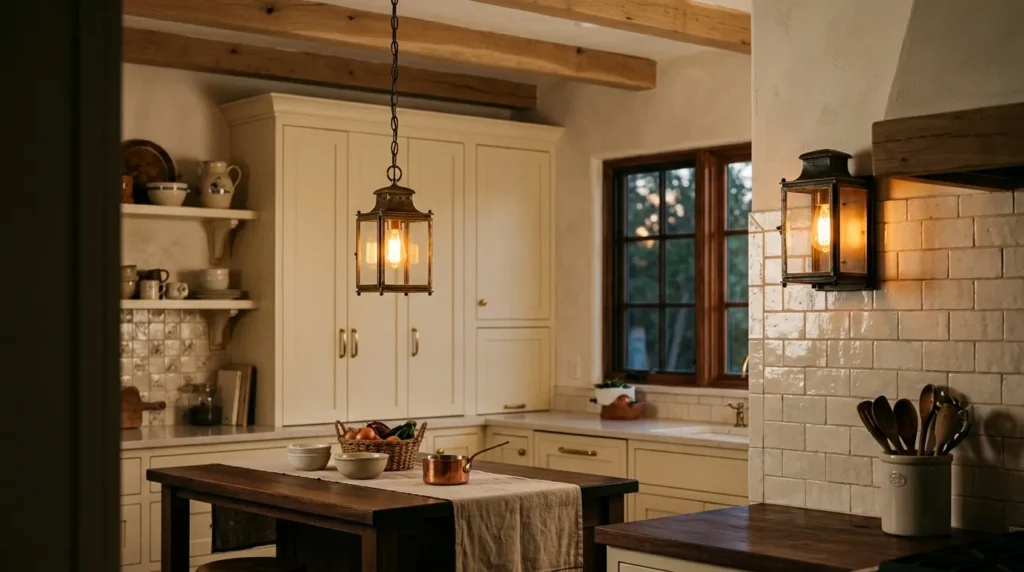
8. Antique-Inspired Lighting
Quick Benefits
- Adds warmth and old-world character overhead
- Creates a layered, collected lighting scheme
- Works well above islands, tables, and sinks
- Pairs naturally with brass hardware and fixtures
- Elevates the whole room’s ambiance after dark
Why It Works
French kitchens rarely rely on a single flush-mount ceiling light; instead, they layer in fixtures that look collected over time — a lantern-style pendant, a small chandelier, a pair of sconces — each adding its own point of warm, ambient light. That’s why many designers recommend treating kitchen lighting the way you would in a dining or living room, with multiple fixtures rather than one utilitarian source.
How To Style It
Hang a lantern-style pendant or a small chandelier above an island or table, choosing an aged brass, bronze, or black iron finish that echoes the room’s other metal tones. Add one or two wall sconces near the range or sink for a softer secondary light source in the evening. Warm-toned bulbs throughout the room reinforce the cozy, collected feeling that cooler, brighter lighting tends to undercut.
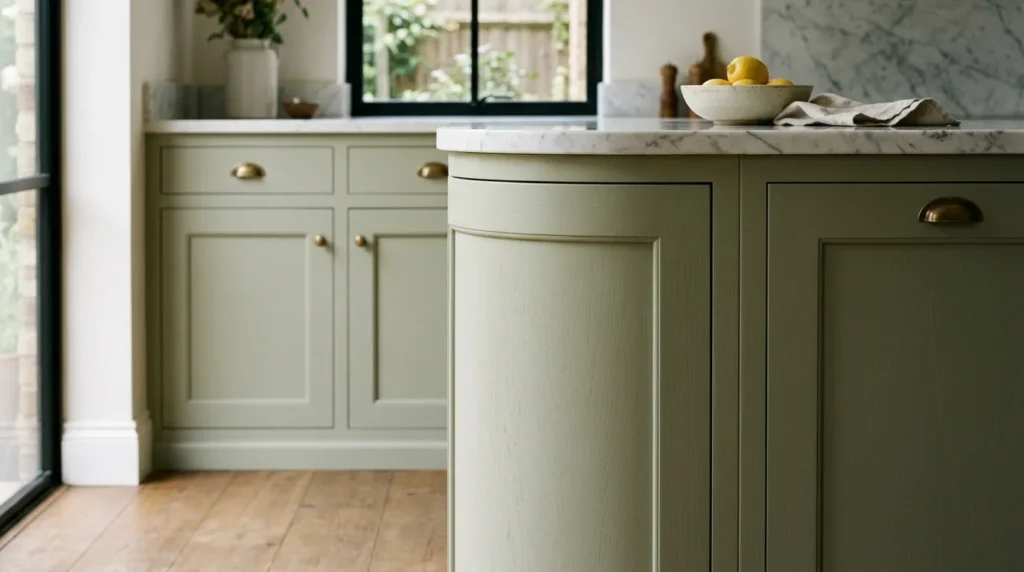
9. Curved Cabinet Details
Quick Benefits
- Softens the kitchen’s overall geometry
- Adds a bespoke, custom-built feeling
- Pairs beautifully with arched range hoods
- Works well on islands and end panels
- A distinctive marker of French classic style
Why It Works
Straight lines and sharp corners dominate most modern kitchens, but French classic design has always favored a softer geometry — curved island ends, arched cabinet openings, gently rounded corners — that gives the room a more custom, architectural feel. I’ve noticed that even one or two curved elements, rather than a fully rounded kitchen, are often enough to shift the whole room’s character toward this softer, more elegant style.
How To Style It
Consider a curved end panel on a kitchen island, or an arched opening on a single display cabinet, as a focused way to introduce this detail without redesigning every cabinet in the room. Curved elements pair especially well with the arched range hood discussed earlier, creating a visual echo between the two features. Keep the rest of the cabinetry simple and straight-lined so the curved details stand out as intentional accents rather than getting lost among too many competing shapes.
10. Fresh Herb Garden
Quick Benefits
- Adds life, scent, and color to the kitchen
- Rooted in genuine French culinary tradition
- Provides fresh ingredients within arm’s reach
- Requires minimal space and upkeep
- A finishing touch that ties the room together
Why It Works
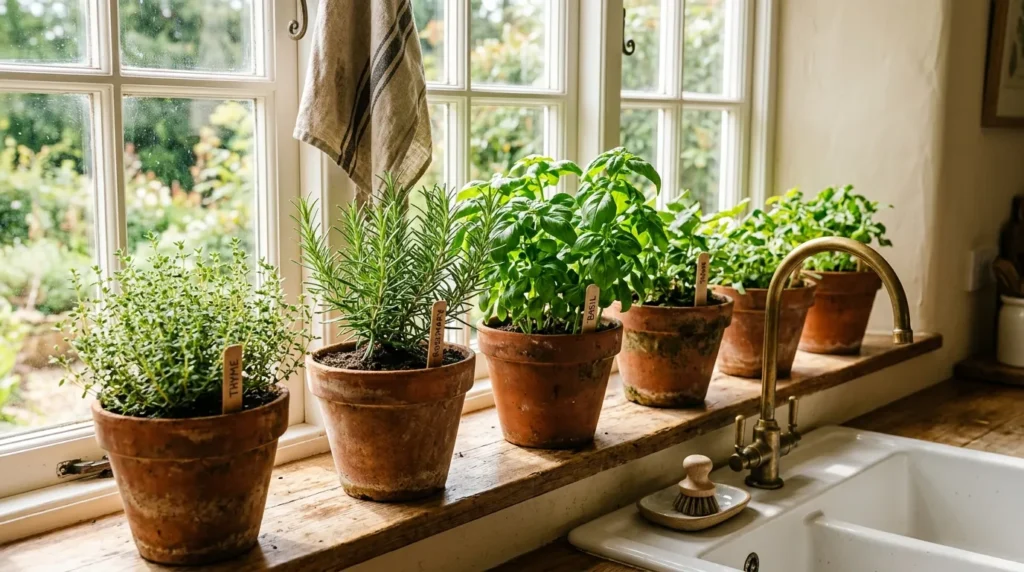
French cooking has always leaned on fresh herbs, and a small kitchen herb garden — whether a windowsill planter or a dedicated countertop setup — connects the room’s design back to its culinary roots in a way that feels genuine rather than purely decorative. In my experience, this is the kind of small, living detail that makes a kitchen feel finished and personal, not just professionally designed.
How To Style It
Group a few terracotta or enamel pots of thyme, rosemary, basil, and chives on a sunny windowsill near the sink, where they’re both decorative and genuinely useful while cooking. Choose simple, matching pots in a neutral tone so the greenery itself provides the visual interest rather than mismatched containers. If windowsill space is limited, a small tiered plant stand near the range or on a section of counter can achieve the same fresh, French-kitchen-garden feeling.
Frequently Asked Questions
What defines a French-style kitchen? Warm cream or soft-colored cabinetry, natural materials like marble and stone, ornate brass hardware, and layered lighting are the core elements. The style favors timeless, collected details over trend-driven finishes.
Is French country the same as French classic kitchen style? They overlap significantly, though French country tends to lean more rustic with elements like exposed beams and terracotta, while French classic or Parisian style leans slightly more refined, with marble, brass, and softer curved details.
What colors work best in a French-style kitchen? Warm creams, soft whites, sage green, and warm charcoal are common choices, often paired with warm wood tones and aged brass accents. Cooler, stark white or gray-based palettes tend to feel less authentically French.
Do I need a full renovation to get this look? No — hardware swaps, open shelving, lighting updates, and a herb garden can all be done without touching cabinetry or flooring. These smaller changes can shift a kitchen’s feel significantly on their own.
What kind of hardware fits a French kitchen best? Aged or unlacquered brass in ornate shapes like cup pulls, ringed knobs, or fluted details fits the style best. Bright, shiny gold or minimal modern bar pulls tend to feel out of place in a French-inspired room.
Can a small kitchen still achieve a French classic look? Yes — many of these ideas, like hardware, open shelving, and a herb garden, scale down easily. Focusing on one or two focal elements, like a statement hood or a marble countertop section, works well in smaller spaces too.
What flooring works best for a French-style kitchen? Herringbone-patterned stone, terracotta, or wood-look tile are classic choices that add texture and movement underfoot. Simpler flooring paired with a bold pattern elsewhere in the room can also work if herringbone isn’t practical.
Final Thoughts
A French-style kitchen isn’t built from a single expensive purchase — it’s built from a handful of coordinated details working together: warm cabinetry, aged brass, natural stone, and layered lighting, all speaking the same design language. Start with one or two ideas, like a hardware swap and open shelving, and build from there as your budget and timeline allow.
Each addition supports the next: warm cabinetry makes brass hardware feel intentional, a statement hood gives curved details somewhere to echo, and antique-inspired lighting ties the whole room together after dark. Start with one or two ideas and gradually build a kitchen that reflects your style and brings a sense of timeless, classic elegance into the room your family gathers in most.
Related Articles
- Modern Farmhouse Kitchen Ideas
- Small Kitchen Layout Solutions
- Timeless Kitchen Backsplash Ideas
- Neutral Home Styling Tips
- Kitchen Lighting Layering Guide