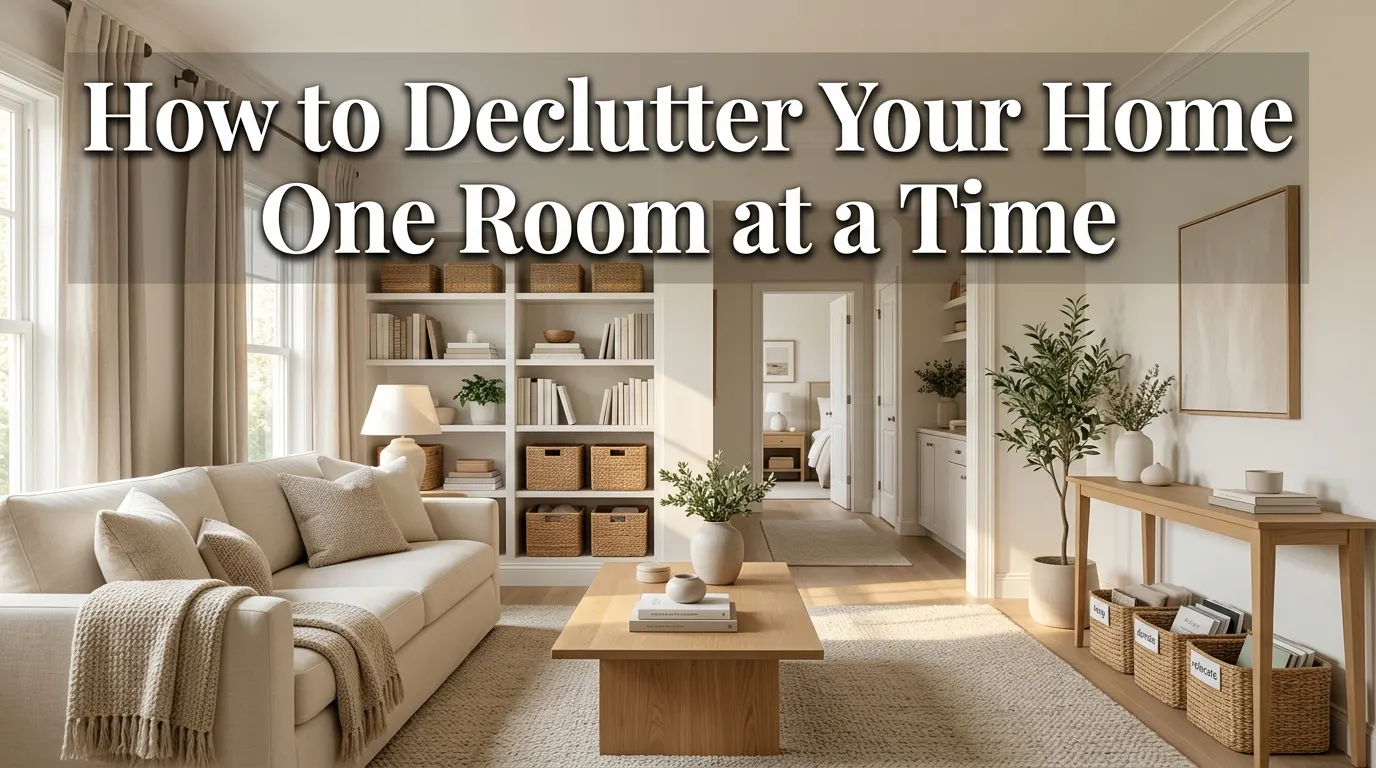
How to Declutter Your Home One Room at a Time
Decluttering your entire home at once can feel overwhelming, especially when every room seems to have its own collection of things that need attention. The good news is that you don’t have to tackle everything in one weekend.
Working through your home one room at a time creates a much more manageable process. Instead of staring at the entire house and wondering where to begin, you can focus on one defined area, make clear decisions, and enjoy visible progress.
In my experience, successful decluttering isn’t about getting rid of everything. It’s about creating enough space for the things you actually use, need, and enjoy. A home can still feel warm and personal while being significantly less cluttered.
The most useful approach is to work systematically. Choose one room, divide it into manageable areas, sort your belongings, remove items that no longer serve a purpose, and then organize what remains.
It’s also important to avoid buying storage containers too early. If you organize items you don’t really need, you’re simply making the clutter look tidier rather than reducing it.
These practical steps can help you move through your home gradually, create more usable space, and develop habits that make it easier to maintain a clutter-free environment.
Table of Contents
- Start With One Room
- Set a Simple Timer
- Sort Everything Into Categories
- Clear Visible Surfaces
- Declutter the Living Room
- Organize the Kitchen
- Simplify the Bedroom
- Tackle the Bathroom
- Create a Donation Station
- Maintain Your Progress
1. Start With One Room
Quick Benefits
- Reduces overwhelm
- Creates clear boundaries
- Shows quick progress
- Makes decisions easier
- Builds momentum
Why It Works
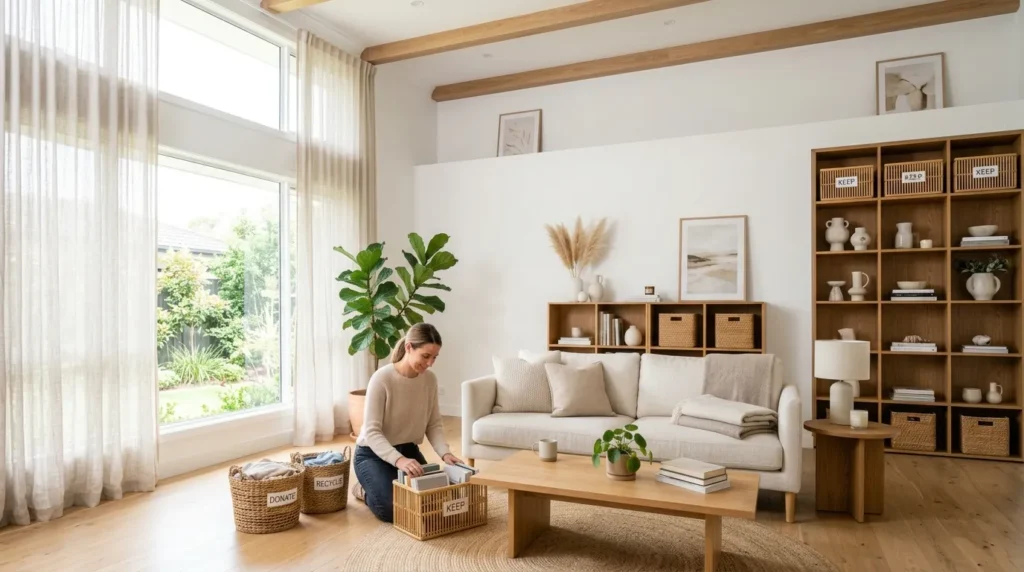
Decluttering becomes much more manageable when you focus on one room instead of trying to organize the entire home simultaneously.
A defined space gives you a clear beginning and ending point. Once that room is finished, you can enjoy the result before moving to the next area.
I’ve found that visible progress creates motivation to continue.
How To Style It
Choose the room causing the most daily frustration or the easiest room if you need an encouraging first win.
Avoid moving between rooms while working. Complete one area before starting another.
2. Set a Simple Timer
Quick Benefits
- Makes tasks manageable
- Prevents burnout
- Creates focus
- Encourages quick decisions
- Works with busy schedules
Why It Works
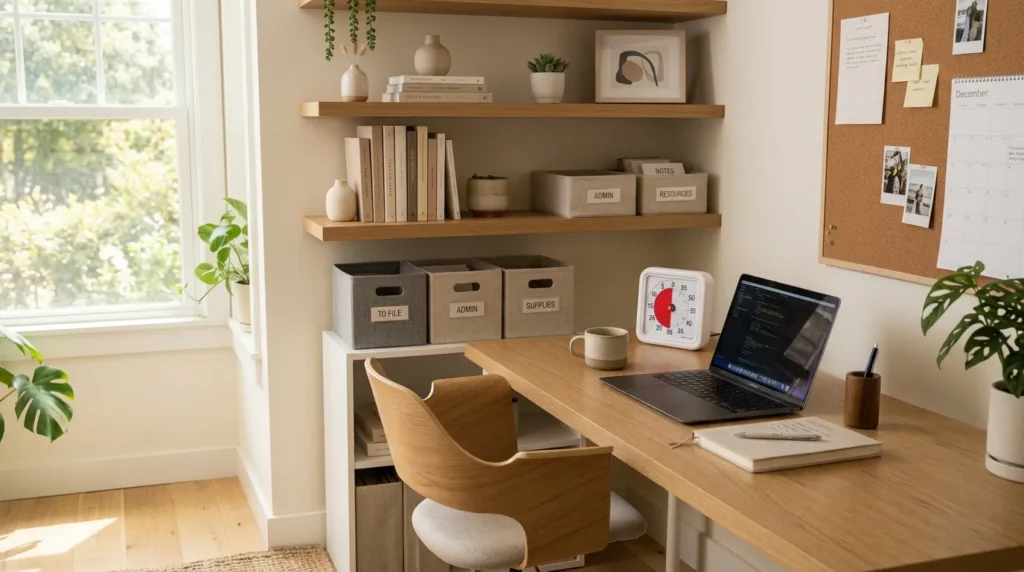
A timer removes the pressure to spend an entire day decluttering. Even a short focused session can produce meaningful results.
Knowing that you only need to work for a defined period can make it easier to begin.
I’ve found that short sessions are particularly effective when motivation is low.
How To Style It
Set a realistic time limit and focus only on the selected room or zone.
When the timer ends, take a break. If you still have energy, start another short session rather than committing to an exhausting marathon.
3. Sort Everything Into Categories
Quick Benefits
- Simplifies decisions
- Prevents confusion
- Speeds up sorting
- Makes donations easier
- Creates organization
Why It Works
Sorting belongings into clear categories helps you understand what you actually have. Instead of repeatedly moving the same items around, you can make decisions once.
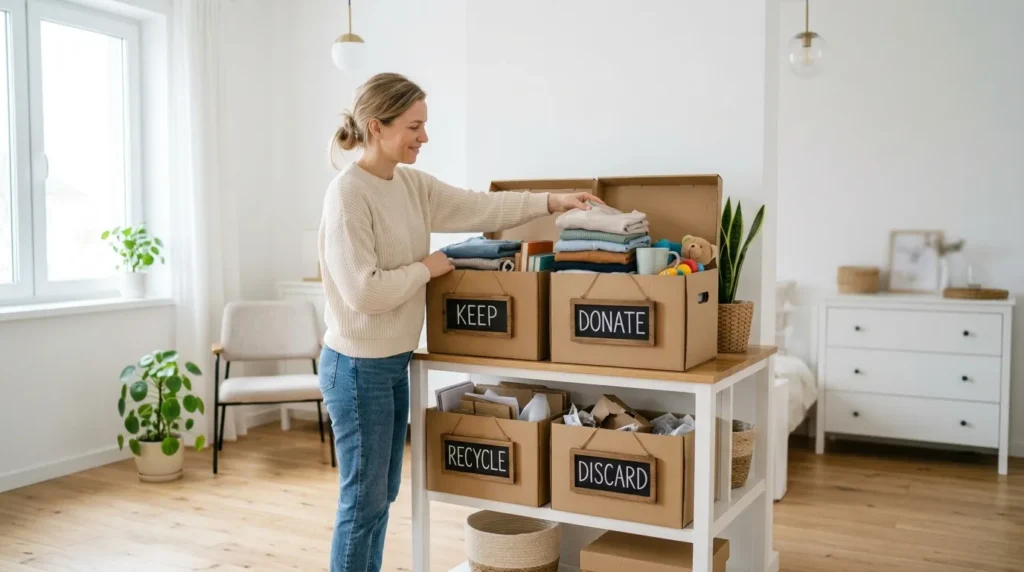
Useful categories include keep, donate, recycle, discard, and relocate.
I’ve found that having physical sorting areas makes the process much more efficient.
How To Style It
Use clearly labeled boxes, bags, or designated areas. Keep items that belong elsewhere outside the main organizing zone so they don’t distract you.
Deal with donation and discard bags promptly.
4. Clear Visible Surfaces
Quick Benefits
- Creates instant impact
- Makes rooms feel larger
- Reduces visual noise
- Improves cleaning
- Shows progress quickly
Why It Works
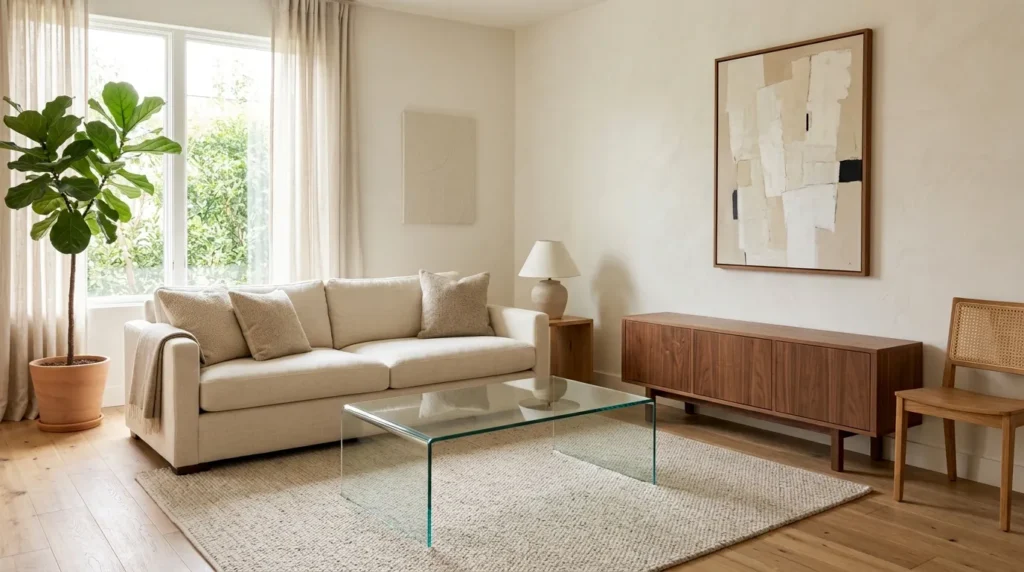
Countertops, tables, shelves, and other visible surfaces often contribute significantly to the feeling of clutter.
Clearing them first can make a room look dramatically different even before storage areas are addressed.
I’ve found that a visually calm surface can change how the entire room feels.
How To Style It
Remove everything from one surface and sort each item before putting anything back.
Return only useful or intentionally decorative pieces. Leave some empty space to create visual breathing room.
5. Declutter the Living Room
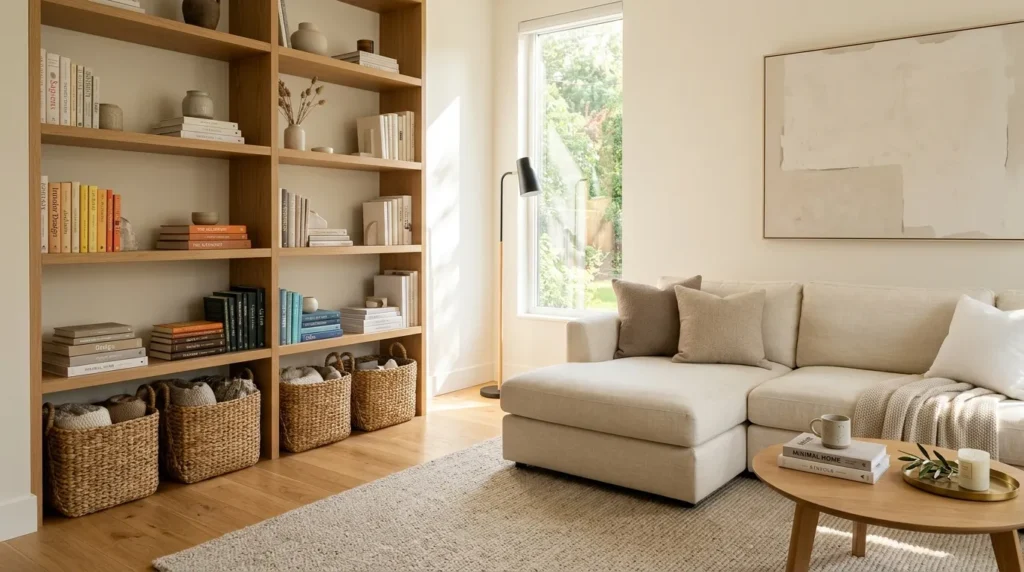
Quick Benefits
- Creates relaxation space
- Reduces visual clutter
- Improves functionality
- Makes cleaning easier
- Creates a calmer atmosphere
Why It Works
Living rooms often accumulate books, toys, electronics, blankets, paperwork, and miscellaneous items because they are used by everyone in the household.
Removing unnecessary objects can make the room feel more spacious without changing the furniture.
I’ve found that the living room benefits greatly from having designated homes for everyday items.
How To Style It
Sort books, magazines, décor, blankets, electronics, and miscellaneous items separately.
Keep frequently used items accessible while storing occasional-use belongings in baskets, cabinets, or drawers.
6. Organize the Kitchen
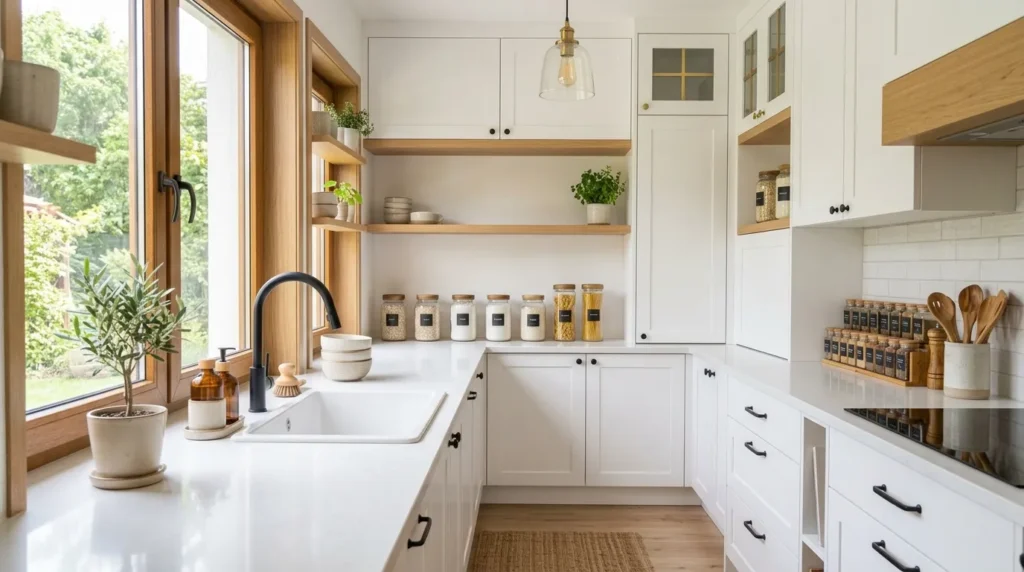
Quick Benefits
- Frees cabinet space
- Improves meal prep
- Makes essentials easier to find
- Reduces duplicate items
- Simplifies cleaning
Why It Works
Kitchens can become cluttered quickly because they contain so many categories of belongings. Duplicate utensils, rarely used appliances, mismatched containers, and expired pantry items can quietly consume valuable space.
Decluttering the kitchen makes everyday routines noticeably easier.
I’ve found that starting with one cabinet or drawer at a time prevents the process from becoming overwhelming.
How To Style It
Remove everything from the selected area and group similar items together. Check expiration dates and set aside duplicates or items you rarely use.
Return the most frequently used pieces to the easiest-to-reach locations.
7. Simplify the Bedroom
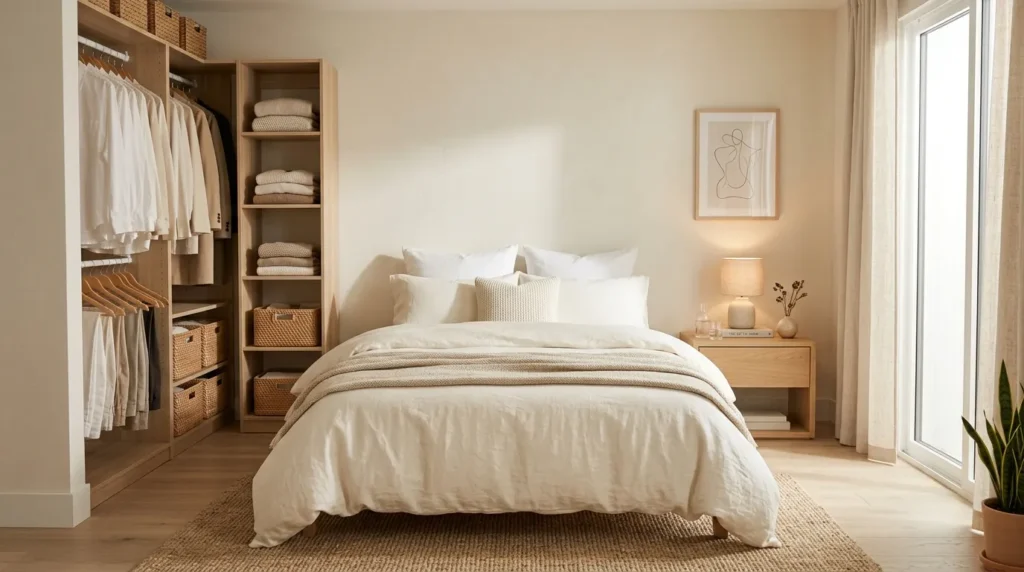
Quick Benefits
- Creates a calmer atmosphere
- Improves storage
- Reduces visual noise
- Makes mornings easier
- Encourages better organization
Why It Works
A bedroom should feel restful, but clothing, accessories, paperwork, and miscellaneous belongings can quickly turn it into a storage area.
Removing unnecessary items can make the room feel more peaceful without requiring a complete makeover.
I’ve found that simplifying bedside tables and visible clothing areas can create an immediate difference.
How To Style It
Start with the closet, dresser, and nightstands. Remove clothing that no longer fits, damaged pieces, and items that haven’t been worn in a long time.
Keep bedside surfaces intentionally simple with only the essentials and a few calming accessories.
8. Tackle the Bathroom
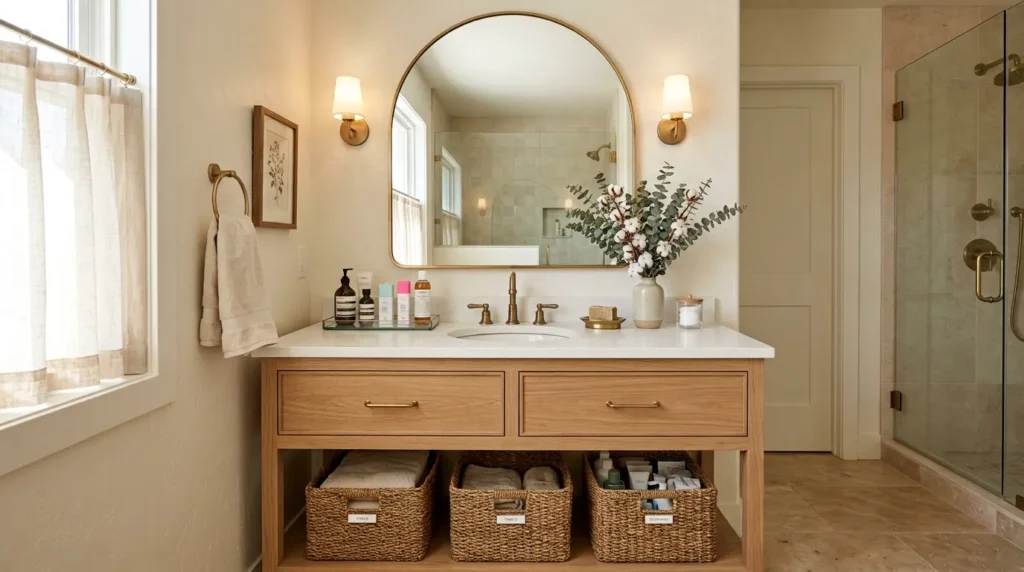
Quick Benefits
- Creates cleaner counters
- Removes expired products
- Improves storage
- Makes cleaning easier
- Speeds up routines
Why It Works
Bathrooms often contain partially used products, expired cosmetics, duplicate toiletries, and items that were purchased but never used.
Removing unnecessary products makes drawers and cabinets easier to navigate.
I’ve found that bathroom decluttering works best when products are grouped by their everyday purpose.
How To Style It
Check expiration dates and dispose of products according to appropriate local disposal guidance.
Group skincare, haircare, toiletries, and cleaning supplies separately. Keep everyday products accessible while storing occasional-use items away from the main counter.
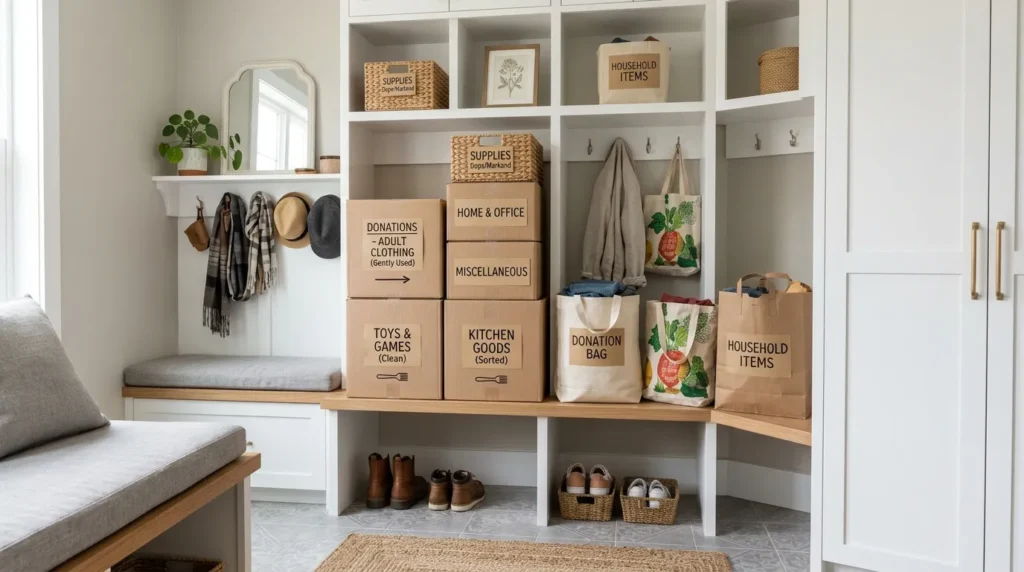
9. Create a Donation Station
Quick Benefits
- Prevents clutter from returning
- Makes donating easier
- Creates accountability
- Simplifies future decluttering
- Keeps unwanted items contained
Why It Works
One common problem with decluttering is allowing unwanted belongings to remain in the home while you decide what to do with them.
A designated donation station creates a clear next step. Once something leaves the keep category, it has somewhere to go.
I’ve found that removing donation bags quickly makes the entire process feel more complete.
How To Style It
Choose a discreet location such as a closet, laundry area, or garage corner. Keep one sturdy box or bag available for items you no longer need.
When the container is full, schedule a donation drop-off or pickup rather than letting it become permanent storage.
10. Maintain Your Progress
Quick Benefits
- Prevents future buildup
- Saves time
- Keeps rooms manageable
- Creates consistent habits
- Reduces future stress
Why It Works
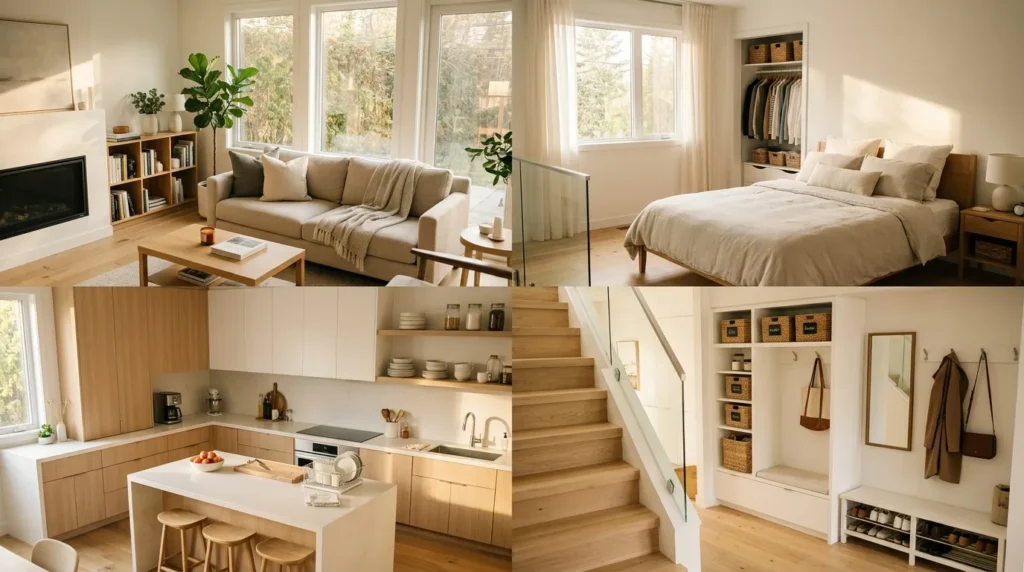
Decluttering is most effective when it becomes an ongoing habit rather than a once-a-year project.
Small daily decisions can prevent belongings from gradually accumulating again. Returning items to their designated homes is often more important than creating complicated organization systems.
I’ve found that a few minutes of daily maintenance can save hours of future decluttering.
How To Style It
Spend a few minutes each evening returning misplaced items and clearing one small surface.
Before buying something new, consider where it will live and whether you already own something that serves the same purpose.
Frequently Asked Questions
What room should I declutter first?
Start with either the room causing the most frustration or an easier space where you can achieve a quick, visible result.
How do I declutter when my home feels overwhelming?
Choose one small area rather than the entire room. A drawer, shelf, countertop, or closet section can be a manageable starting point.
What should I do with things I no longer need?
Depending on their condition, unwanted items can be donated, recycled, sold, responsibly discarded, or passed along to someone who can use them.
Should I buy storage containers before decluttering?
Usually, it’s better to declutter first. Once you know what you’re keeping, you can choose storage that fits your actual needs.
How often should I declutter my home?
Small maintenance sessions can be done regularly, while deeper room-by-room reviews can be scheduled whenever clutter starts affecting how you use the space.
How can I stop clutter from coming back?
Give frequently used items designated homes, avoid unnecessary purchases, and make returning items to their proper locations part of your daily routine.
Conclusion
Decluttering your home doesn’t have to be an exhausting all-day project. By working one room at a time, you can break a large task into manageable steps and create visible progress without feeling overwhelmed.
Start with a defined area, sort belongings carefully, remove items you no longer need, and organize the things you actually use. Once the room is finished, give yourself time to appreciate the difference before moving to the next space.
The goal isn’t to create an empty home. It’s to create a home where the things you own have purpose, function, or meaning.
With consistent small habits, your rooms can stay organized long after the initial decluttering project is complete.