8-Inch vs 10-Inch vs 12-Inch Shelves: Best Depth for Books vs Dinnerware
Choosing between 8-inch vs 10-inch vs 12-inch shelves requires balancing your room’s available square footage with the physical dimensions of the items you intend to store. Books typically require less surface area than heavy dinnerware, meaning a “one size fits all” approach often leads to wasted space or crowded surfaces.
By understanding how shelf depth impacts both visual aesthetics and structural utility, you can ensure your storage solutions remain functional for years. This guide examines the specific requirements for different household goods to help you select the right depth for every wall in your home, preventing common installation mistakes that lead to unstable or impractical storage.
Understanding Standard Shelf Depth Requirements
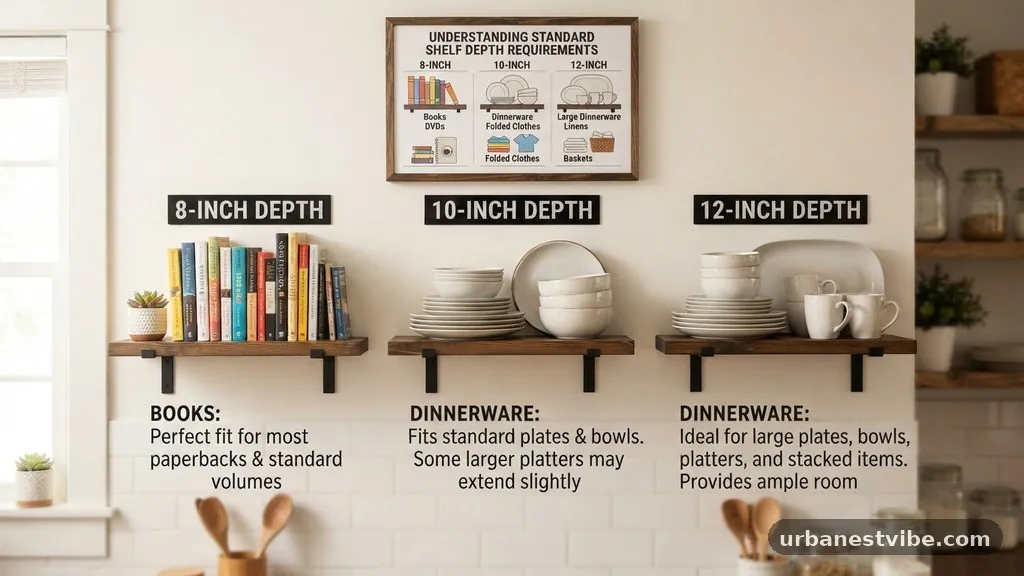
When you’re planning a storage project, the depth of the board is the most critical measurement to get right. Most standard lumber comes in specific widths, and understanding the 8-inch vs 10-inch vs 12-inch shelves debate starts with recognizing what these numbers actually mean in practice.
An 8-inch board is often actually 7.25 inches wide, while a 12-inch board is typically 11.25 inches. This half-inch or three-quarter-inch difference matters when you are trying to fit a specific item flush against a wall.
If you choose a shelf that is too shallow, your items will overhang, creating an eyesore and a safety hazard. If you go too deep, you end up with “dead space” at the back of the shelf that collects dust and makes it difficult to reach items tucked away.
For most standard residential applications, these three dimensions cover almost every need. Books, decorative objects, and kitchenware each have unique footprints that dictate which of these sizes will serve you best.
Selecting the Right Depth for Book Collections
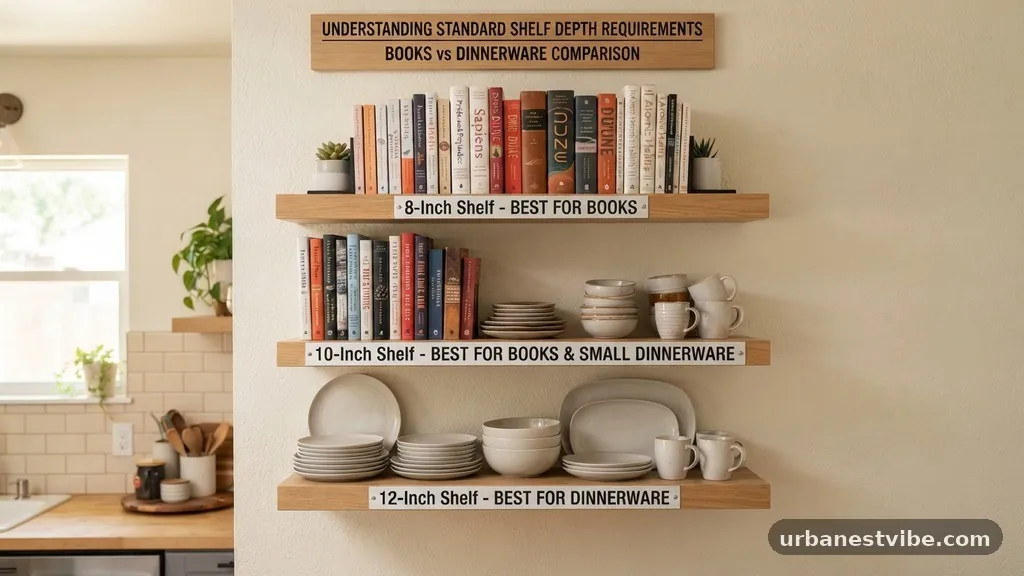
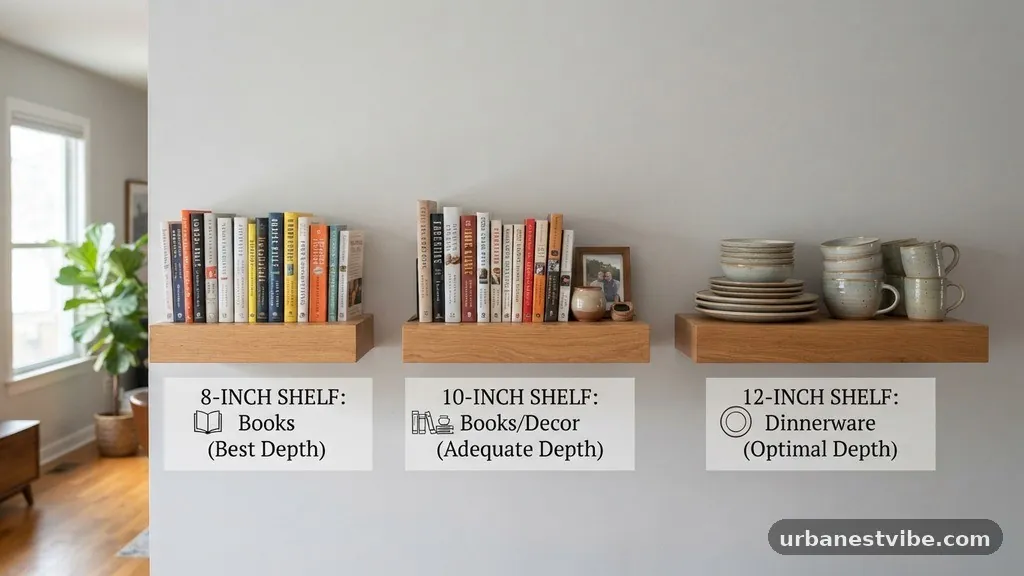
Books are surprisingly consistent in their sizing, which makes them the easiest items to design for. Most standard hardcovers and trade paperbacks measure between 6 and 9 inches in height and usually sit within a depth of 7 to 8 inches. Using an 8-inch shelf is often perfect for a standard library because it keeps the spines flush with the edge of the wood, providing a clean, professional look.
If you have a collection of oversized art books or large encyclopedias, an 8-inch shelf will leave them hanging off the edge. In these cases, moving up to a 10-inch shelf provides the necessary support without creating excessive, wasted room.
Avoid the temptation to use 12-inch shelves for standard books; the extra four inches of depth simply become a graveyard for bookmarks, loose papers, and dust bunnies. Always measure the largest book in your collection before cutting your wood or purchasing brackets.
Storage Solutions for Kitchen Dinnerware
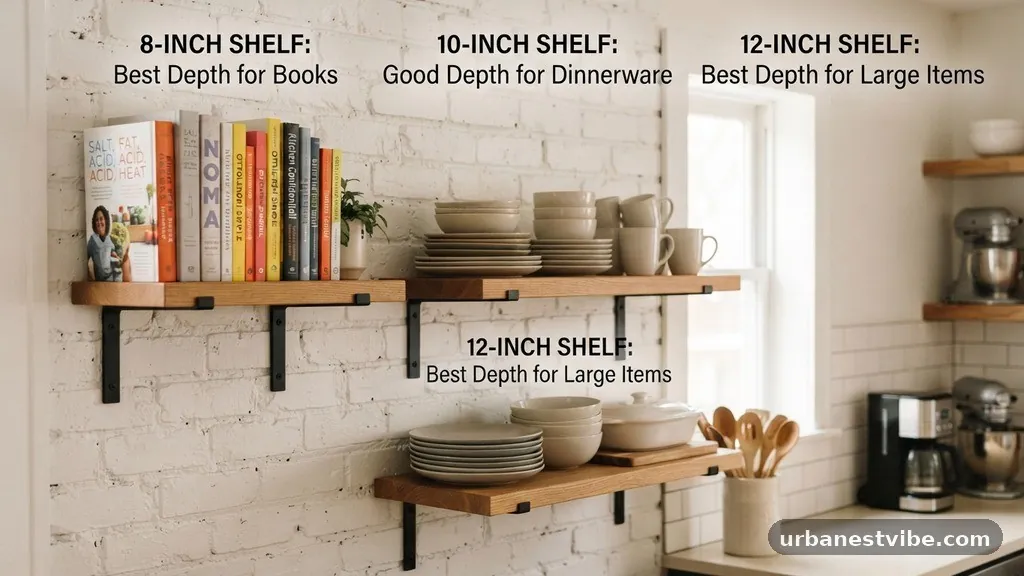
The kitchen is where the 8-inch vs 10-inch vs 12-inch shelves dilemma becomes more complex because plates, bowls, and serving platters vary wildly in diameter. A standard dinner plate is usually 10 to 11 inches in diameter.
If you place these on an 8-inch shelf, they will wobble and pose a significant risk of falling. A 10-inch shelf is the absolute minimum for standard dinner plates, but even then, the plate may stick out slightly.
For a kitchen, a 12-inch shelf is almost always the superior choice. It allows you to stack plates safely while leaving a little breathing room for the decorative edge of the dish. If you are storing heavy stoneware or ceramic pieces, consider the weight as much as the depth.
You’ll need more robust support, such as heavy-duty steel brackets, to handle the load of a full stack of plates on a 12-inch board. Never use a shelf that is shallower than your largest plate diameter.
Maximizing Closet Storage Efficiency
Closets are high-traffic areas where space is at a premium. An 8-inch shelf is usually too shallow for clothing, but it can work well for specialized storage like shoe racks or accessory bins.
If you’re hanging clothes, you generally need at least 20 to 24 inches of depth for hangers to clear the back wall. However, for folded sweaters, jeans, and storage boxes, 10-inch or 12-inch shelves are the industry standard.
When installing these, consider the vertical spacing between shelves. If you are using 12-inch shelves for folded clothing, keep them spaced about 12 to 14 inches apart to allow for easy access. A common mistake in closet design is installing shelves that are too deep for the items being stored, which forces you to stack items behind one another.
This “double-stacking” makes it nearly impossible to find what you need without creating a mess. Stick to 10-inch shelves for standard folded items to keep everything visible and accessible.
The Role of Shelf Depth in Visual Weight
Beyond pure utility, the depth of your shelving significantly affects the “visual weight” of a room. In a small office or narrow hallway, a 12-inch shelf can make the space feel cramped and claustrophobic.
It juts out into the walkway, creating a visual barrier that breaks up the flow of the room. Using an 8-inch shelf in these tighter areas keeps the walls feeling open and airy.
When you’re choosing between 8-inch vs 10-inch vs 12-inch shelves, consider the eye level of the user. Shelves installed at eye level should generally be shallower to avoid the feeling that they are “looming” over the space.
If you need deep storage, place it closer to the floor or higher up near the ceiling where it won’t impact your line of sight. By varying your shelf depths throughout a room, you can create a dynamic, layered look that feels intentional rather than cluttered.
Structural Support and Bracket Selection
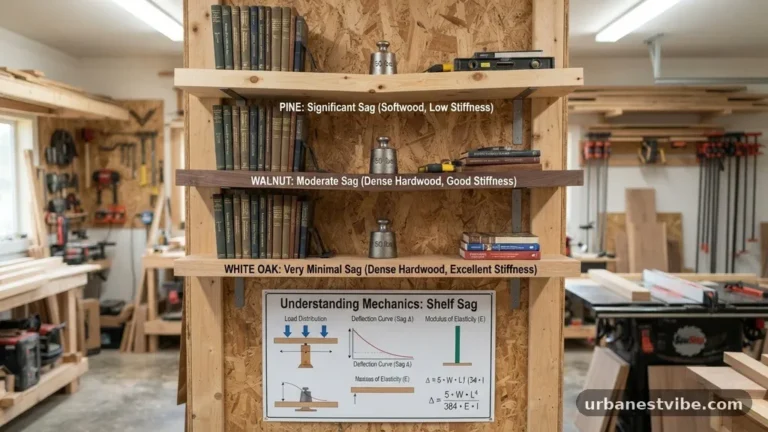
No matter which depth you choose, the integrity of your installation depends entirely on the support you provide. A 12-inch shelf loaded with heavy dinnerware requires much stronger brackets than an 8-inch shelf holding paperback books. When you increase the depth, you also increase the potential for the shelf to sag under the weight of the items placed near the outer edge.
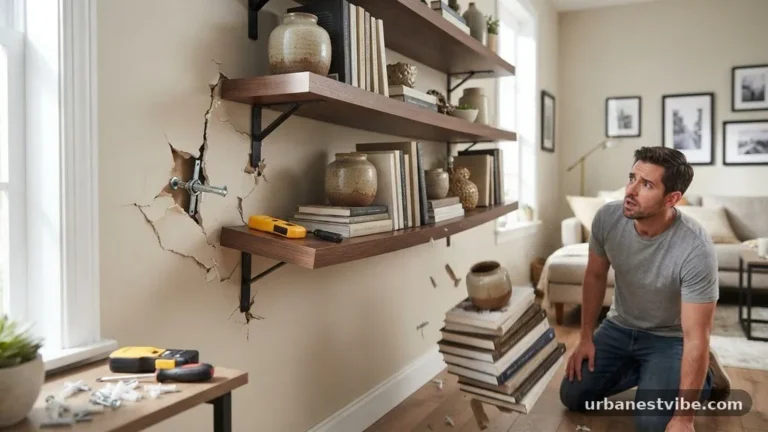
For shelves deeper than 10 inches, you should always aim to hit wall studs with your hardware. If you are using floating shelves, the internal support mechanism must be rated for the full depth of the shelf. A long, deep shelf acts as a lever, putting immense torque on your wall anchors.
If you are unsure about the weight, it is always better to over-engineer the support. Consult the USDA Forest Products Laboratory for guidance on wood strength and span requirements if you are building custom shelving from solid lumber.
Managing Small Spaces with Narrow Shelving
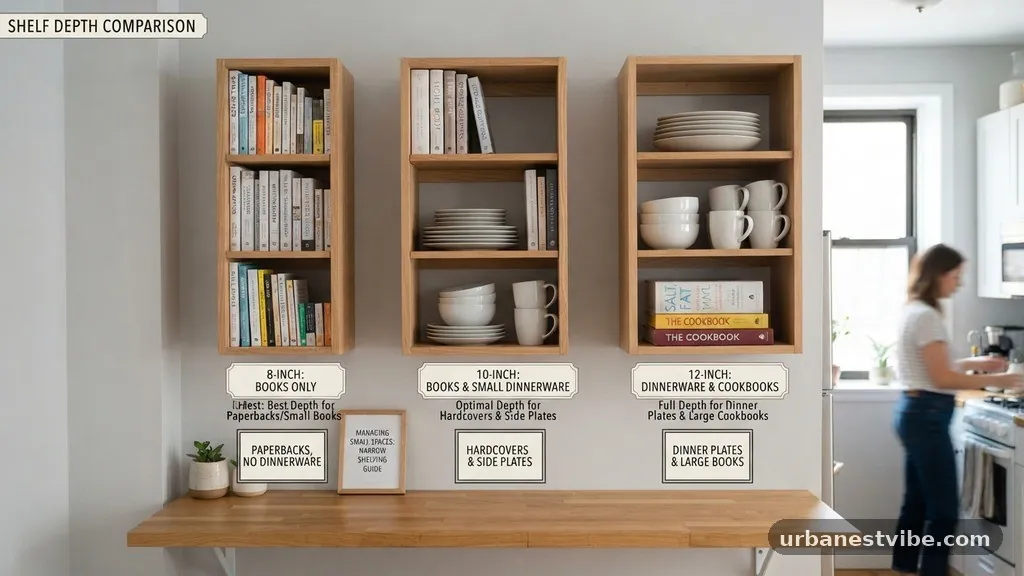
In compact apartments or small utility rooms, every inch counts. An 8-inch shelf is a secret weapon for narrow corridors or behind-the-door storage.
It provides just enough surface to hold essential items like keys, mail, or small decorative plants without impeding movement. When you have less than 30 inches of clearance in a hallway, avoid anything deeper than 8 inches.
Another trick for small spaces is to use verticality. If you cannot go deep, go high. Installing a series of 8-inch shelves from floor to ceiling can store a surprising amount of small items without making the room feel like a warehouse.
Be careful, however, to keep the most frequently used items at arm’s reach. If you use a ladder to access high shelves, ensure those shelves are secured to the wall studs to prevent them from being pulled down by accidental contact.
Accounting for Decorative and Oversized Items
Sometimes you aren’t storing books or dishes; you’re displaying art, vases, or electronics. These items don’t follow standard sizing, which makes the 8-inch vs 10-inch vs 12-inch shelves decision more about individual measurement than general rules. A large decorative vase might require a 12-inch depth for stability, even if it weighs very little.
Electronics, such as gaming consoles or cable boxes, usually require at least 10 inches of depth to accommodate the unit and the necessary wiring behind it. Always remember that cables need room to bend without being kinked against the wall.
A 12-inch shelf is often the safest bet for media equipment because it allows for proper airflow, which is critical for preventing overheating. Never push an electronic device flush against a wall; always leave at least an inch or two of clearance for heat dissipation.
Common Installation Mistakes to Avoid
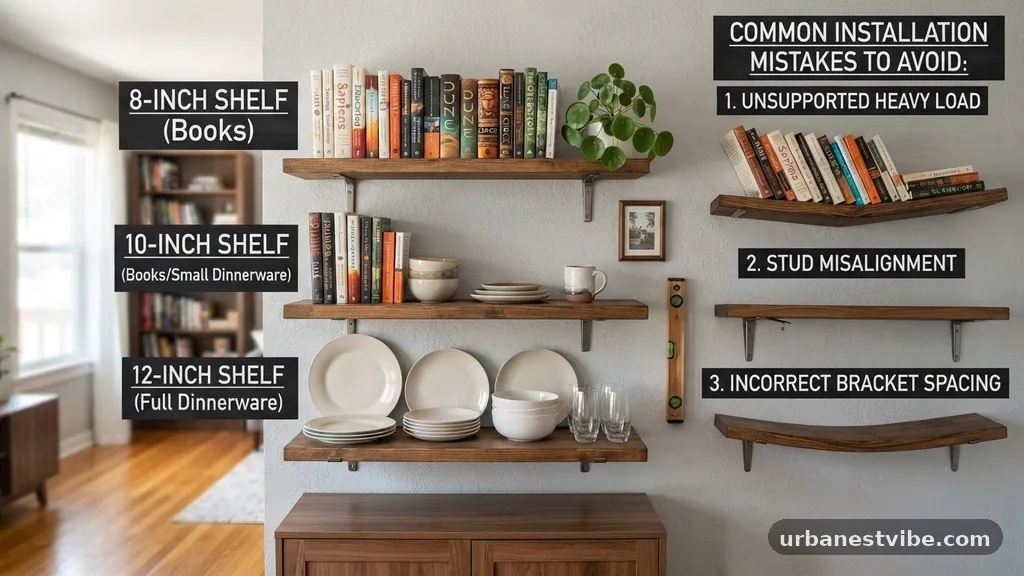
The most frequent error homeowners make is failing to account for the thickness of the wall and the protrusion of the brackets. If you are installing a shelf into a recessed nook, measure the width at the back, the middle, and the front. Walls are rarely perfectly square, and a 12-inch shelf might fit at the back but be too wide for the front opening.
Another common mistake is neglecting the “clearance” needed for removing items. If you have a 12-inch deep shelf and you place it 13 inches below the shelf above it, you will have almost no room to tilt a plate or a book to remove it from the shelf.
Always leave at least 2 to 3 inches of vertical clearance above your tallest item. This simple rule prevents the frustration of “locked-in” storage that is technically on the shelf but impossible to grab.
Material Considerations for Different Depths
The material you choose should be appropriate for the depth of the shelf. Solid wood is a classic choice, but it can be heavy and prone to warping if the span is too long.
If you are using a 12-inch depth, solid wood is excellent because it provides the necessary stiffness to prevent bowing. For 8-inch shelves, plywood or high-density particle board can work well because the shorter span reduces the risk of sagging.
If you are painting your shelves, remember that deeper shelves show more surface area, which means imperfections in the wood or the paint finish will be more visible. Always sand your boards thoroughly before finishing.
If you are opting for a “floating” look, ensure the material is thick enough to hide the mounting hardware. A thin piece of wood, even if it is 12 inches deep, will not look premium if the mounting screws are visible from the side.
Integrating Shelving into Your Home Design
When you look at your home as a whole, the transition between different shelf depths should feel natural. You might use 12-inch shelves in the pantry for bulk storage, transition to 10-inch shelves in the kitchen for everyday dishes, and finish with 8-inch shelves in the living room for books and decor. This variation keeps the home feeling functional while avoiding the clinical look of a warehouse.
The key to a successful installation is consistency within a single wall. If you have a bank of shelves, try to keep them the same depth unless you have a specific reason to vary them.
A wall with staggered depths can look messy unless it is perfectly executed as a design feature. If you are unsure, stick to a uniform depth for the entire run of shelving to create a cohesive, professional appearance that highlights your belongings rather than the storage itself.
Frequently Asked Questions
Is an 8-inch shelf deep enough for a standard hardcover book?
Yes, an 8-inch shelf is usually perfect for most standard hardcover books. These books typically measure between 6 and 8 inches deep, so an 8-inch board will allow them to sit flush or with a very minor gap, providing a clean, organized appearance without wasting space.
Can I use 10-inch shelves for my dinner plates?
While 10-inch shelves are the absolute minimum for standard dinner plates, they are often risky. Because many plates have a diameter of 10.5 to 11 inches, they will likely hang over the edge. A 12-inch shelf is much safer and more practical for heavy or large ceramic dinnerware.
What is the best way to prevent shelves from sagging?
To prevent sagging, ensure your brackets are spaced no more than 24 to 32 inches apart. For deeper shelves like 12-inch boards, use sturdier, heavy-duty brackets. Additionally, always mount your brackets directly into wall studs rather than relying solely on drywall anchors, especially if you are storing heavy items.
Are floating shelves as strong as bracketed shelves?
Floating shelves can be very strong, but their capacity is limited by the internal mounting hardware and the thickness of the shelf itself. They are generally better for lighter items like books or decor. If you are planning to store heavy dinnerware or large stacks of books, traditional bracketed shelving is usually the more reliable and safer option.
How much vertical space should I leave between shelves?
You should generally allow 2 to 3 inches of “headroom” above your tallest item. For example, if your tallest book is 9 inches, the space between that shelf and the one above it should be at least 11 or 12 inches. This ensures you can easily tilt and remove items without struggling.
Final Thoughts on Shelf Depth
Selecting the right depth for your storage is a simple but transformative step in home organization. By carefully evaluating whether your needs align with 8-inch vs 10-inch vs 12-inch shelves, you can eliminate clutter and ensure your walls are working as hard as possible for you. Remember that books and light decor thrive on shallower surfaces, while kitchenware and large items demand the extra room of a 12-inch board.
Focus on using quality materials and secure mounting to protect your belongings and keep your space looking its best. With these measurements in mind, you are ready to tackle your next shelving project with confidence. We would love to hear about the creative storage solutions you’ve implemented in your own home, so feel free to share your experiences or ask further questions about your specific wall layout.