How Much Weight Can a Heavy-Duty Hidden Steel Bracket Shelf Really Hold?
Understanding how much weight can a heavy-duty hidden steel bracket shelf really hold is essential for anyone planning a custom storage project. These installations offer a clean, minimalist look, but their structural integrity depends entirely on physics and proper execution. If you fail to account for the mechanical leverage applied to your wall studs, you risk damaged drywall or falling decor.
By learning the precise factors that influence load capacity, you will gain the confidence to build floating shelves that remain level and secure for years. We will explore the critical variables that dictate performance, from steel thickness to the depth of your shelf, ensuring your project is both beautiful and safe.
Evaluating the Mechanical Advantage of Hidden Brackets

The primary challenge with any floating shelf is the cantilever effect. When you place an object on a shelf, the weight creates a downward force at the end of the board, which acts as a lever against the mounting point.
A heavy-duty hidden steel bracket works by transferring this force into the wall studs through a series of rods or a backplate. Unlike traditional support brackets that sit underneath the shelf, a hidden system relies on the rigidity of the steel rod to resist bending.
If the rod is too thin, it will deflect under the weight of your books or kitchen items. This deflection leads to the shelf sagging downward, which is not only unsightly but also risks pulling the fasteners out of the wall.
To determine the maximum capacity, you must consider the length of the rod extending into the shelf. A longer rod provides more stability, but it also requires a thicker shelf material to house the steel without compromising the structural integrity of the wood itself.
The Critical Role of Wall Studs
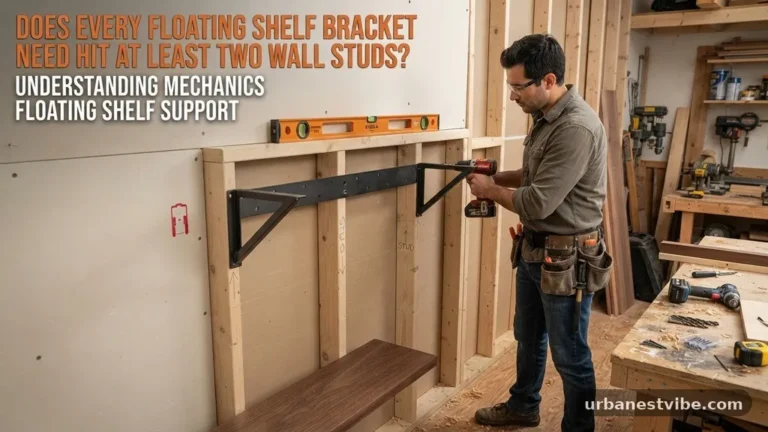
No matter how strong your steel bracket is, the system is only as reliable as the surface it is attached to. You must anchor these supports directly into solid wood studs to achieve their rated weight capacity.
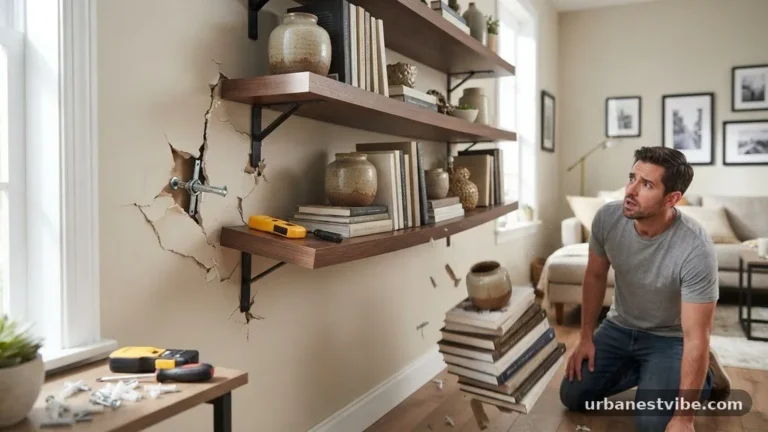
Anchoring into drywall alone is a recipe for failure, as the gypsum board will crumble under the pressure of a loaded shelf. Using a stud finder is the first step in any successful installation, and you should always verify the center of the stud to ensure the screws have maximum bite.
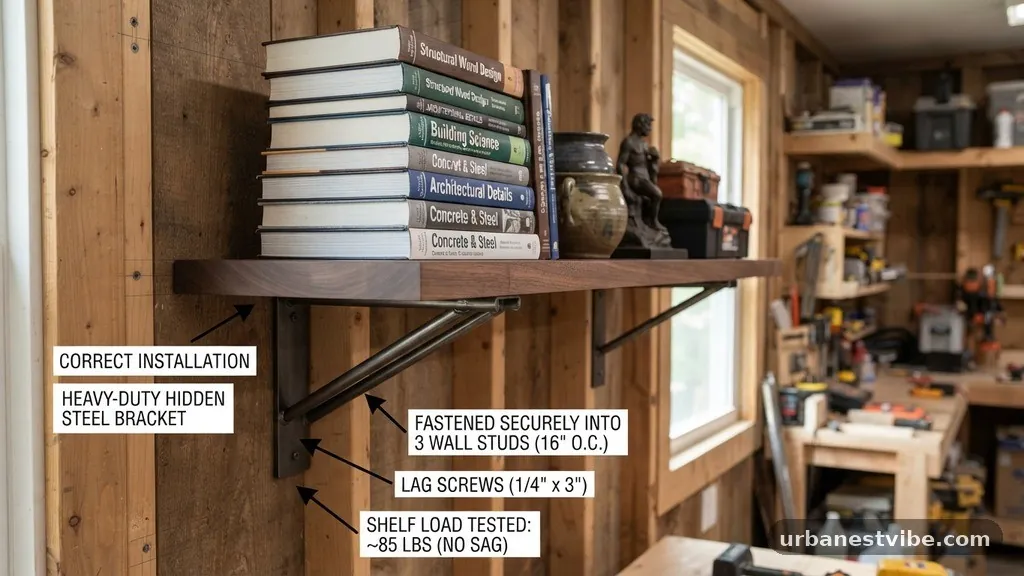
When you mount the backplate of the bracket, consider using heavy-duty structural screws rather than standard wood screws. These are designed to handle high shear loads, which is exactly what a wall-mounted bracket experiences.
If your studs are spaced 16 inches apart, try to align your brackets so that each one captures a stud. If the shelf is long, you may need to add additional brackets to distribute the load, effectively turning the shelf into a continuous beam supported at multiple points.
Selecting the Right Steel Thickness and Material
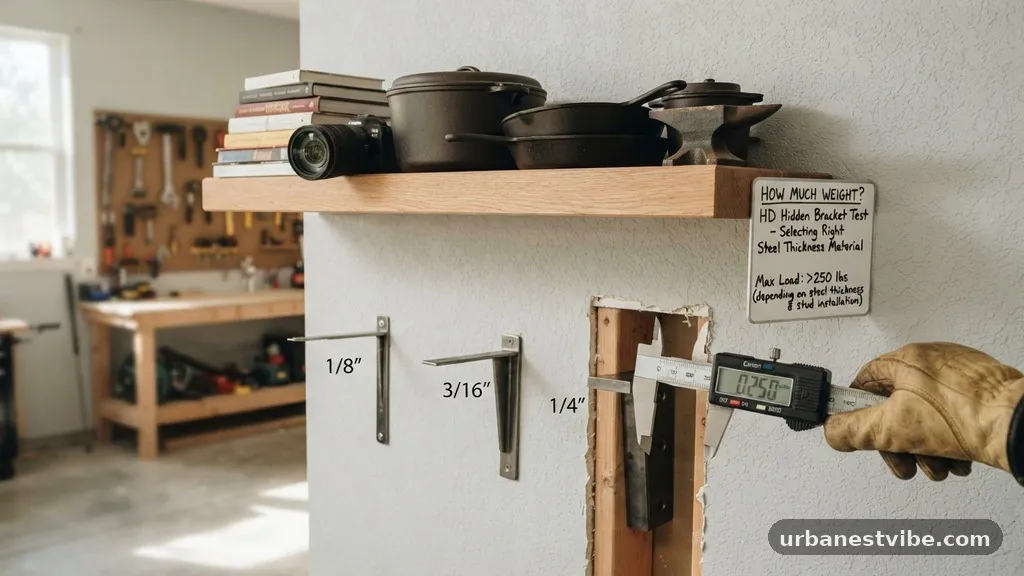
The physical dimensions of the steel used in your bracket determine its resistance to bending. A heavy-duty bracket typically utilizes solid steel rods with a diameter of at least 1/2 inch or 5/8 inch.
Anything thinner, such as 1/4 inch rod, will likely flex under moderate loads, making it unsuitable for heavy items like stoneware or stacked books. The backplate, which sits flush against the wall, should be made of thick gauge steel, often 3/16 inch or 1/4 inch, to prevent it from warping when you tighten the mounting screws.
When shopping for hardware, look for materials that are specifically rated for structural use. Avoid generic hardware store options that don’t provide a load capacity rating.
Reliable manufacturers often provide a guide to safe installation practices that details how to calculate the load per bracket based on the specific steel alloy and rod length. Using high-quality steel ensures that the bracket maintains its shape under pressure, preventing the “drift” that causes shelves to tilt away from the wall over time.
Calculating Total Load Capacity per Shelf
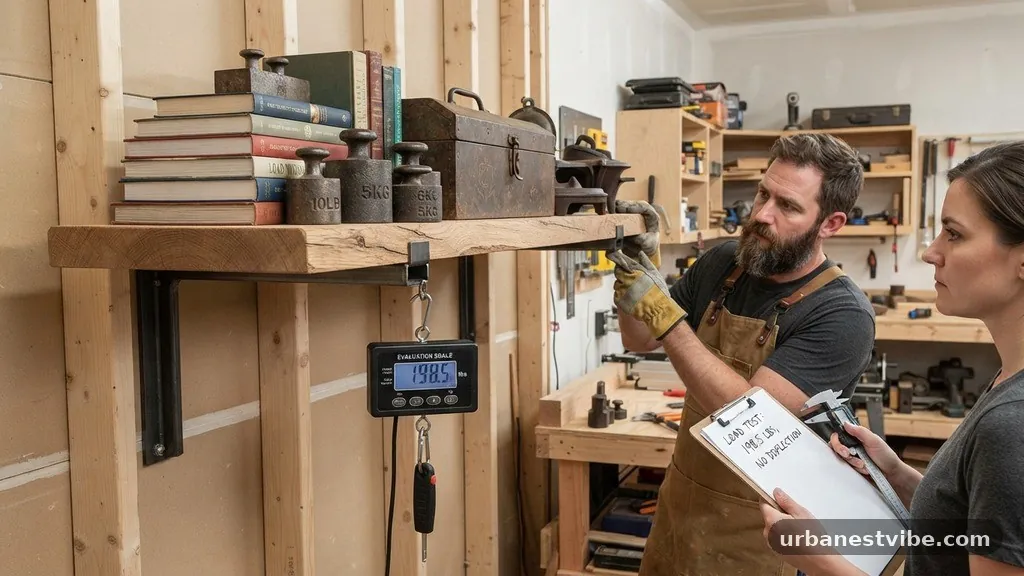
To estimate how much weight your setup can handle, you need to combine the ratings of all brackets used for a single shelf. If a single heavy-duty bracket is rated for 50 pounds, a shelf supported by two such brackets might theoretically hold 100 pounds.
However, this calculation assumes that the shelf material is strong enough to bridge the gap between the brackets without snapping. Softwoods like pine are more prone to bending or splitting near the bracket holes than denser materials like oak or walnut.
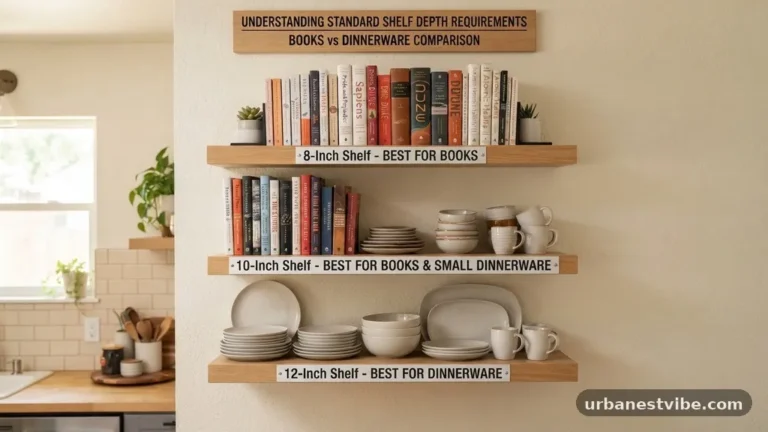
You must also account for the depth of your shelf. A shelf that extends 10 inches from the wall creates significantly more leverage than one that extends only 6 inches. The deeper the shelf, the higher the stress on the steel rod.
If you are building a deep shelf for a kitchen countertop support, you may need to reduce the expected weight limit to compensate for the increased torque. Always aim for a conservative estimate; if you expect to hold 50 pounds, design your system to handle 75 pounds to provide a safety margin.
Managing Leverage and Shelf Depth
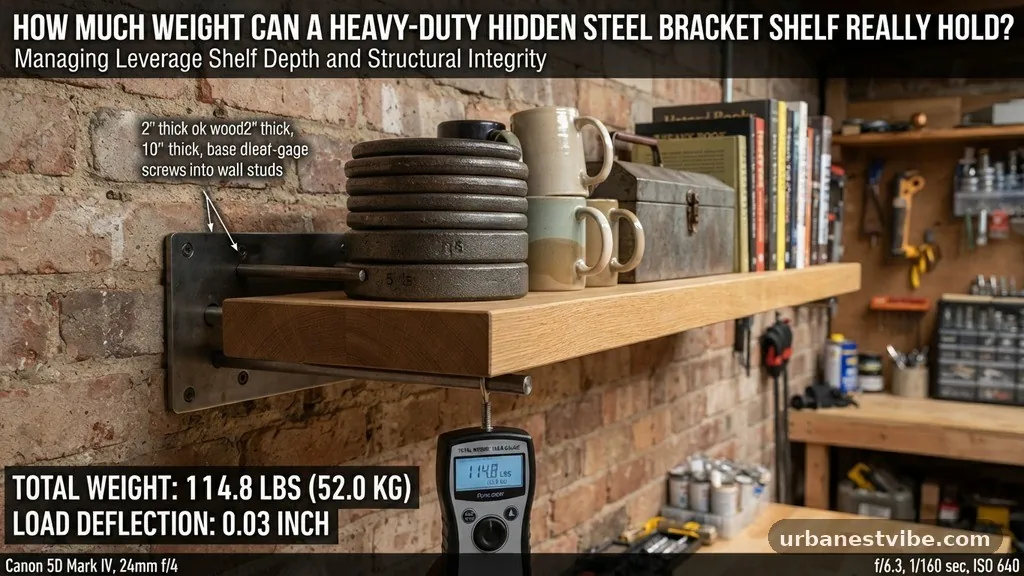
The depth of your shelf is perhaps the most overlooked variable in bracket performance. As you move the center of gravity of your items further away from the wall, the force exerted on the mounting hardware increases exponentially.
This is why most manufacturers provide a maximum shelf depth for their bracket systems. If you exceed this depth, you are effectively turning the shelf into a long lever, which can cause the bracket to bend or the wall anchors to fail.
If you absolutely must have a deep shelf, consider using a bracket that features a longer backplate. A taller backplate creates a wider footprint on the wall, which helps distribute the downward pressure over a larger area of the stud.
This reduces the risk of the bracket “pivoting” or pulling away from the wall at the top. For very deep installations, sometimes the only solution is to accept that the shelf will have a lower weight capacity or to add a secondary, visible support.
The Importance of Proper Fastener Selection
Many DIYers focus entirely on the bracket while ignoring the screws that hold it to the wall. Using cheap, soft-metal screws is a common mistake that leads to snapped heads or stripped threads.
You should use hardened steel lag screws or structural wood screws that are specifically rated for high-shear applications. These screws are designed to grip the wood fibers of the stud tightly without stripping the hole.
Pre-drilling your holes is non-negotiable when working with structural fasteners. If you drive a thick lag screw into a stud without a pilot hole, you risk splitting the wood, which significantly reduces the holding power of the screw.
Use a drill bit that is slightly smaller than the shank of the screw. This ensures the threads have plenty of wood to bite into, creating a connection that is as strong as the stud itself.
Avoiding Common Installation Pitfalls
One common error is failing to ensure the bracket is perfectly level before tightening the final fasteners. Even a slight tilt can cause items to slide off the shelf or put uneven pressure on one side of the bracket.
Use a spirit level to check the position of each bracket relative to the others. If you have multiple brackets on one long shelf, they must be perfectly aligned, or the shelf will not sit flush against the wall.
Another mistake is neglecting to account for the weight of the shelf material itself. A thick piece of solid hardwood can weigh 15 to 20 pounds on its own.
If your brackets are rated for 50 pounds, you have already used up a significant portion of that capacity before you even place a single book or dish on the surface. Always add the weight of the wood to the weight of your intended load to ensure you stay within safe operating limits.
Impact of Shelf Material Density
The material you choose for your shelf directly affects how well the hidden bracket performs. Particleboard or MDF (medium-density fiberboard) are generally poor choices for floating shelves because they are prone to crumbling at the point where the bracket enters the wood. As the shelf flexes, the steel rod can widen the hole in the wood, leading to a loose, wobbly connection.
Solid hardwood, such as maple, white oak, or cherry, provides a dense, stable medium that grips the steel rod securely. When you drill the holes for the brackets, the wood fibers hold the rod in place, which helps maintain the shelf’s rigidity. If you are using a lighter material, consider reinforcing the holes with metal sleeves or using a thicker piece of wood to provide more surface area for the bracket to engage with.
Ensuring Long-Term Stability
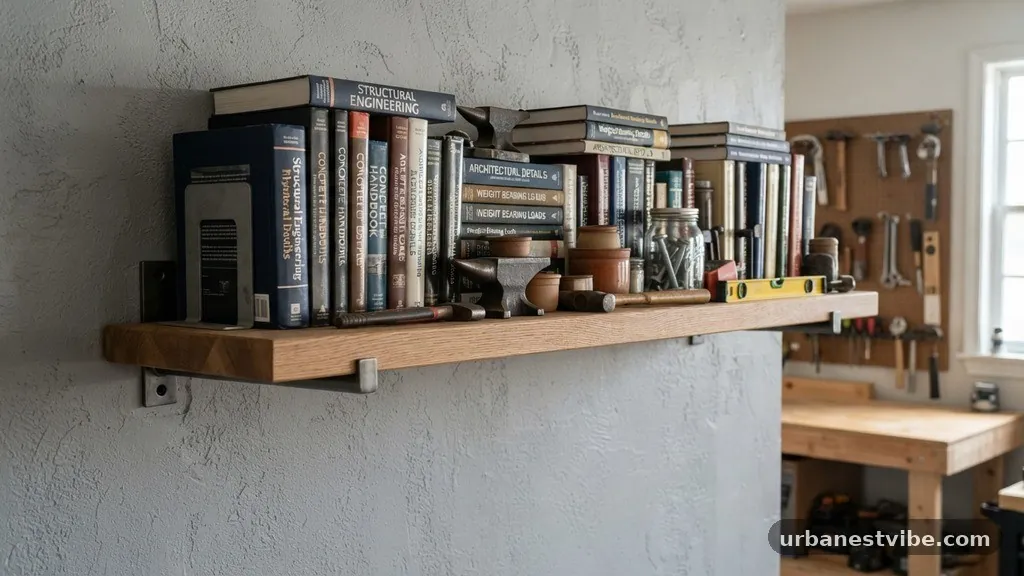
Over time, the weight on your shelf can cause the fasteners to loosen slightly, especially if the shelf is in a high-traffic area with vibrations, such as near a door. Check your shelves annually to ensure the backplate remains tight against the wall. If you notice any movement or sagging, it is often a sign that the screws are beginning to pull out of the studs.
If you find that your shelf has become loose, do not simply tighten the existing screws. If the wood in the stud has been damaged or stripped, the screws will not hold securely.
Instead, remove the bracket, fill the hole with a high-quality wood filler or a new piece of dowel, and re-drill the pilot hole. Alternatively, move the bracket to a new position on the stud to ensure a fresh, solid connection.
When to Consider Visible Support Brackets
There are limits to what a hidden system can achieve. If you are planning to store extremely heavy items, such as a collection of heavy cast-iron cookware or a large library of hardcover books, a hidden bracket may not be the safest choice.
In these cases, it is wiser to use visible support brackets. These brackets transfer the weight directly to the wall at an angle, which is a much more efficient way to manage heavy loads.
Visible brackets also eliminate the risk of the rod bending or the shelf material failing at the mounting point. While they do not offer the same minimalist, floating aesthetic, they provide peace of mind for heavy-duty storage.
If you prioritize the look of a floating shelf but need more strength, look for hidden brackets that include a small diagonal brace. This hybrid design offers a compromise between strength and style, allowing you to carry more weight without sacrificing the clean lines of your interior.
Frequently Asked Questions
How do I know if my wall can support a heavy-duty shelf?
The ability of your wall to support a heavy shelf depends on the structure behind the drywall. If you have standard wood studs, they can easily handle the weight of a properly installed shelf. However, if your walls are made of lath and plaster, metal studs, or masonry, you will need specialized anchors and mounting techniques to ensure the bracket remains secure.
Can I install floating shelves on masonry or brick walls?
Yes, but you must use masonry anchors, such as sleeve anchors or lead shields, instead of standard wood screws. These anchors expand inside the masonry to create a high-strength bond. It is often more difficult to achieve a perfectly level installation on brick, so take your time with the layout and alignment before drilling your holes.
Does the length of the shelf affect the weight capacity?
The length of the shelf itself does not change the weight capacity of the brackets, but it does change how you distribute the load. A very long shelf may sag in the middle if the brackets are spaced too far apart. To prevent this, ensure your brackets are spaced no more than 16 to 24 inches apart, depending on the thickness of the shelf material.
What is the maximum weight a standard hidden bracket can hold?
While it varies by manufacturer, most high-quality, heavy-duty hidden steel brackets are rated to hold between 30 and 75 pounds per pair, assuming they are installed into solid studs. Always check the specific rating provided by the manufacturer, as some lighter-duty versions are only intended for decorative items and may fail with even moderate weight.
Is it better to use one long bracket or several short ones?
Using several short, individual brackets is generally better for long shelves because it allows you to align each one perfectly with a wall stud. A single long bracket, while potentially stronger in terms of steel, might not align with your stud spacing, forcing you to use less secure drywall anchors for some of the mounting points.
Final Thoughts on Shelf Strength
Determining how much weight can a heavy-duty hidden steel bracket shelf really hold requires a balanced view of hardware, mounting surfaces, and the physics of leverage. By prioritizing solid stud engagement and choosing high-quality steel hardware, you create a storage solution that is as durable as it is aesthetic. Always respect the limitations of your shelf material and avoid exceeding the weight ratings specified by the manufacturer.
With careful planning and attention to detail, you can enjoy the clean, open look of floating shelving without compromising on safety or functionality. If you have questions about your specific wall type or shelf dimensions, consult a local hardware professional to ensure your installation meets all local building standards. We invite you to share your own experiences with floating shelf projects or ask for further clarification on these structural principles.