
How to Decorate a Bedroom with Minimal Effort
There’s a particular kind of tired that comes from staring at a bedroom you don’t love but don’t have the energy to fix. In my experience, most people don’t need a renovation — they need ten smart, low-effort decisions that add up to a room that finally feels finished. A full redesign sounds exhausting, and honestly, it’s rarely necessary. Most bedrooms aren’t failing because of bad bones; they’re failing because of a few missed layers — texture, light, and a bit of intentional styling.
I’ve noticed that the bedrooms people love most on Pinterest aren’t the most expensive ones. They’re the ones that feel calm, layered, and a little personal, without looking overworked. That’s good news if you’re short on time, budget, or patience for a big project. A weekend, a few affordable pieces, and a little bit of strategy can genuinely transform how a room feels to walk into at the end of the day.
This guide is built around one idea: minimal effort, maximum visual payoff. Every idea here is something you can do in an afternoon, without hiring anyone, without moving furniture around for hours, and without spending a fortune. I’ve seen this approach transform spaces that felt flat and forgettable into rooms people actually want to spend time in — reading, resting, or just decompressing after a long day.
Whether you’re renting and can’t paint the walls, working with a small budget, or simply short on time, these ideas are designed to meet you where you are. You’ll find practical styling advice, real reasons why each idea works, and enough detail to actually execute it — not just admire it. If you’re anything like me, you don’t want a Pinterest board full of inspiration you’ll never act on. You want a short list of things that actually move the needle.
By the end of this article, you’ll have a clear, doable plan for a bedroom that looks intentional, feels cozy, and reflects your style — without the effort of a full makeover.
Table of Contents
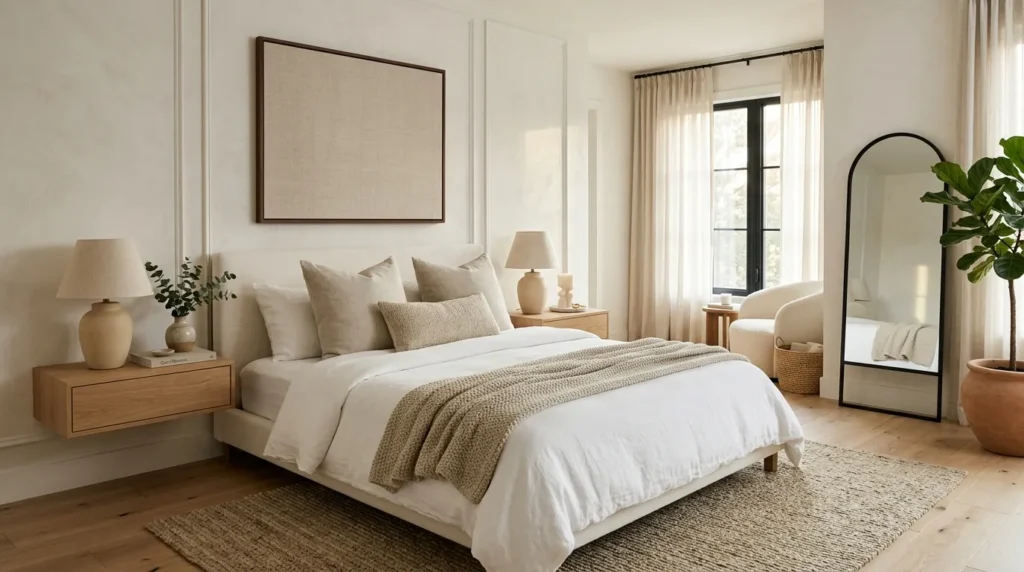
- Cozy Layered Bedding — The single fastest way to upgrade how a bedroom looks and feels.
- Statement Throw Pillows — Small additions that instantly add color, texture, and personality.
- Warm Ambient Lighting — Swapping harsh overhead light for a softer, more intentional glow.
- Curated Nightstand Vignette — Styling a small surface to feel thoughtful instead of cluttered.
- Oversized Wall Art — One large piece that does the visual work of several small ones.
- Soft Area Rug — Grounding the room and adding warmth underfoot.
- Simple Curtain Swap — Elevating windows without any construction or hardware headaches.
- Decluttered Surfaces — The invisible styling trick that makes everything else look better.
- Textured Throw Blanket — A low-cost layer that adds instant coziness and visual interest.
- Fresh Greenery Touch — Bringing life and softness into the room with almost no upkeep.
1. Cozy Layered Bedding
Quick Benefits
- Instantly makes the bed look intentional and expensive
- Requires no tools, painting, or furniture rearranging
- Works with any existing frame, headboard, or mattress
- Easy to update seasonally without a full re-buy
- One of the highest-impact, lowest-effort upgrades available
Why It Works
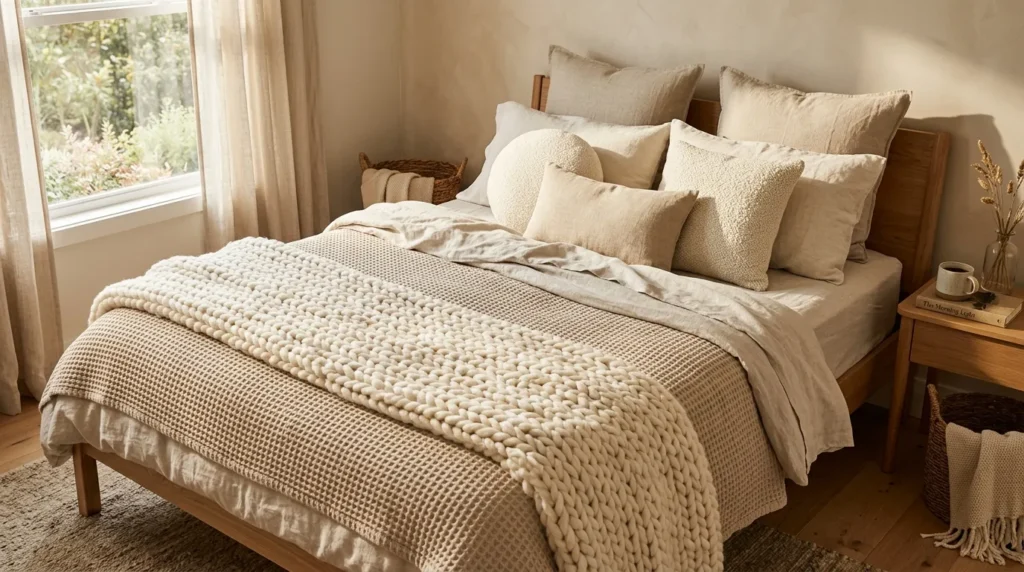
The bed is the visual anchor of almost every bedroom, so it’s the first place your eye lands and the first thing that signals whether a room feels put-together. A mistake many homeowners make is treating the bed as “done” once there’s a comforter on it. In reality, layering — a flat sheet, a duvet or quilt, a folded throw, and a mix of pillow sizes — is what creates that catalog-style look people save on Pinterest. It’s not about buying more; it’s about arranging what you already have with a bit more intention.
How To Style It
Start with a base layer in a neutral or soft tone, then add one textured layer on top, like a waffle-knit quilt or a chunky knit throw folded across the foot of the bed. Mix two to three pillow sizes — standard sleeping pillows in back, then one or two decorative pillows in front — and avoid matching every pattern exactly; a little contrast in texture feels more curated than a perfectly matched set. One simple trick I always suggest is fluffing and centering pillows daily; it takes fifteen seconds and makes the whole bed look freshly styled.
2. Statement Throw Pillows
Quick Benefits
- Adds color and personality without a big investment
- Easy to swap seasonally or when your taste changes
- No special skills or tools required
- Works in rented spaces with zero commitment
- Ties the bedding, rug, and curtains together visually
Why It Works
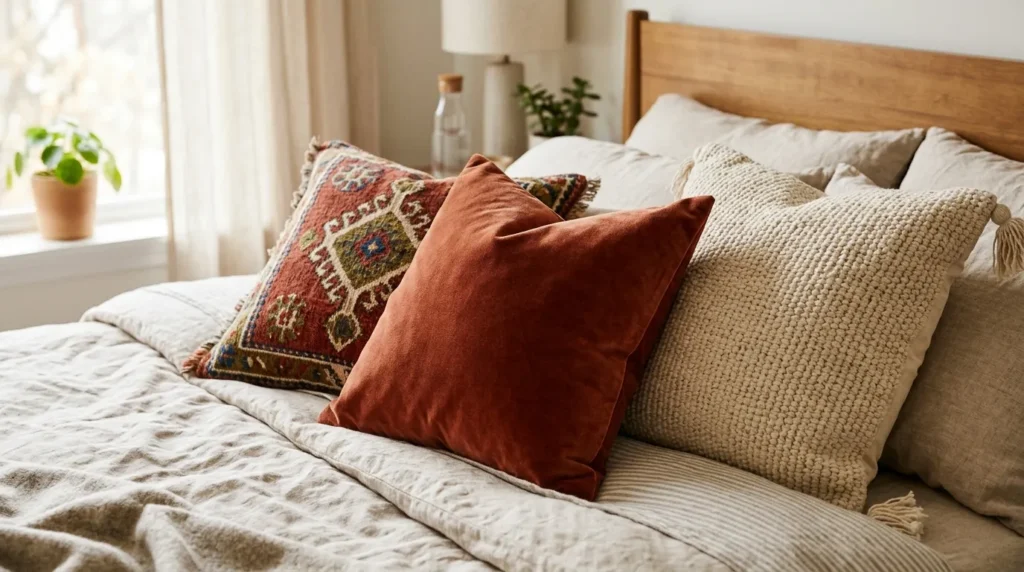
Pillows are the accessory of home decor — small, replaceable, and disproportionately impactful. A room with neutral bedding and walls can feel completely transformed by two or three well-chosen pillows in a bold pattern or rich color. That’s why many designers recommend starting a room refresh with pillows before touching anything bigger; they’re the lowest-risk way to test a color palette or pattern direction before committing to it elsewhere in the space.
How To Style It
Choose one dominant pattern, one solid color that pulls from it, and one textured neutral (like linen or bouclé) to round things out. Odd numbers tend to look more natural than even ones, so three pillows often reads better than four. If your budget is tight, pillow covers instead of full pillows let you refresh the look seasonally for a fraction of the cost. Keep the pillow color palette connected to at least one other element in the room — a rug, curtain, or piece of art — so the space feels cohesive rather than randomly accessorized.
3. Warm Ambient Lighting
Quick Benefits
- Instantly softens the mood of the entire room
- Costs very little compared to structural changes
- No electrician or wiring needed for most options
- Makes the space feel more like a retreat
- Flatters skin tones and furniture finishes alike
Why It Works
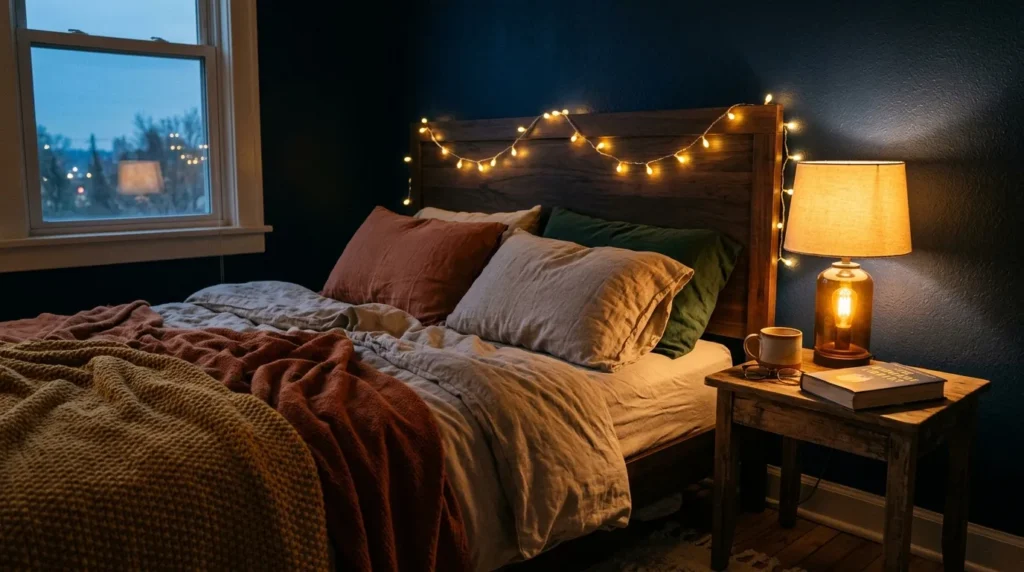
Overhead lighting is functional, but it’s rarely flattering — harsh, flat, and better suited to cleaning than relaxing. In my experience, swapping or supplementing that single overhead source with layered, warmer light is one of the most underrated bedroom upgrades. Warm ambient light (around 2700K) mimics candlelight and golden-hour sun, both of which the eye reads as cozy and calming rather than clinical.
How To Style It
Add a plug-in table lamp on the nightstand, a small floor lamp in a reading corner, or a string of warm LED lights along a headboard or shelf. If you’re renting, look for lamps with dimmers or smart bulbs you can dim from your phone — no rewiring required. Turn off the overhead light in the evening and rely on these smaller sources instead; the shift in mood is immediate. A mistake many people make is placing only one lamp in the room, which creates a single hot spot instead of a soft, even glow — aim for at least two light sources on opposite sides of the room.
4. Curated Nightstand Vignette
Quick Benefits
- Turns a cluttered surface into a styled focal point
- Costs little to nothing using items you already own
- Takes under ten minutes to arrange
- Adds personality without permanent changes
- Improves the room’s overall sense of order
Why It Works
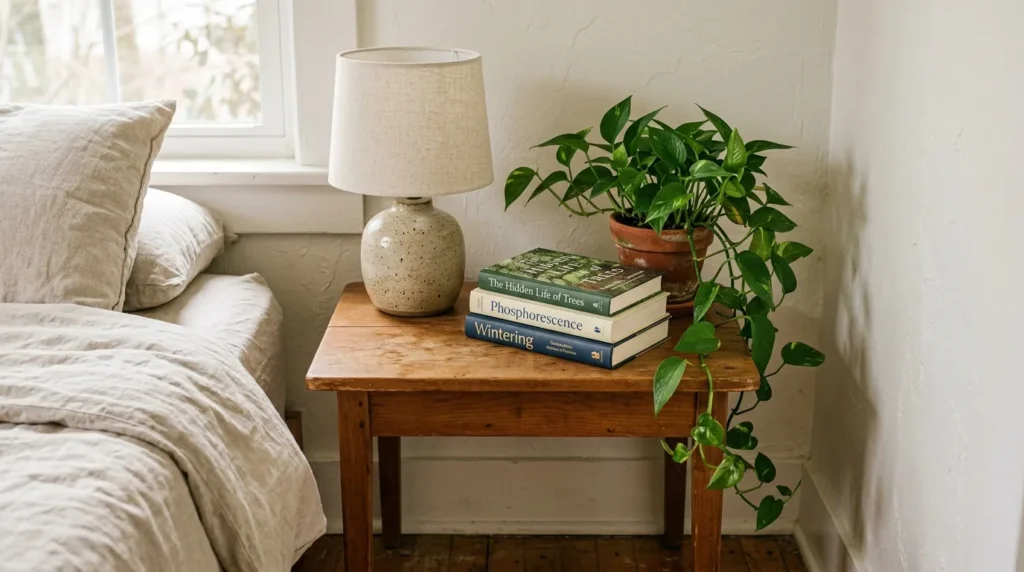
Nightstands tend to become dumping grounds — chargers, water glasses, half-read books — and that clutter quietly undermines every other styling effort in the room. I’ve seen this idea transform spaces almost instantly because a nightstand vignette is essentially free interior design: you’re not buying anything new, just editing and arranging what’s already there into a small, intentional scene.
How To Style It
Limit the surface to three to five items: a lamp, a small stack of books, and one personal or decorative object like a candle, small plant, or framed photo. Vary the heights so your eye moves naturally across the grouping instead of landing flat. Hide daily-use items like chargers and remotes in a small drawer or basket so the visible surface stays styled. This is a small habit worth repeating nightly — clearing the nightstand before bed keeps the vignette looking intentional rather than lived-in-and-forgotten.
5. Oversized Wall Art
Quick Benefits
- Fills wall space efficiently with one purchase, not several
- Creates an instant focal point above the bed
- Easier to hang straight than a full gallery wall
- Works with removable hanging strips in rentals
- Elevates the room’s perceived design intention
Why It Works
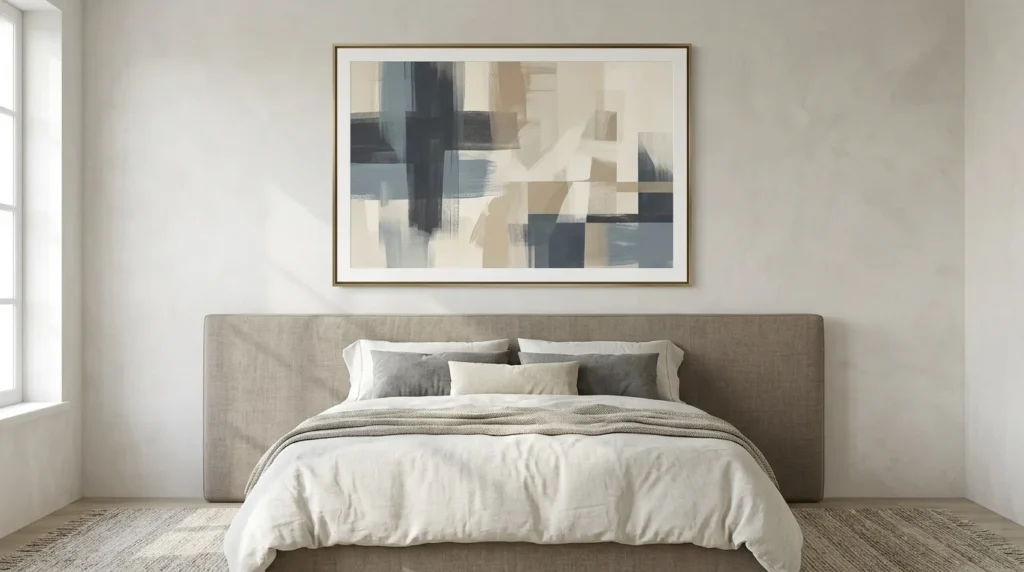
One large piece of art does more visual work than five small ones scattered across a wall, and it takes a fraction of the effort to plan and hang. A mistake many homeowners make is under-scaling art — choosing something too small for the wall, which leaves the space feeling unfinished no matter how nice the piece is. As a rule of thumb, art above a bed should span roughly two-thirds the width of the headboard.
How To Style It
Center the piece six to eight inches above the headboard, or slightly lower in rooms with tall ceilings so it doesn’t float too far from the bed. A single framed print, a woven wall hanging, or even a large tapestry all work — the key is scale, not cost. In rental-friendly setups, heavy-duty removable hooks or adhesive strips rated for the frame’s weight let you skip drilling entirely. If you can’t find one large piece you love, a tightly grouped diptych or triptych with matching frames reads as one cohesive statement rather than a scattered gallery.
6. Soft Area Rug
Quick Benefits
- Adds warmth and softness underfoot immediately
- Grounds the furniture and defines the space visually
- Hides imperfect flooring in rentals
- No installation or tools required
- Instantly makes a room feel more finished
Why It Works
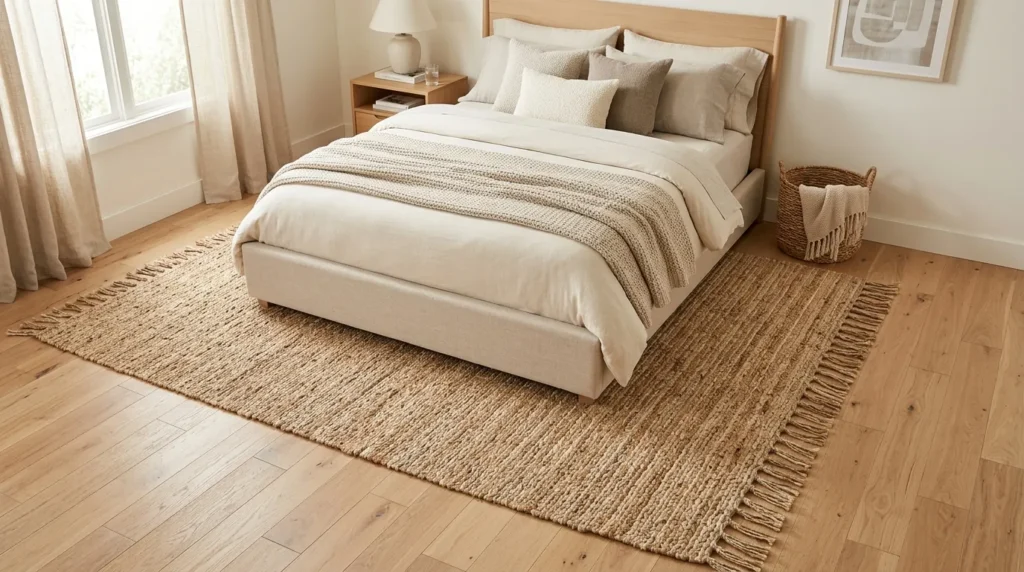
A bedroom without a rug — especially over hardwood, laminate, or tile — often feels colder and less finished than one that has this final grounding layer. One thing that works especially well is choosing a rug that extends at least a foot beyond the sides of the bed; a too-small rug is one of the most common reasons a styled room still feels slightly off, even when everything else is done well.
How To Style It
For a queen or king bed, look for a rug roughly 8×10 feet so it extends well past the nightstands. If budget is a concern, two smaller matching runners placed on either side of the bed can achieve a similar grounding effect for less money. Choose texture over pattern if your bedding and pillows are already busy, or lean into a patterned rug if your linens are more neutral — the goal is balance, not competition between layers.
7. Simple Curtain Swap
Quick Benefits
- Softens hard window lines with almost no effort
- Improves natural light diffusion during the day
- Adds height and drama when hung correctly
- Inexpensive compared to blinds or shutters
- Works with tension rods in rental-friendly setups
Why It Works
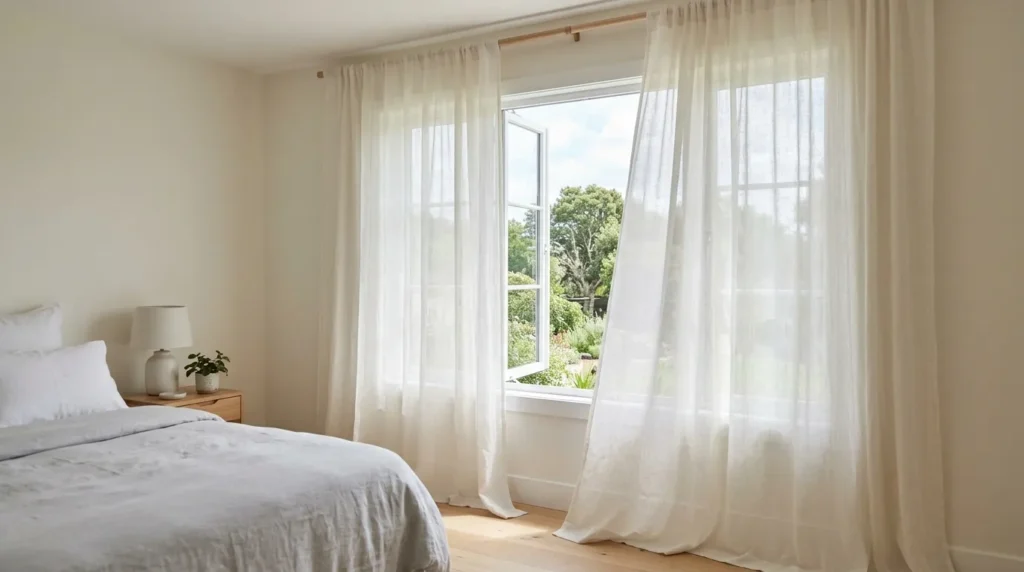
Curtains do double duty: they soften a room visually and control how light enters it throughout the day. In my experience, the biggest curtain mistake isn’t fabric choice — it’s placement. Curtains hung directly on the window frame make the ceiling feel lower and the window feel smaller, while curtains hung higher and wider create the illusion of a larger, brighter room.
How To Style It
Mount the rod four to six inches above the window frame and extend it a few inches beyond the frame on each side, so the curtains can fully clear the glass when open and let in maximum light. Choose a lightweight linen or cotton blend for a soft, airy look, or a heavier weave if you want more of a cocoon-like feel at night. Tension rods make this entirely renter-friendly, since no drilling is required, and a simple swap from mini blinds to fabric panels alone can shift a room from “apartment default” to “styled space.”
8. Decluttered Surfaces
Quick Benefits
- Makes every other styling choice look more effective
- Costs nothing beyond a little time
- Reduces visual noise and mental clutter
- Creates space for the vignettes and decor you do keep
- Immediately improves how “finished” the room feels
Why It Works
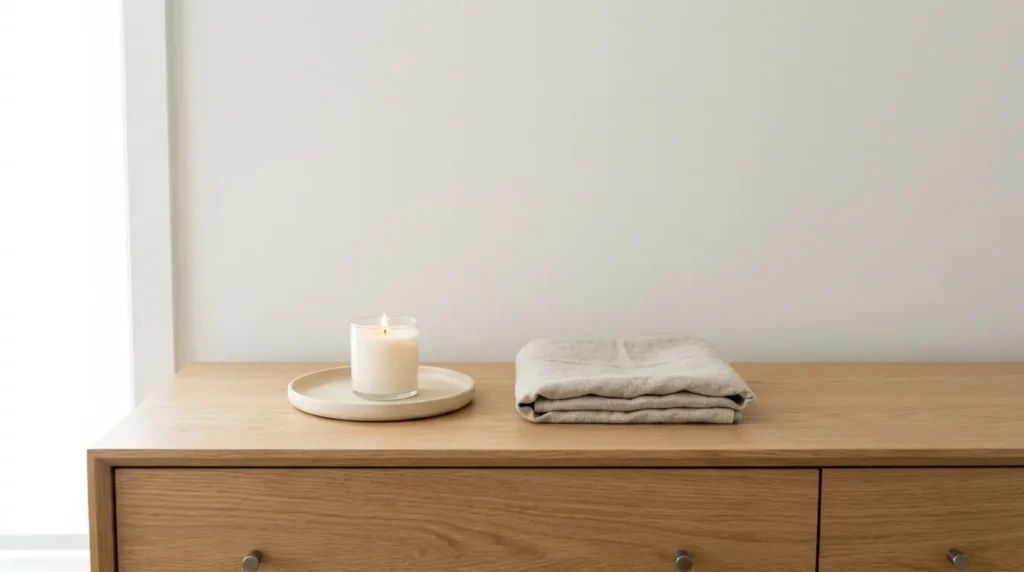
This is the styling step people skip because it doesn’t feel like decorating — but it might matter more than anything you buy. A room can have a beautiful rug, layered bedding, and great art, and still feel chaotic if every dresser and windowsill is covered in miscellaneous items. That’s why many designers recommend clearing before adding; empty space is a design element, not an absence of one.
How To Style It
Do a fifteen-minute sweep of every visible surface — dresser top, windowsill, desk, floor — and sort items into three categories: put away, relocate, or donate. Keep dresser tops down to a small handful of intentional objects, mirroring the nightstand vignette approach. Add a closed basket or tray for the inevitable overflow of daily items like jewelry or hair ties, so clutter has a designated, hidden home instead of spreading across open surfaces.
9. Textured Throw Blanket
Quick Benefits
- Adds instant coziness for very little cost
- Introduces texture without changing color scheme
- Doubles as a functional layer for chilly nights
- Easy to fold, drape, or swap seasonally
- Works on beds, chairs, or benches alike
Why It Works
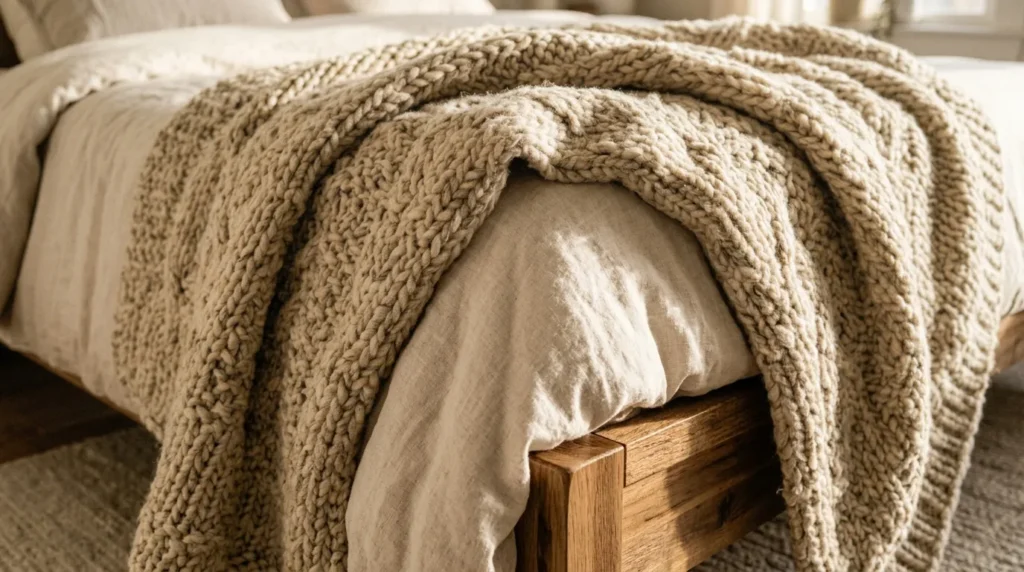
Texture is what separates a room that looks styled from one that just looks clean. A chunky knit or sherpa throw draped across the end of the bed or over a reading chair adds visual softness and depth that flat bedding alone can’t achieve. One simple trick I always suggest is choosing a throw in a slightly different tone than your main bedding — enough contrast to be noticed, not so much that it clashes.
How To Style It
Fold the throw in thirds and drape it across the foot of the bed, or lay it loosely over the arm of a chair for a more relaxed, lived-in look. If your room already has a lot of pattern from pillows or a rug, a solid-colored throw in a contrasting texture will add interest without overwhelming the space. This is one of the easiest seasonal swaps — a lightweight cotton throw in warmer months, a heavier knit as the weather cools.
10. Fresh Greenery Touch
Quick Benefits
- Adds life and softness with very little maintenance
- Improves air quality and visual warmth
- Works in low-light rooms with the right plant choice
- Inexpensive compared to most other decor categories
- Softens hard edges of furniture and shelving
Why It Works
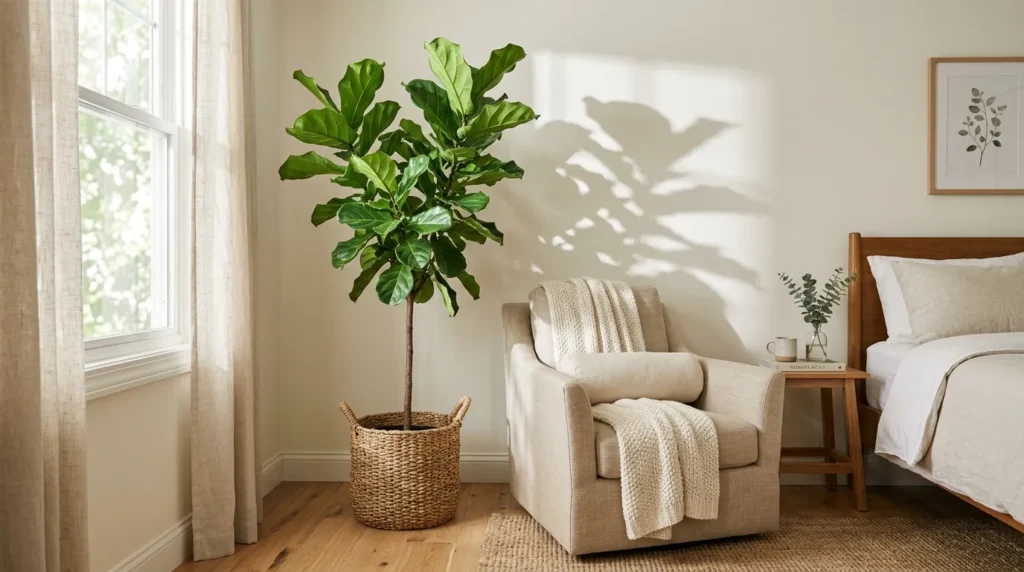
A bedroom without any greenery often feels slightly sterile, even when everything else is styled well. Plants — real or high-quality faux — bring an organic softness that furniture and textiles can’t replicate on their own. I’ve noticed that even one well-placed plant can make a room feel more cared for and lived-in, which is exactly the feeling most people are chasing with a refresh like this.
How To Style It
Low-light, low-maintenance options like a pothos, snake plant, or ZZ plant are forgiving choices for bedrooms without much direct sun. Place one larger floor plant in an empty corner to fill dead space, or a smaller plant on the dresser or nightstand to echo the vignette styling from earlier. If you’re not confident in keeping a plant alive, a realistic faux version placed thoughtfully achieves the same visual softness without any of the upkeep.
Frequently Asked Questions
What is the cheapest way to make a bedroom look better? Layering your existing bedding with a folded throw and a couple of extra pillows is typically the lowest-cost, highest-impact change you can make. Decluttering surfaces is completely free and often has just as much visual impact. Both can be done in under an hour without buying anything new.
How can I decorate my bedroom without buying new furniture? Focus on layers instead of pieces: bedding, pillows, lighting, and a rug can transform a room without touching the furniture itself. Rearranging what you already own — like moving a lamp or repositioning a chair — can also shift how the whole room feels.
What makes a bedroom look expensive on a budget? Consistent scale and a limited color palette do more than expensive individual items. Oversized art, layered textures, and warm lighting read as intentional and high-end, even when every piece was affordable.
How do I decorate a rental bedroom without damaging walls? Removable adhesive hooks, tension rods, and freestanding decor like rugs, plants, and lamps let you style a rental fully without drilling. Peel-and-stick options exist for art and even lighting if you want more flexibility.
How long does a minimal-effort bedroom refresh take? Most of these ten ideas can be completed in a single weekend, and several — like decluttering or swapping pillows — take less than thirty minutes each. The key is tackling them one at a time rather than trying to do everything at once.
Do I need a color scheme before I start decorating? It helps, but it doesn’t need to be complicated. Choosing two or three colors — one neutral base, one accent, one texture-focused neutral like wood or woven fiber — is enough to keep new additions feeling cohesive.
What’s the biggest mistake people make when decorating a bedroom? Under-scaling their choices — art that’s too small, a rug that’s too small, or a single light source instead of layered lighting. Going slightly bigger and adding a second light source usually solves the “something feels off” problem.
Final Thoughts
A bedroom doesn’t need a full renovation to feel like a place you actually want to be in. Start with one or two ideas — layered bedding and a decluttered nightstand, for example — and build from there as time and budget allow. Each small change compounds: better lighting makes the art look more intentional, a rug makes the bedding feel more grounded, and decluttered surfaces make every other choice more visible.
The goal isn’t perfection in a weekend. It’s a room that feels a little more like you every time you walk into it. Start with one or two ideas and gradually build a space that reflects your style and supports everyday comfort.
Related Articles
- Cozy Bedroom Ideas for Small Spaces
- How to Style a Nightstand Like a Designer
- Budget-Friendly Wall Art Ideas
- Renter-Friendly Decor Upgrades
- Layered Lighting Ideas for Every Room