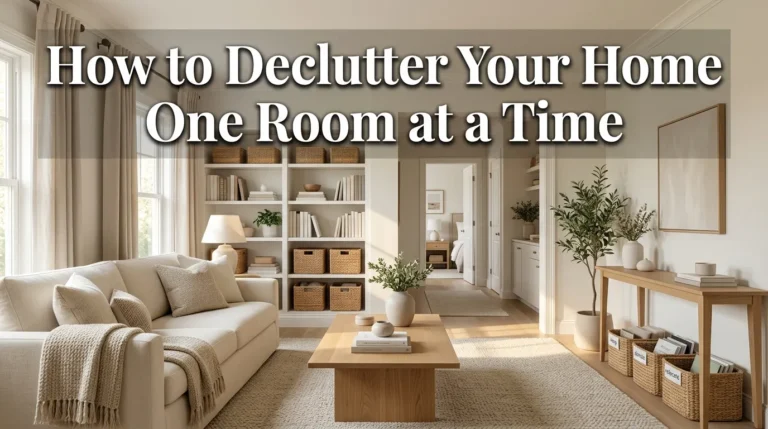

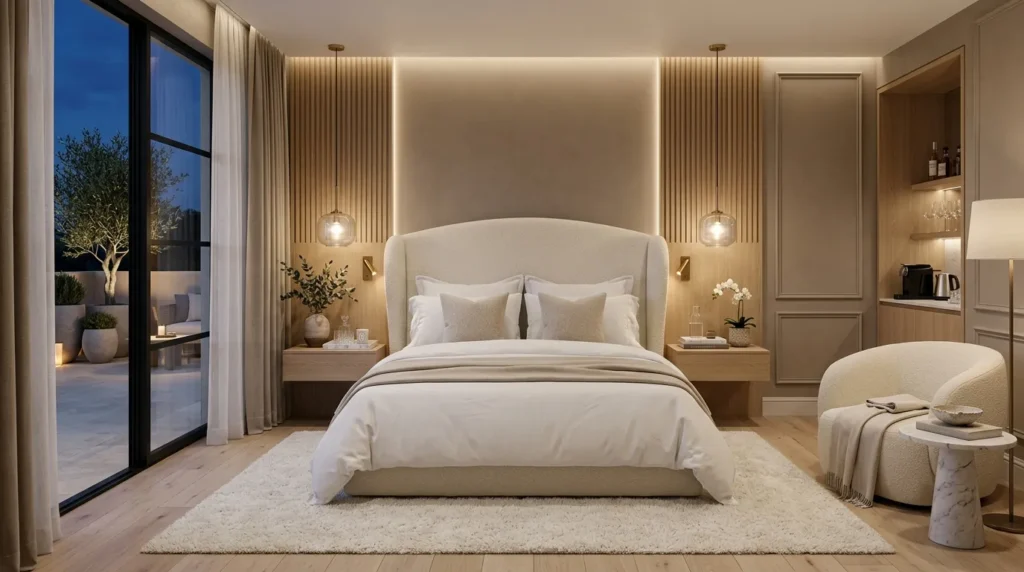
10 Modern Bedroom Ideas with Hotel-Inspired Design
There’s a specific feeling that comes with walking into a beautiful hotel room — the bed looks impossibly crisp, the lighting is flattering from every angle, and somehow nothing feels cluttered even though the room has everything you need. In my experience, most people assume that feeling requires a hotel budget to recreate at home. It doesn’t. It requires a handful of specific design decisions, repeated consistently, that most bedrooms simply skip.
I’ve noticed that hotel rooms succeed not because they’re minimalist, exactly, but because every element earns its place. There’s no random pile of mail on the dresser, no mismatched lamp shades, no bare bulb glaring from the ceiling. Everything is edited, layered, and lit with intention. That’s a formula, not a mystery — and it’s one you can apply to an existing bedroom without a full renovation.
This guide breaks down ten specific, hotel-inspired ideas that bring that same polished, restful quality into a modern bedroom. A mistake many homeowners make is trying to copy the “look” of a luxury hotel room through a single statement piece, when the real effect comes from a handful of smaller, consistent choices working together — bedding, lighting, storage, and color, all pulling in the same direction.
Whether you’re working with a builder-grade bedroom or refreshing a space that’s started to feel dated, these ideas are designed to be realistic. None of them require knocking down walls or hiring a design firm. They’re the same principles hotel designers rely on, translated into steps you can actually take in your own home, on your own timeline.
By the end of this article, you’ll have a clear plan for turning your bedroom into the kind of restful, elevated space that makes you want to linger in bed a little longer on a Sunday morning.
Table of Contents
- Plush Upholstered Headboard — The single piece that instantly signals a hotel-level bedroom.
- Luxe Layered Bedding — Hotel-quality linens and the layering method behind them.
- Blackout Drapery Panels — Floor-to-ceiling drapes for both style and better sleep.
- Floating Nightstand Design — A sleek, space-saving alternative to bulky bedside furniture.
- Statement Pendant Lighting — Swapping table lamps for a more architectural lighting moment.
- Minimalist Color Palette — The restrained tones that make hotel rooms feel calm.
- Spa-Inspired Textures — Bringing tactile, natural materials into the bedroom.
- Hidden Storage Solutions — Keeping the room clutter-free the way hotels always do.
- Accent Wall Paneling — Adding architectural interest behind the bed.
- Curated Art Display — Choosing and placing art like a design professional.
1. Plush Upholstered Headboard
Quick Benefits
- Instantly elevates the entire look of the bed
- Adds softness and comfort for reading or lounging
- Works as a focal point without extra wall decor
- Available in a wide range of budgets and sizes
- Easy to retrofit onto most existing bed frames
Why It Works
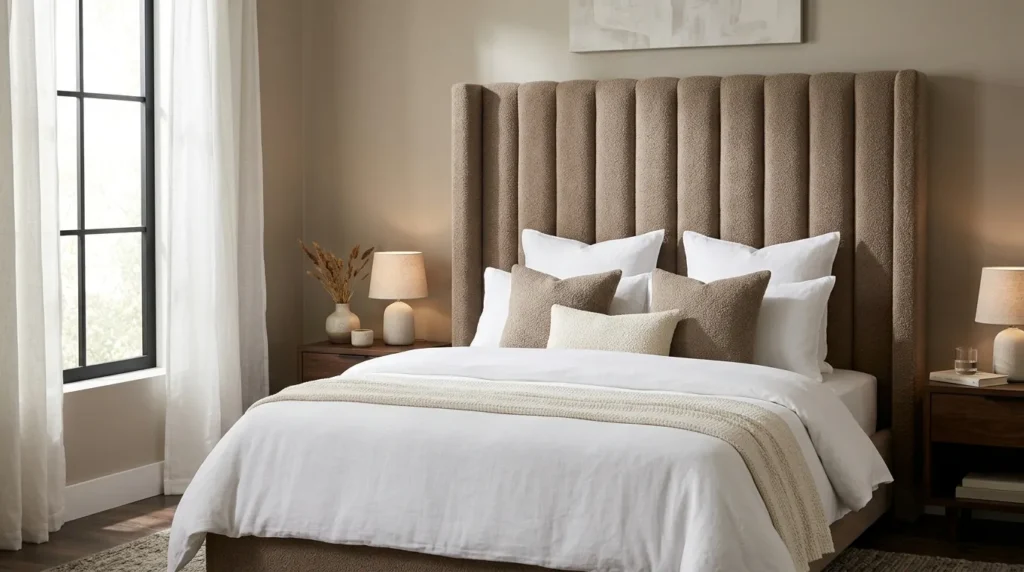
An upholstered headboard is one of the fastest ways to make a bed look custom rather than store-bought, which is exactly the quality that separates a hotel room from an average one. A mistake many homeowners make is leaving a bed frame headboard-free or opting for a thin, low-profile option; a tall, padded headboard adds both visual weight and physical comfort, giving the whole bed a more substantial, considered presence.
How To Style It
Choose a headboard that reaches at least a few inches above where your pillows sit when stacked, in a durable, easy-to-clean fabric like performance velvet, boucle, or linen blend. Neutral tones — oatmeal, dove gray, warm taupe — tend to read as more timeless and hotel-like than bold colors or patterns. If a full headboard isn’t in the budget, an upholstered wall panel mounted at headboard height achieves a similar effect for less.
2. Luxe Layered Bedding
Quick Benefits
- Creates the “hotel bed” look people specifically search for
- Improves both the visual and physical comfort of the bed
- Works with any headboard or frame style
- Easy to maintain with the right fabric choices
- One of the highest-impact upgrades for the investment
Why It Works
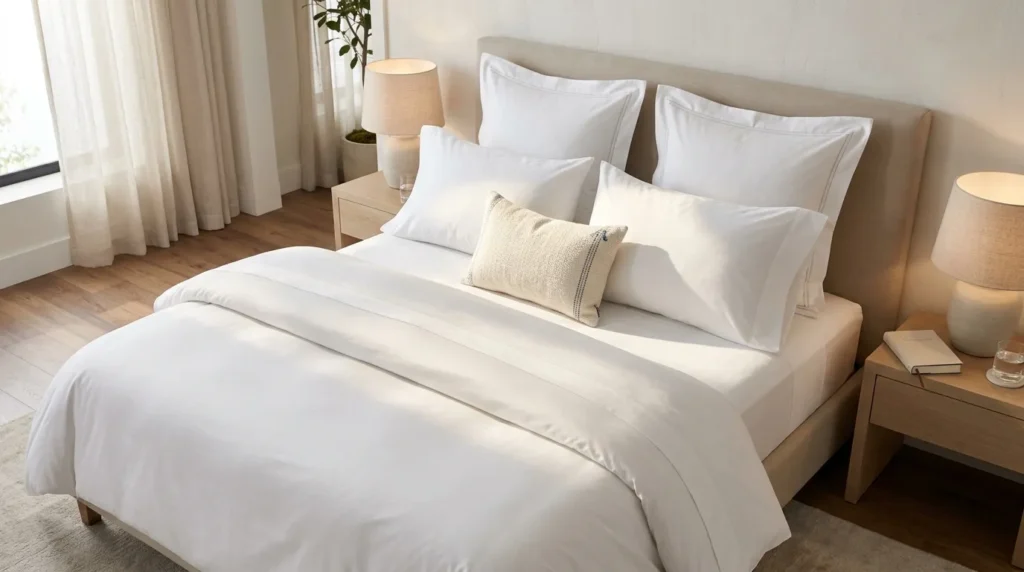
Hotel beds look inviting because of a specific layering formula: a fitted sheet, a flat sheet folded crisply at the top, a duvet folded roughly a third of the way down, and pillows stacked in a specific sequence. That’s why many designers recommend learning this exact layering order rather than guessing — it’s a formula, not an aesthetic accident, and it works the same way in a budget bedroom as it does in a five-star suite.
How To Style It
Use a white or light neutral base — sheets and duvet cover in a crisp cotton or sateen weave — since light, monochromatic bedding is what most hotels use and what photographs as “clean” and “fresh.” Stack pillows in this order from back to front: two standard sleeping pillows, two European shams, and one smaller lumbar or accent pillow. Fold the duvet back about a third of the way down the bed to reveal the flat sheet beneath, exactly the way hotel housekeeping does it.
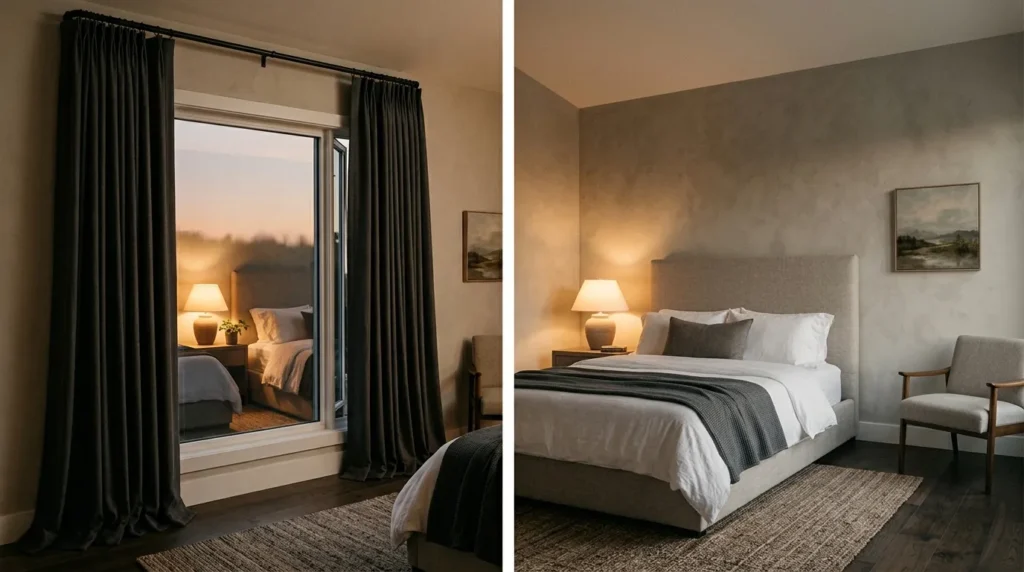
3. Blackout Drapery Panels
Quick Benefits
- Blocks light for genuinely better sleep quality
- Adds a tailored, finished look to windows
- Creates height and drama when hung correctly
- Reduces outside noise as a secondary benefit
- Works in both rented and owned spaces
Why It Works
Hotel rooms almost universally use heavy, floor-length drapes, and it’s not purely aesthetic — full blackout capability is a major contributor to the deep, uninterrupted sleep people associate with hotel stays. One thing that works especially well is choosing drapery that pools slightly at the floor or just grazes it, rather than stopping short, since floor-length panels immediately read as more tailored and intentional than shorter curtains.
How To Style It
Mount the rod as close to the ceiling as practical and extend it several inches beyond the window frame on each side, so the panels can fully clear the glass and appear taller and wider than the window itself. Choose a true blackout lining, even if the visible fabric is a lighter color, so you get the room-darkening benefit without sacrificing a soft daytime look. Layering a sheer panel behind the blackout drape adds another dimension for daytime, when full blackout isn’t needed.
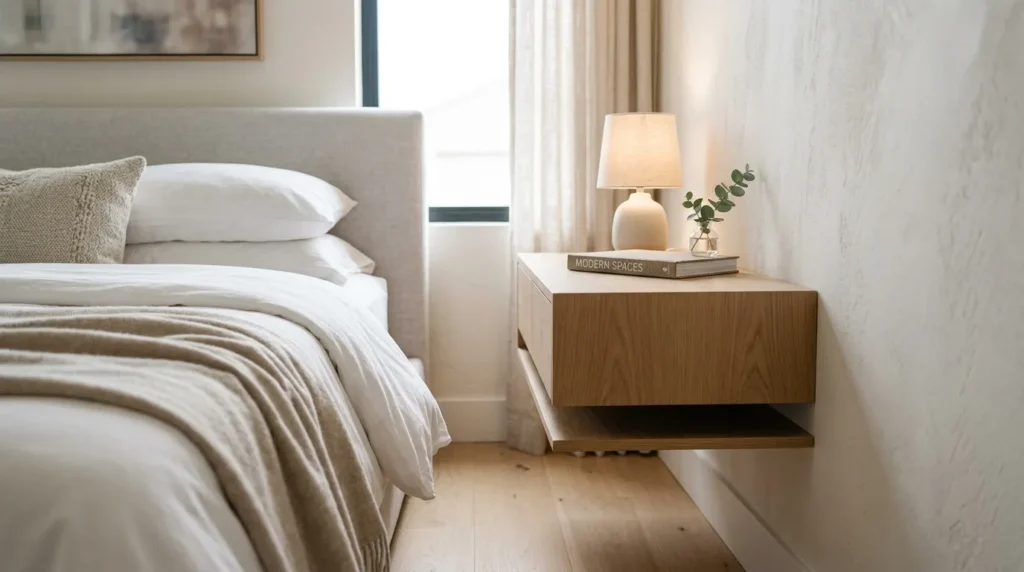
4. Floating Nightstand Design
Quick Benefits
- Creates a sleek, modern, space-saving look
- Makes small bedrooms feel more open
- Easier to clean underneath than traditional nightstands
- Adds an architectural, custom-built feel
- Works well with minimalist or contemporary styling
Why It Works
Floating nightstands — wall-mounted shelves or drawers that don’t touch the floor — are a signature of high-end hotel and boutique bedroom design because they reduce visual clutter at floor level and make the whole room feel lighter and more spacious. In my experience, this small architectural choice does more to modernize a bedroom’s overall feel than most people expect from a single piece of furniture.
How To Style It
Mount floating nightstands so the surface sits roughly level with or slightly below the top of the mattress, keeping proportions comfortable for reaching a lamp or phone from bed. Choose a design with at least one drawer or shelf to maintain some hidden storage, since floating doesn’t have to mean styleless. Keep the wall space above clean and simple — a small sconce or piece of art is enough — so the floating effect itself stays the visual focus.
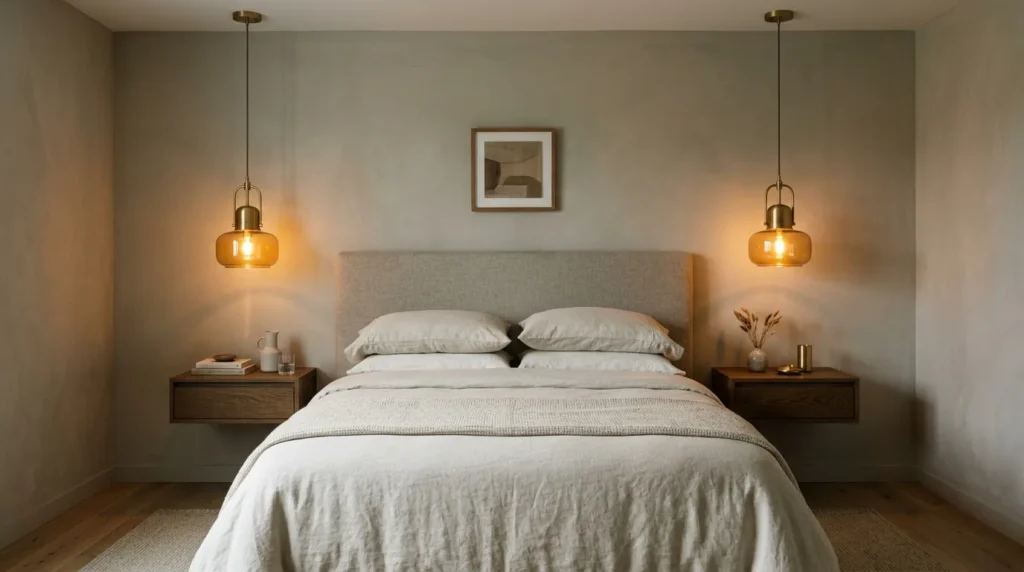
5. Statement Pendant Lighting
Quick Benefits
- Frees up nightstand surface space
- Adds a more architectural, designed feel than lamps
- Creates a memorable focal point on entry to the room
- Pairs especially well with floating nightstands
- Works in both small and large bedrooms
Why It Works
Swapping traditional table lamps for pendant lights hung above each nightstand is a favorite trick among hotel and boutique designers because it does two things at once: it frees up surface space and adds a more sculptural, intentional lighting element than a standard lamp ever could. I’ve seen this idea transform a fairly ordinary bedroom into something that reads as genuinely designed rather than simply furnished.
How To Style It
Hang pendants so the bottom of the fixture sits roughly twenty to twenty-eight inches above the nightstand surface, adjusting for ceiling height and personal reading needs. Matching pendants on both sides create symmetry, which tends to feel calmer and more hotel-like than mismatched fixtures. If rewiring isn’t an option, plug-in pendant kits with a cord cover can achieve the same look without any electrical work.
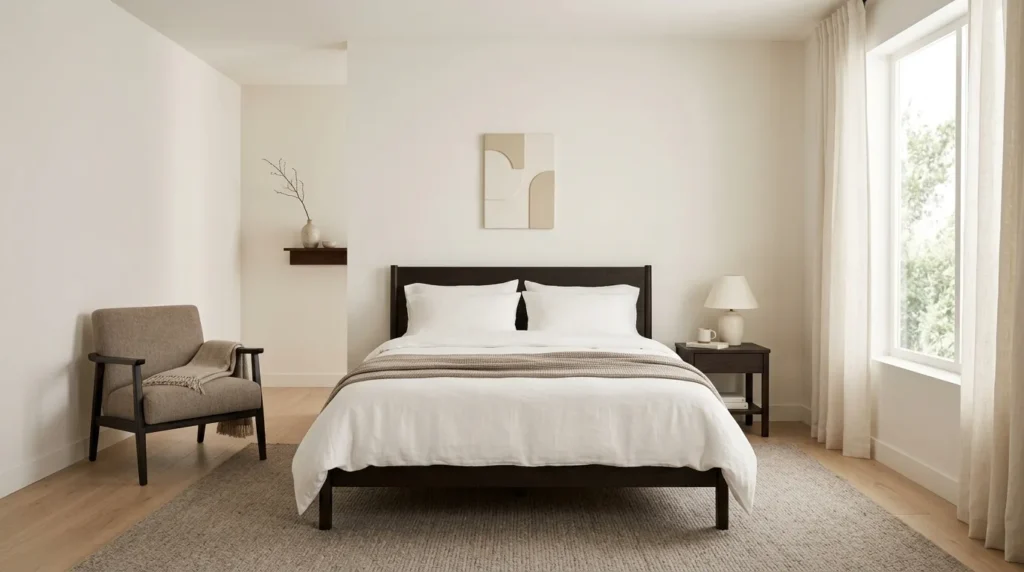
6. Minimalist Color Palette
Quick Benefits
- Creates an instantly calmer, more restful feeling
- Makes the room feel larger and more cohesive
- Easier to style consistently than a busy palette
- Timeless — won’t feel dated in a few years
- Works as a foundation for any style layered on top
Why It Works
Hotel bedrooms rarely use more than two or three colors total, and that restraint is precisely what makes them feel calm rather than sparse. A mistake many homeowners make is introducing too many competing colors across bedding, walls, and furniture, which creates visual noise even when each individual piece is attractive. A tight palette does the opposite — it lets texture and lighting carry the visual interest instead.
How To Style It
Choose one neutral base (warm white, greige, or soft taupe), one deeper anchor tone (charcoal, espresso, or deep green), and one metal or wood tone that repeats throughout the room’s hardware and furniture. Apply this palette consistently across walls, bedding, and major furniture pieces, saving any bolder color for a single small accent, like one throw pillow or a piece of art. This restraint is what allows textures — discussed next — to become the room’s real source of visual richness.
7. Spa-Inspired Textures
Quick Benefits
- Adds richness and depth without adding color
- Creates a calming, tactile sensory experience
- Works within a minimalist color palette
- Elevates budget materials through smart pairing
- Appeals to both sight and touch
Why It Works
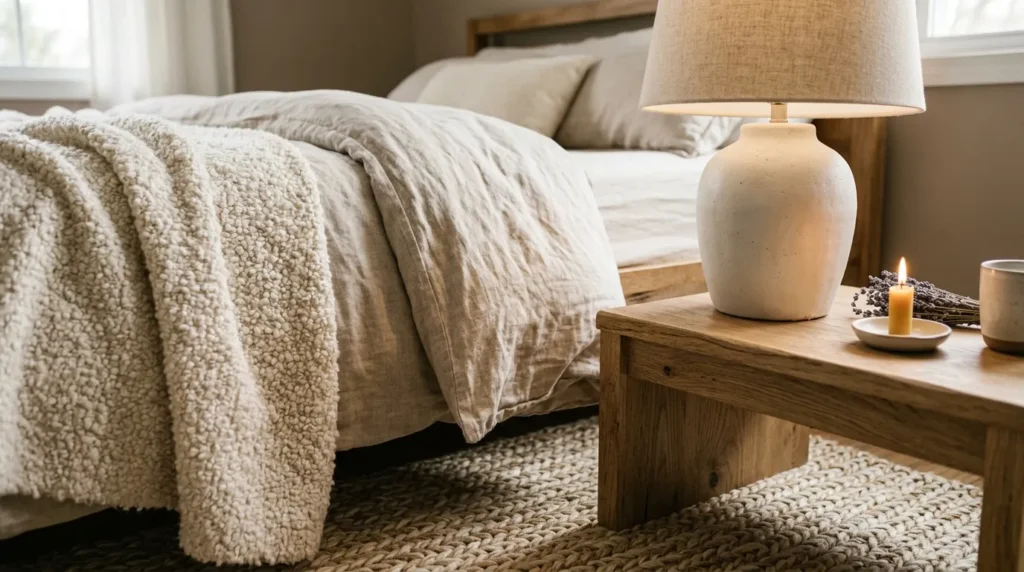
Once color is simplified, texture becomes the room’s main design language — and hotel spas and bedrooms alike lean heavily on natural, tactile materials like linen, boucle, raw wood, and matte stone finishes. One simple trick I always suggest is layering at least three distinct textures in any given vignette, since a room built entirely from smooth, similar surfaces tends to feel flat no matter how good the color palette is.
How To Style It
Combine a woven textured rug, a smooth linen duvet, a boucle accent chair, and a matte ceramic lamp base within the same room, so no two adjacent surfaces feel identical. Bring in raw or lightly finished wood — a bench, a nightstand, a headboard frame — to add warmth against cooler tones like stone or matte metal. Keep textures in the same tonal family as your color palette so the variety reads as intentional layering rather than visual clutter.
8. Hidden Storage Solutions
Quick Benefits
- Keeps the room visually calm and clutter-free
- Maximizes function without sacrificing style
- Makes small bedrooms feel more spacious
- Supports the minimalist look other ideas rely on
- Works well with built-in or freestanding furniture
Why It Works
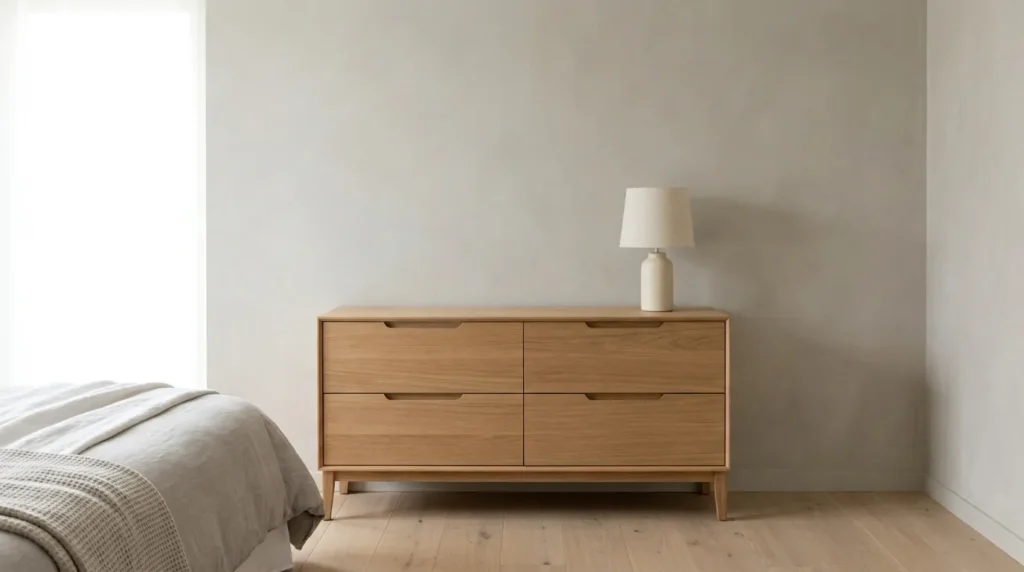
Hotel rooms almost never show visible clutter, not because guests don’t have belongings, but because storage is deliberately built in and closed off — drawers, closets, and cabinets that keep daily items out of sight. That’s why many designers recommend prioritizing closed storage over open shelving in a bedroom specifically, since open shelves tend to accumulate visual noise faster than any other storage type in this particular room.
How To Style It
Choose furniture with closed storage built in — a bed frame with drawers, a dresser instead of open shelving, a bench with a lift-top seat — so daily items have a home that isn’t visible from the doorway. Use drawer organizers and closet systems to keep even hidden storage functional rather than chaotic, since a messy drawer still creates friction even if no one can see it. Reserve any open shelving for a small, curated display rather than everyday storage.
9. Accent Wall Paneling
Quick Benefits
- Adds architectural interest behind the bed
- Creates a boutique-hotel focal point
- Works with paint, wood, or fabric paneling
- Adds perceived value and custom-build quality
- Pairs well with a minimalist overall palette
Why It Works
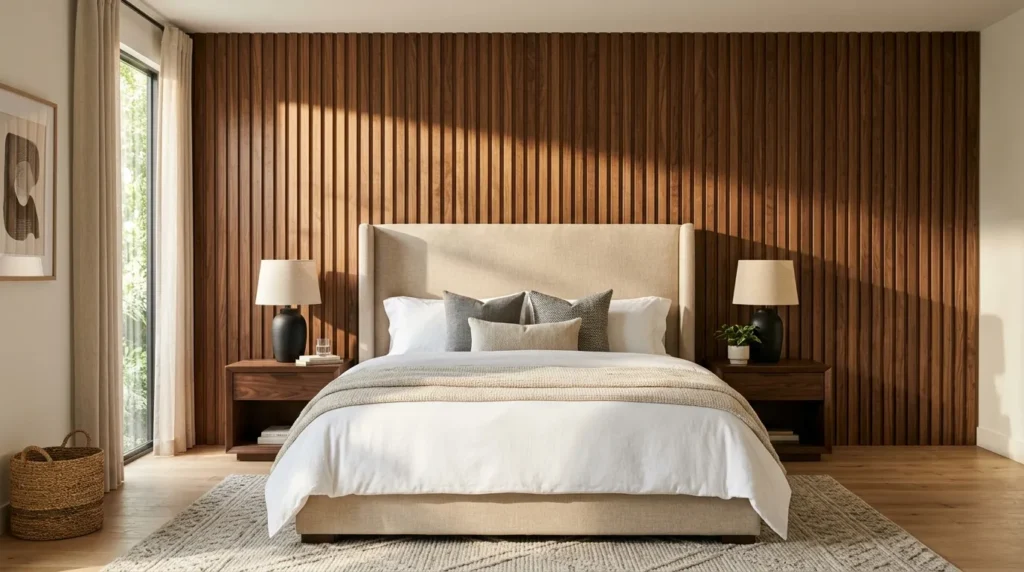
Wall paneling — whether wood slat, molding-based, or upholstered — is one of the clearest markers of boutique hotel design, because it adds architectural depth to what would otherwise be a flat, forgettable wall behind the bed. A mistake many homeowners make is skipping this step because it sounds like a construction project, when several paneling options are actually straightforward weekend installs.
How To Style It
Vertical wood slat paneling, installed in a section behind and slightly wider than the headboard, is one of the more approachable DIY options and instantly adds a modern, textural backdrop. For a lower-effort version, peel-and-stick paneling or applied molding in a grid or vertical pattern achieves a similar visual depth without full carpentry. Keep the paneling in the same tonal family as your palette so it reads as architecture, not decoration layered on top.
10. Curated Art Display
Quick Benefits
- Adds personality within a controlled, calm palette
- Creates a finished, intentional focal point
- Easy to update without touching bigger design elements
- Works at almost any budget level
- Reinforces the room’s overall color and mood
Why It Works
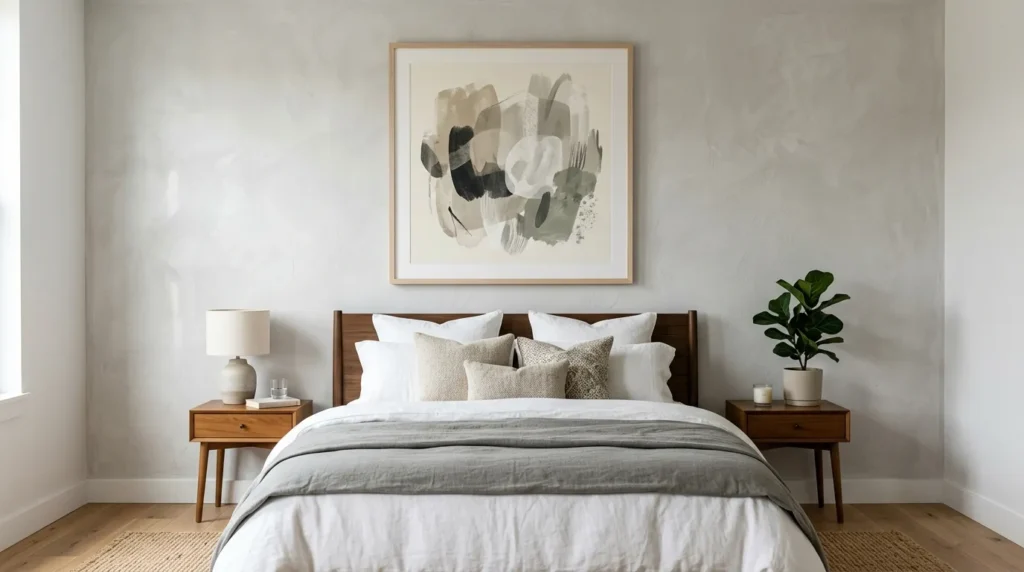
Hotel rooms rarely use more than one or two pieces of art, chosen deliberately rather than filling every wall. In my experience, this restraint is part of what keeps the whole room feeling calm — a single well-scaled piece does more for a hotel-inspired bedroom than a gallery wall ever could, because it doesn’t compete with the bedding, lighting, or paneling for attention.
How To Style It
Choose one large piece for above the bed, sized to roughly two-thirds the width of the headboard, in tones that echo the room’s existing palette rather than introducing new colors. If a second piece is wanted, place it opposite the bed or in a reading nook rather than clustering both near the headboard. Abstract, tonal, or nature-inspired art tends to read as more calming and hotel-appropriate than busy patterns or high-contrast prints.
Frequently Asked Questions
What makes a bedroom feel like a hotel room? A restrained color palette, crisp layered bedding, soft ambient lighting, and minimal visible clutter are the core ingredients. Hotel rooms succeed through consistency across these elements rather than any single standout feature.
How do I get hotel bedding at home? Look for crisp white or light neutral sheets in a cotton or sateen weave, and layer a duvet folded back about a third of the way down the bed with pillows stacked from largest to smallest. The layering order matters as much as the fabric quality.
Is a headboard necessary for a hotel-style bedroom? It’s one of the highest-impact single additions, though not strictly required. An upholstered wall panel at headboard height can achieve a similar visual effect if a full headboard isn’t in the budget.
What colors do hotels typically use in bedrooms? Most hotel bedrooms rely on two to three tones total: a neutral base like warm white or greige, a deeper anchor color, and one consistent metal or wood finish. This restraint is part of what makes the spaces feel calm rather than sparse.
How can I add hotel-style lighting without rewiring? Plug-in pendant lights with a cord cover, or simply swapping bulbs to a warmer color temperature in existing fixtures, can achieve a similar mood without any electrical work. Layering two or three light sources at different heights also helps.
Do I need to paint my walls to get this look? Not necessarily. Paneling, art, and textiles can add the architectural and tonal interest hotel rooms rely on even over an existing wall color, especially if that color already falls within a neutral or muted palette.
How much does a hotel-inspired bedroom refresh typically cost? It varies widely depending on which ideas you pursue, but many of these updates — bedding, lighting swaps, art, and storage — can be done incrementally at a range of budgets, without requiring a full renovation.
Final Thoughts
A hotel-quality bedroom isn’t about spending like a five-star resort — it’s about applying the same handful of principles consistently: a restrained palette, intentional lighting, hidden storage, and bedding layered the right way. Start with one or two ideas, like the bedding formula and a new headboard, and layer in the rest as time and budget allow.
Each addition supports the next: a tighter color palette makes the textures stand out, hidden storage keeps the calm palette from being undone by clutter, and the right lighting ties the whole room together in the evening. Start with one or two ideas and gradually build a space that reflects your style and supports the kind of rest a good hotel room is designed for.
Related Articles
- Cozy Bedroom Ideas for Small Spaces
- How to Style a Nightstand Like a Designer
- Minimalist Home Decor for Every Room
- Renter-Friendly Decor Upgrades
- Layered Lighting Ideas for Every Room